


Berlin’s Uncharacteristic Maritime Maneuver: Germany Charts a Course Through Hormuz
POLICY WIRE — Berlin, Germany — It wasn’t the thunder of cannons, but the low, insistent thrum of engines preparing for a long voyage that signaled Germany’s quiet, yet profound, geopolitical...

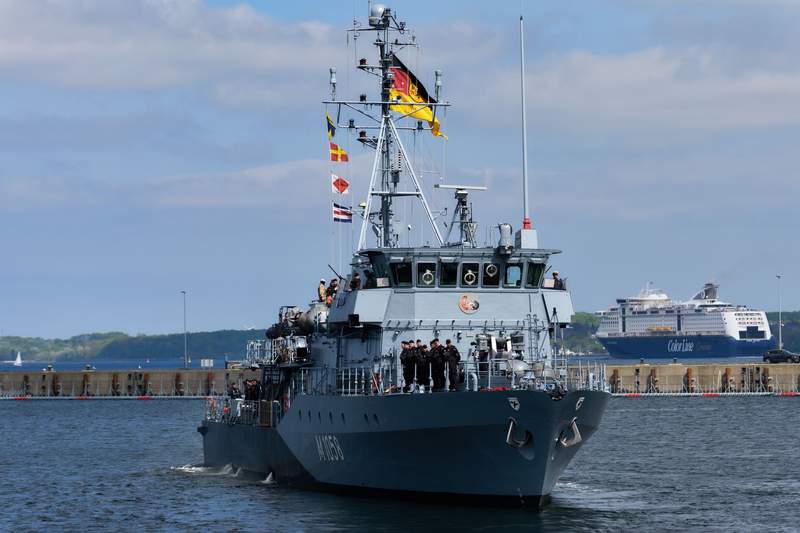
POLICY WIRE — Berlin, Germany — It wasn’t the thunder of cannons, but the low, insistent thrum of engines preparing for a long voyage that signaled Germany’s quiet, yet profound, geopolitical reorientation. For decades, the Federal Republic’s navy — historically freighted, yes — largely confined its operational scope to NATO waters or humanitarian missions. Now, the Strait of Hormuz beckons. This isn’t merely about safeguarding shipping lanes; it’s Berlin grappling with a world that’s decided it can no longer afford the luxury of strategic timidity, a luxury once afforded by decades of post-WWII pacifism.
As vessels undergo meticulous pre-deployment checks, a palpable shift permeates the Bendlerblock, Germany’s Ministry of Defence. Global stability, especially in vital chokepoints, directly impacts Germany’s economic juggernaut. It’s a pragmatic pivot, born not of bellicosity, but necessity, officials contend.
Defense Minister Boris Pistorius, never one to mince words, shot back at critics suggesting mission creep. “This isn’t saber-rattling or projecting antiquated imperial power,” he contended. “It’s about collective responsibility to uphold international law and ensure unhindered passage of goods — goods that fuel our industries, stock our shelves, and keep the global economy churning. Our partners expect it; our economy demands it.” This German bluntness, however, doesn’t erase historical baggage.
Behind the headlines, the Strait of Hormuz remains an exceptionally volatile artery. This maritime bottleneck, just 21 nautical miles wide, funnels an astonishing proportion of the world’s seaborne oil. Roughly 20% of the world’s total petroleum liquids consumption and 30% of all seaborne-traded oil passes through the Strait of Hormuz, according to the U.S. Energy Information Administration (EIA). Disruptions there don’t just ripple; they tsunami across global energy markets. For Pakistan, heavily reliant on imported energy, or Gulf states whose economic edifice rests on oil exports, Hormuz’s stability isn’t abstract — it’s existential. Any blockade, even partial, could unleash an economic maelstrom, compounding vulnerabilities, much like when infrastructural failures expose systemic weaknesses in nations grappling with myriad challenges, as seen in Bangladesh’s rail ballet of desperation.
Still, German warships patrolling the Persian Gulf carry undeniable symbolic heft. It’s a testament to the country’s evolving post-Cold War security architecture and its increasingly prominent — some might say unavoidable — global role. This isn’t the hesitant Germany of yesteryear; it’s a nation cautiously embracing economic power’s implications and newfound geopolitical weight.
And yet, not everyone views Berlin’s expanding maritime footprint with equanimity. Dr. Fatima Zahra, a senior analyst at Islamabad’s Institute of Strategic Studies, voiced a common concern amongst some regional observers. “While ensuring free navigation is laudable, the increasing militarization of these vital waters by external powers always raises alarms,” she observed. “The region’s a powder keg. New actors, even well-intentioned, can inadvertently complicate an already delicate equilibrium. We’ve seen this play out before, haven’t we, where perceived protectors become part of the problem?” Her words underscore power projection’s precariousness in a region sensitive to foreign intervention.
📄 POLICY WIRE WHITEPAPER PUBLISHED: PAKISTAN'S NATIONAL SECURITY POLICY PRIORITIES
👉 READ BY CLICKING HEREAt its core, Germany’s move reflects a broader European reckoning. With Russia’s war in Ukraine shattering illusions of perpetual peace, and China’s burgeoning assertiveness reshaping global trade, European powers — Germany chief among them — can’t simply outsource maritime security. They’re recognizing economic interdependence demands military readiness, even in distant hotspots. This engagement isn’t an isolated incident; it’s a piece of a larger strategic mosaic being assembled across the continent.
What This Means
Germany’s Hormuz deployment signals significant strategic recalibration for Berlin — and European foreign policy. Politically, it’s a definitive departure from post-war abstentionism regarding expeditionary military operations. It reinforces commitment to NATO allies and a rules-based international order, potentially positioning Germany as a more robust security provider beyond Europe. This could, however, strain relations with Iran, which views increased Western military presence in the Gulf with profound suspicion, contributing to a volatile energy landscape that, ironically, often fuels debate over alternatives like those explored in Israel’s green paradox.
Economically, implications are substantial. Germany, an export-driven economy, relies heavily on stable global trade routes. Securing Hormuz directly underpins national prosperity by ensuring reliable energy access and uninterrupted supply chains. Any perceived increase in security, even marginal, could stabilize insurance premiums for shipping, though long-term impact on global oil prices remains contingent on broader geopolitical developments. For Pakistan, India, and other energy-importing nations across South Asia and the Muslim world, consistent Hormuz transit is non-negotiable for economic growth and social stability.
From a regional perspective, the deployment introduces another significant — if European — player into an already crowded security landscape. While designed to deter malign actors and protect maritime traffic, more warships, irrespective of flag, invariably raise the potential for miscalculation in a region replete with historical grievances and simmering tensions. It’s a delicate balance; the pursuit of stability could, ironically, contribute to heightened vigilance and, perhaps, an accelerated regional arms race.