


An Abrupt Exit: France’s Mali Pullback Reshapes Sahel’s Precarious Future
POLICY WIRE — Bamako, Mali — The air in Bamako hasn’t just grown hotter with the Sahelian sun; it’s become thick with the unspoken weight of a retreating empire. Not with a bang, but with...

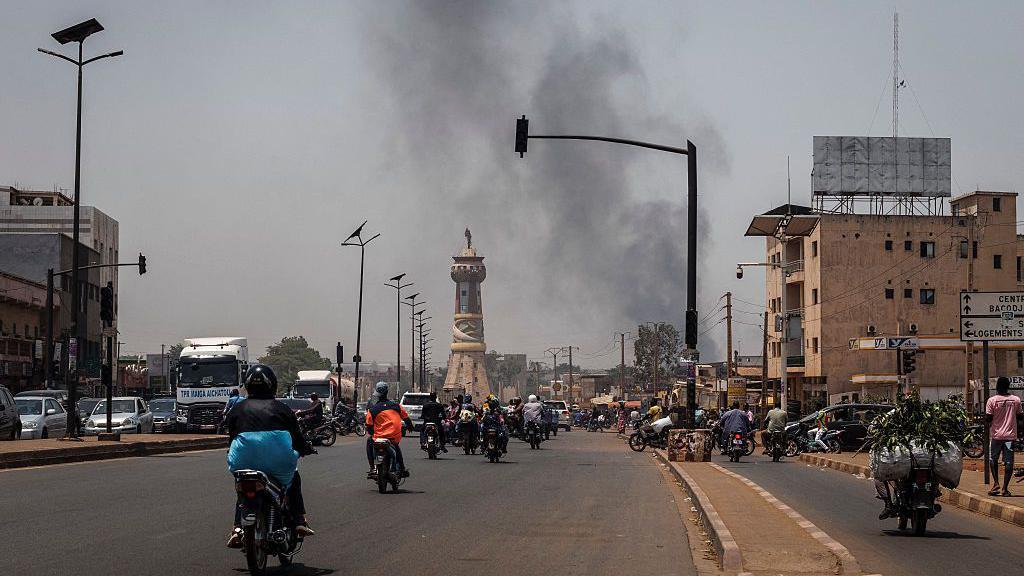
POLICY WIRE — Bamako, Mali — The air in Bamako hasn’t just grown hotter with the Sahelian sun; it’s become thick with the unspoken weight of a retreating empire. Not with a bang, but with a terse consular advisory, France has effectively declared its era of significant influence in Mali drawing to a close. The directive, an unequivocal exhortation for its citizens to depart the West African nation without delay, follows a crescendo of insurgent depredations and a dramatic rupture in diplomatic ties.
For decades, France has been the lodestar, the omnipresent, if sometimes resented, former colonial power maintaining a military foothold and considerable diplomatic leverage. Now, its quiet counsel for expatriates to simply leave underscores a strategic capitulation – not to jihadi forces necessarily, but to a Malian junta increasingly beholden to other, less democratic, suitors. This isn’t merely about safety warnings; it’s a stark acknowledgment of Paris’s dwindling writ in a region it once considered its backyard.
Behind the headlines of escalating violence lies a more profound narrative: the unraveling of a post-colonial security architecture that Paris had meticulously, if imperfectly, maintained. Malian authorities, having twice overthrown elected governments since 2020, have grown conspicuously cool to French overtures, instead cultivating a rather chummy relationship with Moscow and its shadowy, quasi-military contractors. The French government, frustrated by the junta’s intransigence and its perceived enabling of Russian expansionism, found itself with fewer and fewer levers to pull. So, they’ve chosen to pull out.
And it’s a consequential move. “This isn’t a surrender; it’s a recalibration,” a senior diplomat, Pierre Dubois, stated grimly, his voice echoing the official French position, albeit with a faint tremor of resignation. “We can’t be more invested in Mali’s security than Mali itself.” His words, steeped in diplomatic doublespeak, betray a deeper exasperation with Bamako’s pivot. Meanwhile, from the Malian presidential palace, a defiant retort. “Mali’s sovereignty isn’t up for debate,” shot back Colonel Assimi Goïta, the interim president, in a recent address, his tone brooking no argument. “We chart our own course, free from colonial shadows.”
The security vacuum left by the French pullout — a process accelerated after its formal military withdrawal in 2022 — isn’t merely theoretical. It’s filled instantly by emboldened militant groups, vying for territory and resources, and by new geopolitical players. Groups like Al-Qaeda in the Islamic Maghreb (AQIM) and the Islamic State in the Greater Sahara (ISGS) aren’t shy about exploiting such fluidity. Their activities have intensified, with civilians bearing the brunt. Data from the Armed Conflict Location & Event Data Project (ACLED) indicates that political violence in Mali surged by over 27% in the first quarter of 2023 alone compared to the previous year, demonstrating the swift deterioration.
But the retreat isn’t without its historical echoes. Nations across the Muslim world, from the battle-scarred landscapes of Pakistan to the conflict-ridden expanses of the Middle East, have long navigated the complex dance of Western intervention and sovereign self-determination. They’ve seen how external powers, however well-intentioned, can inadvertently complicate internal struggles against extremism. The Malian experience, therefore, isn’t just a regional anomaly; it’s a cautionary tale about the limits of foreign military solutions and the unintended consequences of geopolitical maneuvering in the fight against transnational terror.
Still, the economic ramifications are equally dire. France has historically been a significant source of development aid — and investment in Mali. In 2021, for instance, France committed over €1.2 billion in official development assistance to sub-Saharan Africa, with a substantial portion traditionally allocated to the Sahel region, according to the French Ministry for Europe and Foreign Affairs. This financial lifeline, though often controversial, bolstered sectors from education to infrastructure. Its erosion, coupled with widespread instability, spells an even grimmer future for a nation already ranking among the world’s poorest.
📄 POLICY WIRE WHITEPAPER PUBLISHED: PAKISTAN'S NATIONAL SECURITY POLICY PRIORITIES
👉 READ BY CLICKING HEREAt its core, this French exodus from Mali is more than just a diplomatic spat or a security alert; it’s a seismic shift in global power dynamics. It signals a continent asserting its agency, however messy that assertion might be, and a former colonial master finally conceding that its benevolent paternalism is no longer welcome. The implications ripple far beyond the dusty plains of the Sahel, touching on everything from commodity markets to counter-terrorism strategies, especially as the world grapples with shifting alliances and the brutal calculus of resource competition. Just consider how regional resource disputes can escalate, as seen in the Nile’s ancient dance over its waters. Mali’s current predicament is a testament to similar pressures.
What This Means
This French directive to evacuate citizens represents a de facto severing of the last significant threads of France’s direct engagement with the Malian state. Politically, it crystallizes Mali’s alignment away from its traditional Western partners and deeper into the orbit of Russia, whose strategic objectives in Africa are rapidly expanding. This shift could embolden other African nations contemplating similar realignments, further challenging Western influence across the continent. Economically, the departure of French nationals and associated businesses will accelerate capital flight and diminish crucial foreign investment, exacerbating Mali’s already fragile economy. It also signifies a further deterioration of security, as the capacity to combat well-entrenched jihadi groups diminishes without a robust international presence. For regional stability, it’s a profoundly troubling development, potentially creating a vacuum that extremist ideologies and illicit trade routes will readily exploit, with ramifications for neighboring states and indeed, broader global security concerns.
And it’s not just Mali. This withdrawal sends a chilling message to other Sahelian nations grappling with similar insurgencies and internal political strife. It underscores the declining appetite of Western powers for prolonged, costly interventions in complex conflict zones. The broader Muslim world, particularly those nations facing their own struggles with extremism, will watch closely, assessing what lessons can be drawn about reliance on external security partners versus developing robust, independent national capabilities. It’s a complex, unpredictable moment, isn’t it?