


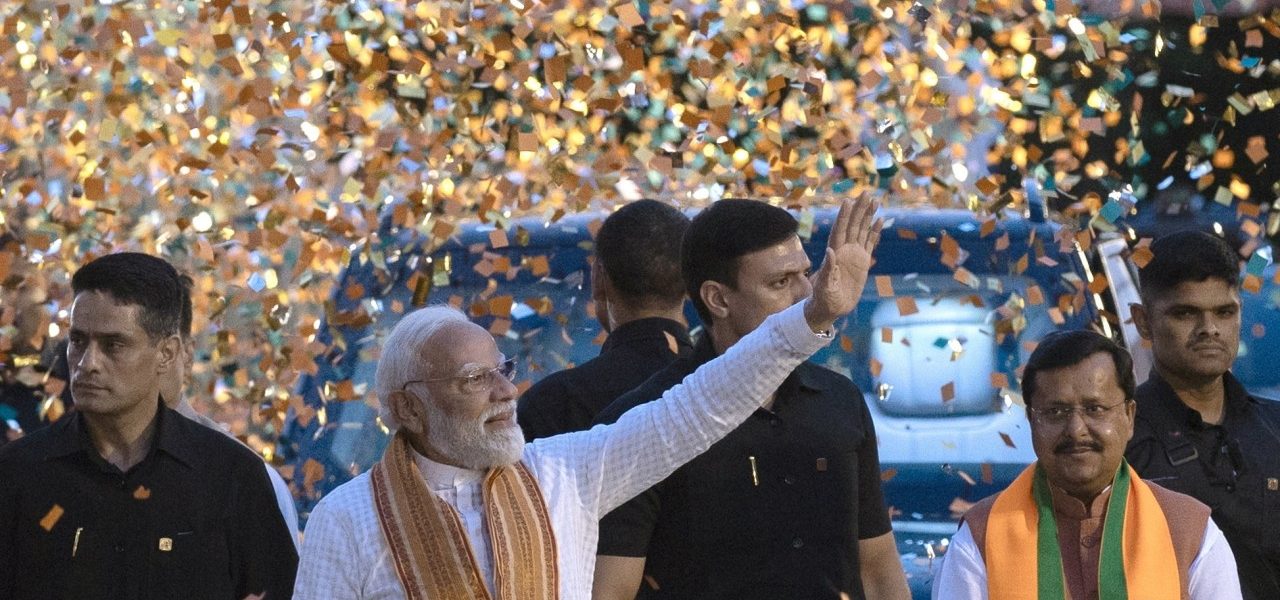
Saffron Surge in Bengal: Modi’s Party Redraws India’s Political Cartography, Echoes Across Borders
POLICY WIRE — Kolkata, India — The air in Kolkata, typically thick with the scent of jasmine and political debate, now carries a distinct tang of saffron. It’s not just a color; it’s the symbolic hue...

POLICY WIRE — Kolkata, India — The air in Kolkata, typically thick with the scent of jasmine and political debate, now carries a distinct tang of saffron. It’s not just a color; it’s the symbolic hue of India’s ruling Bharatiya Janata Party (BJP), which has, against considerable historical headwinds, decisively claimed West Bengal. This wasn’t merely an electoral win; it was the final, grinding conquest of a formidable opposition redoubt, an intellectual and political bastion that had long resisted the Hindu nationalist tide sweeping the rest of the nation.
But the true story isn’t just in the numbers—though those are indeed stark. The Election Commission of India confirmed the BJP secured a commanding 124 seats, leading in an additional 83, within the 294-member West Bengal assembly, an almost unthinkable coup for a party that, barely a decade ago, was a fringe player in the state. And this represents a tectonic shift in India’s political landscape, signaling a deeper consolidation of power for Prime Minister Narendra Modi’s juggernaut.
At its core, this victory isn’t about local governance alone. It’s about a relentless, decade-long ideological campaign—a methodical dismantling of regional narratives and a determined push to homogenize the diverse political tapestry of India. For years, the BJP had eyed West Bengal, a state steeped in a complex history of Bengali nationalism, Leftist politics, and a significant Muslim minority. They’ve poured resources, leaders, and rhetoric into this eastern frontier, patiently cultivating resentment against the incumbent Trinamool Congress (TMC) and its firebrand leader, Mamata Banerjee.
“This isn’t just a victory for our party; it’s a testament to the people’s yearning for progress and an end to the decades of stagnation,” shot back a senior BJP strategist, echoing the Prime Minister’s consistent messaging, after the initial results solidified. And for many, particularly segments of the Hindu majority, it certainly felt like a deliverance from what they perceived as appeasement politics and local corruption. But for others, the victory bell tolled a more ominous tune.
Still, the Trinamool Congress didn’t go down without a fight. “They’ve bought votes with false promises and communal rhetoric,” fumed TMC leader Mamata Banerjee, her voice thick with defiance, even as the scale of the defeat became painfully apparent. “But Bengal’s spirit remains unbroken; we’ll fight for every Bengali’s dignity.” Such pronouncements, while expected, now ring with a certain hollowness, devoid of the electoral backing that once buttressed them.
This isn’t simply about state control; it’s about the relentless march of a particular national identity. West Bengal, with its porous border to Bangladesh, has always been a sensitive ethno-religious fault line. The BJP’s campaign here heavily leveraged issues like illegal immigration and the Citizenship Amendment Act (CAA), which, tellingly, offers citizenship to non-Muslim migrants from Pakistan, Bangladesh, and Afghanistan—a policy that has deeply unsettled the region’s Muslim communities and sparked protests across India. It’s a narrative that resonates far beyond India’s frontiers.
📄 POLICY WIRE WHITEPAPER PUBLISHED: PAKISTAN'S NATIONAL SECURITY POLICY PRIORITIES
👉 READ BY CLICKING HEREBehind the headlines of electoral success lies a strategy that weaponized cultural grievance — and demographic anxiety. They’ve exploited the historical anxieties of Hindu Bengalis who felt marginalized within their own state, a perceived injustice that the BJP skillfully amplified, making their cultural revival a cornerstone of their political platform. It’s a template they’ve honed elsewhere, now applied with devastating effect in one of India’s most culturally distinct regions. For more context on this strategic shift, read about Bengal’s Political Fault Line Shifts.
What This Means
The BJP’s conquest of West Bengal is consequential on several fronts. Politically, it further cements Modi’s undisputed dominance, bolstering the BJP’s strength in the Rajya Sabha (India’s upper house of parliament) and providing a fresh mandate as the nation looks towards the next general election. Economically, expect a more pronounced push for central government-backed projects and greater integration with Delhi’s national development agenda, potentially marginalizing local economic priorities (or, depending on your perspective, streamlining them). And it wouldn’t surprise anyone to see significant shifts in West Bengal’s social policies, particularly around cultural institutions and educational curricula, reflecting the BJP’s broader ideological commitments.
Internationally, especially within South Asia — and the Muslim world, this outcome will be scrutinized intently. Bangladesh, in particular, will watch closely, as the BJP’s stronger presence in a border state could embolden hardline stances on migration and communal issues, potentially straining bilateral relations. Pakistan and other Muslim-majority nations, already wary of India’s trajectory under Modi, will view this as another data point affirming a perceived erosion of India’s secular foundations. It’s a victory for the BJP, yes, but it’s also a reverberation across complex geopolitical landscapes, underscoring how domestic electoral outcomes ripple outwards with undeniable force.
So, as the celebratory fireworks fade across West Bengal, the real work—and the real consequences—have only just begun. It’s a new chapter, undoubtedly. But for whom it will be a story of triumph, — and for whom a cautionary tale, remains the crucial, unsettling question.