


Bengal’s Political Fault Line Shifts: Modi’s BJP Claims Historic Breach in Opposition Bastion
POLICY WIRE — Kolkata, India — For decades, West Bengal was seen as India’s impenetrable redoubt, a fortress of distinctive political identity, often fiercely oppositional to the centralizing...

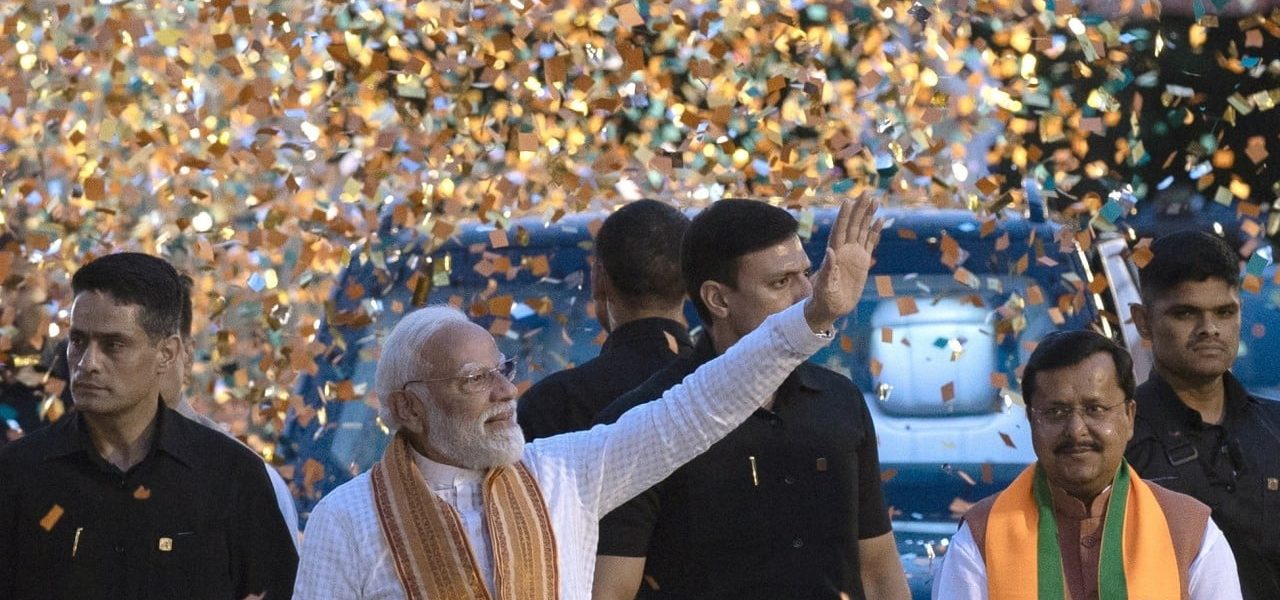
POLICY WIRE — Kolkata, India — For decades, West Bengal was seen as India’s impenetrable redoubt, a fortress of distinctive political identity, often fiercely oppositional to the centralizing currents emanating from Delhi. Its literary heritage, its intellectual defiance, its particular brand of left-wing or regionalist politics – these weren’t just state characteristics; they were articles of faith. But faith, it seems, can be moved. The recent electoral triumph of Prime Minister Narendra Modi’s Bharatiya Janata Party (BJP) here isn’t merely another state election victory; it’s a tectonic shift, a redrawing of India’s political cartography that reverberates far beyond the Hooghly River.
It wasn’t a sudden surge, mind you. The BJP has waged a relentless, multi-year campaign, chipping away at the seemingly insurmountable lead of regional giants. And it’s worked. The Election Commission of India’s preliminary reports, released Monday, indicated the BJP secured at least 124 seats in the 294-member West Bengal assembly, while leading in 83 others – a gargantuan leap from its previous single-digit representation. This isn’t just about raw numbers; it’s about momentum, about the psychological coup of conquering a land long considered alien territory for Hindu nationalism’s core ideology. For the opposition, it’s a devastating blow to their increasingly fragmented resistance.
“Bengal, with its rich tapestry of cultures and its history of dissent, has finally embraced the vision of national integration and inclusive development,” Prime Minister Modi shot back at critics, speaking from Delhi, his tone uncharacteristically subdued for a man who’d just engineered a historic political breakthrough. “We aren’t here to supplant Bengaliness; we’re here to elevate it within the larger Indian narrative.” This, of course, is the subtle art of political rebranding – painting an ideological takeover as a benevolent embrace.
But many aren’t buying the benign rhetoric. “What ‘national integration’ means in their lexicon, we’ve seen in other states,” countered a senior Trinamool Congress leader, requesting anonymity due to the delicate post-election atmosphere. “It’s often a euphemism for cultural homogenization, for an erosion of regional distinctiveness. Our state’s ethos – its pluralism, its syncretic traditions – these are now under threat, and that’s a concern not just for West Bengal, but for all of India’s diverse states.” It’s a sentiment that echoes in numerous opposition camps across the subcontinent.
Still, the mechanics of this victory are worth dissecting. It wasn’t just Hindutva ideology that propelled the BJP. It was a potent cocktail of ground-level organization, aggressive social media campaigns, and a shrewd exploitation of local grievances, particularly against the incumbent government’s perceived corruption and law and order issues. They masterfully crafted a narrative of change, painting themselves as the only viable alternative. And it resonated with enough voters to shatter the old guard.
And so, the saffron wave that’s swept much of the Hindi heartland has finally crashed through Bengal’s metaphorical seawall. This isn’t merely about another state falling into the BJP’s column; it represents a significant broadening of the party’s appeal, proving its ideological tenets can, with sufficient effort and strategic maneuvering, transcend linguistic and cultural barriers previously thought impregnable. It’s a testament to their long-game strategy, meticulously executed.
📄 POLICY WIRE WHITEPAPER PUBLISHED: PAKISTAN'S NATIONAL SECURITY POLICY PRIORITIES
👉 READ BY CLICKING HEREBehind the headlines, however, lies a more complex reality. West Bengal shares a porous border with Bangladesh, a Muslim-majority nation. Its own population includes a significant Muslim minority, roughly 27% according to the 2011 census, concentrated in various districts. This demographic reality has often shaped the state’s political calculus. The BJP’s ascendancy, built on a platform often perceived as Hindu majoritarian, will inevitably raise anxieties among these communities. It’s a situation closely watched in Dhaka, Islamabad, and indeed, across the broader Muslim world, where India’s treatment of its minorities is increasingly scrutinized. Any perceived shift in policy or rhetoric could, quite frankly, ripple through regional diplomacy, adding another layer to already intricate bilateral relations.
What This Means
At its core, this West Bengal victory consolidates the BJP’s dominance and emboldens its leadership, particularly Prime Minister Modi, as India approaches its next general election. Politically, it severely weakens the national opposition, which now has fewer strongholds to launch a credible challenge. The narrative of an all-conquering BJP gains further traction, making it harder for other parties to rally support or form cohesive alliances. Economically, a single-party rule across more states promises greater policy alignment with the Centre, potentially facilitating large infrastructure projects or contentious economic reforms, though local resistance shouldn’t be underestimated. For the Muslim population within West Bengal, and indeed across India, this victory intensifies concerns about secularism and minority rights, potentially leading to increased social polarization. Don’t forget, the political conversation often shifts dramatically after such a consequential electoral upset. Internationally, it reinforces India’s trajectory under a strong Hindu nationalist government, a development observed with a mixture of apprehension and strategic calculation by neighboring countries and global powers alike.
It’s not just a change in administration; it’s a cultural assertion, a political realignment that will reshape governance, social discourse, and inter-community relations for years to come. The question now isn’t if West Bengal will change, but how profoundly, and what implications those changes will have for the fragile mosaic that’s modern India.