


Supreme Court’s Shifting Sands: Mifepristone Access Wins Precarious Reprieve
WASHINGTON — The judicial tightrope America’s highest court so frequently navigates grew demonstrably tauter this week, as a temporary reprieve offered a fleeting sense of stability to...

WASHINGTON — The judicial tightrope America’s highest court so frequently navigates grew demonstrably tauter this week, as a temporary reprieve offered a fleeting sense of stability to reproductive rights advocates. No grand pronouncement, no definitive resolution, just a stay – a pause button pressed on an escalating legal skirmish that threatened to upend one of the nation’s primary avenues for abortion access. It wasn’t a victory, not really; more a deferral of inevitable, deeply contentious reckoning.
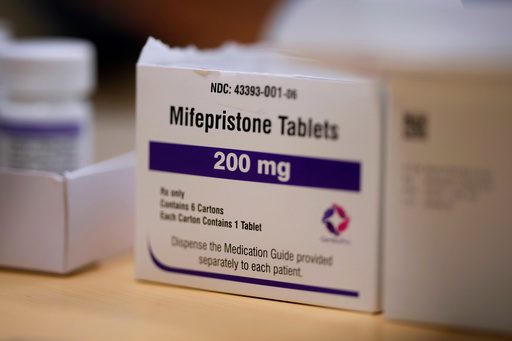
On Monday, Justice Samuel Alito’s single-page order effectively reinstated broad access to mifepristone, the first of a two-drug regimen central to medication abortions. This means, for now, women nationwide can still obtain the pill via telehealth consultations, through the mail, or directly from pharmacies — modalities a federal appeals court had sought to curtail just days prior. But don’t mistake this for calm waters; it’s merely a brief eddy in a tempestuous sea, an acknowledgment that something needed to be done before the legal chaos engulfed the entire healthcare landscape, if only for another week.
The stakes are consequential. Medication abortions now account for nearly two-thirds of all abortions in the U.S., a figure underscored by the Guttmacher Institute’s latest data, marking a profound shift in reproductive healthcare post-Roe v. Wade. Its availability has been a critical bulwark against the sweeping bans enacted by many Republican-led states, offering a crucial, if often challenging, pathway to care for those in increasingly restrictive environments.
And so, Louisiana’s aggressive legal maneuver to restrict mifepristone access, asserting its availability undermined their state’s prohibitions, now hits a temporary wall. But the legal battle’s long game is far from over. Still, for those on the front lines of reproductive advocacy, the temporary halt provides a vital breath.
“This temporary stay offers a crucial lifeline to millions, but it doesn’t mask the underlying judicial assault on women’s autonomy,” opined Senator Elizabeth Warren (D-Mass.), a vocal proponent of abortion rights, in a statement to Policy Wire. “We’re not celebrating; we’re regrouping for the fight ahead, a fight for fundamental rights that shouldn’t be up for judicial debate.”
📄 POLICY WIRE WHITEPAPER PUBLISHED: PAKISTAN'S NATIONAL SECURITY POLICY PRIORITIES
👉 READ BY CLICKING HEREOn the opposing side, the sentiment was one of disappointment, yet also resolve. “We’re gravely disappointed by this judicial overreach, which prioritizes convenience over the sanctity of life,” shot back Marjorie Dannenfelser, president of Susan B. Anthony Pro-Life America. “The Supreme Court has simply delayed the inevitable. Our legal system will ultimately uphold protections for the unborn, and we’ll continue our relentless advocacy for a nation where every life is cherished.” Their unwavering stance highlights the intractable nature of this ideological schism.
Behind the headlines, this legal dance isn’t just about a pill; it’s about the very architecture of federal power, state sovereignty, and the ongoing interpretation of rights in a deeply fractured nation. It’s also a mirror to global conversations. The precariousness of women’s healthcare access, and the politicization of medical science, isn’t lost on observers in countries like Pakistan, for instance, where debates over women’s bodily autonomy — albeit framed by different cultural and religious lenses — remain fiercely contested. The echoes of such foundational struggles resonate, even across vastly disparate geopolitical landscapes, underscoring a universal tension between individual liberty and state control, particularly concerning female bodies. It’s a complex, multifaceted issue, isn’t it?
What This Means
This temporary injunction, while celebrated by pro-choice advocates, doesn’t resolve the core legal quandary. It simply kicks the can down the road, buying the Supreme Court more time to deliberate the complexities of a lower court’s expansive ruling that sought to override decades of FDA approval processes. Politically, it buys the Biden administration a fleeting reprieve from having to immediately contend with a nationwide disruption to medication abortion access, just months before a pivotal election. Economically, unrestricted access to mifepristone reduces the cost and logistical burden of abortion care, particularly for low-income individuals in states with few clinical options. But the underlying legal vulnerability remains. The manufacturers’ emergency appeals demand the high court directly address whether a federal judge has the authority to revoke or restrict the FDA’s scientific determinations. Expect a renewed push from both sides, particularly from Democratic-led states attempting to fortify their legal protections for providers and patients. This isn’t the end; it’s merely the end of the beginning of this particular judicial chapter.