


Israel’s Aerial Gambit: Billions Committed to US Jets, Reshaping Mideast Skies
POLICY WIRE — Tel Aviv, Israel — The quiet hum of financial commitment, rather than the roar of jet engines, echoed through the corridors of power this week, as Israel’s cabinet sanctioned a...

POLICY WIRE — Tel Aviv, Israel — The quiet hum of financial commitment, rather than the roar of jet engines, echoed through the corridors of power this week, as Israel’s cabinet sanctioned a multi-billion-dollar procurement of advanced combat aircraft from the United States. It’s a move that, beneath the veneer of national security, reveals a high-stakes economic experiment, locking a nation into decades of technological dependency and astronomical maintenance costs.
While headlines trumpet the bolstering of Israel’s already formidable air force, the true story isn’t just about stealth capabilities or aerial supremacy. No, it’s about cementing a strategic partnership, deepening an industrial symbiosis, and sending an unmistakable signal across a perpetually fractious region. And it isn’t cheap, mind you.
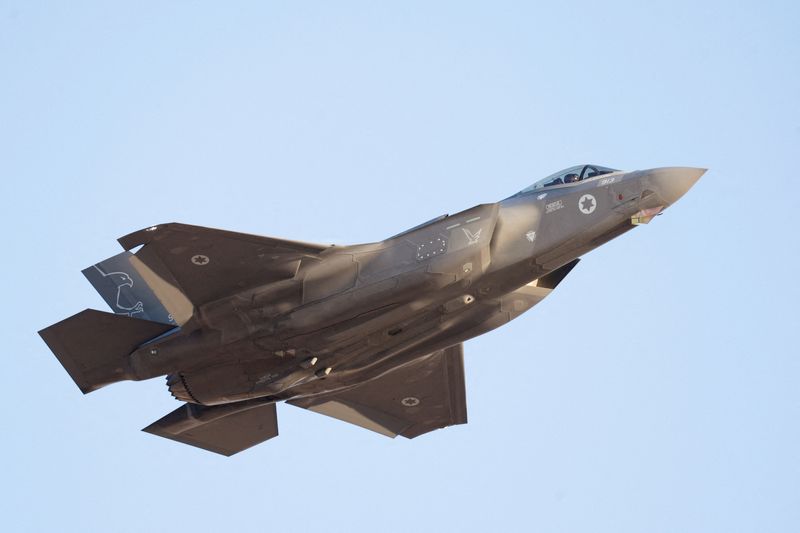
The deal, encompassing additional squadrons of Lockheed Martin F-35 ‘Adir’ stealth fighters and advanced Boeing F-15IA (a localized variant of the F-15EX) multirole jets, solidifies Israel’s qualitative military edge (QME)—a doctrine zealously guarded by both Jerusalem and Washington. The precise number of aircraft and the final price tag remain subject to negotiation and congressional oversight, but defense industry analysts familiar with similar procurements estimate the combined acquisition could easily surpass $6 billion, funded significantly by U.S. military assistance, as reported by outlets like Defense News.
But what does this colossal investment truly signify? For some, it’s a pragmatic necessity. “This isn’t merely an acquisition; it’s a strategic bulwark, ensuring our qualitative military edge remains insurmountable against any emerging threat,” asserted Israeli Defense Minister Yoav Gallant, his voice betraying a steely resolve during a recent press briefing. He’s not wrong; the region isn’t exactly teeming with doves.
Still, the transaction isn’t without its critics, who point to the substantial drain on public coffers and the potential for an accelerated regional arms race. At its core, the procurement solidifies Israel’s air power superiority for the foreseeable future, particularly against adversaries like Iran, whose own conventional air force is largely composed of aging platforms. The F-35, with its fifth-generation stealth and sensor fusion, and the F-15IA, renowned for its payload capacity and range, offer a complementary punch. They’ve got capabilities that – let’s face it – most nations only dream of.
Behind the headlines, this also represents a considerable boon for U.S. defense contractors. It’s a testament to the enduring relationship between the two nations, one that frequently intertwines strategic imperatives with commercial interests. “The United States remains unequivocally committed to Israel’s security, and this procurement underscores that enduring partnership, bolstering regional stability through robust deterrence,” remarked State Department spokesperson Matthew Miller in Washington, emphasizing the long-term strategic alignment. He’s toeing the party line, naturally, but it’s true enough.
📄 POLICY WIRE WHITEPAPER PUBLISHED: PAKISTAN'S NATIONAL SECURITY POLICY PRIORITIES
👉 READ BY CLICKING HEREWhat This Means
The immediate political implication is a clear reaffirmation of Israel’s unwavering focus on maintaining military dominance in a volatile neighborhood. It signals to adversaries—chiefly Iran and its proxies—that any escalatory ambitions will be met with overwhelming air power. Economically, while the deal is largely underwritten by U.S. foreign military financing, it still represents a substantial allocation of resources, which could otherwise be directed toward pressing domestic needs. This is the brutal economics of national security, where abstract threats often trump tangible social investments.
And for the broader Muslim world — and South Asia? The ripple effects are subtler but no less significant. While direct engagement with Israel is limited for many, the continuous upgrading of Israel’s military capabilities contributes to a pervasive sense of strategic imbalance. Nations like Pakistan, navigating their own complex security landscape and often viewing regional power dynamics through a different lens, will undoubtedly take note. It’s not just about one nation’s defense; it’s about the ever-shifting tapestry of regional influence and the perceived necessity for counter-balancing capabilities.
The deal could, inadvertently, spur other regional powers—particularly wealthy Gulf states—to accelerate their own advanced weapons acquisitions, potentially escalating an already tense arms race. Every such transaction contributes to global narratives and policy echos, shaping perceptions of who holds the strategic cards. So, while Tel Aviv and Washington celebrate a deepened alliance, the rest of the world watches, calculating its own next move in this perpetual geopolitical chess match.