


The Perilous Plateau: When Sports Stars Mirror National Economic Anxieties
POLICY WIRE — Seattle, USA — It’s often the silence, not the roar, that truly reverberates. When a talent, once lauded as ascendant, finds his output suddenly muted, the clamor of past triumphs...

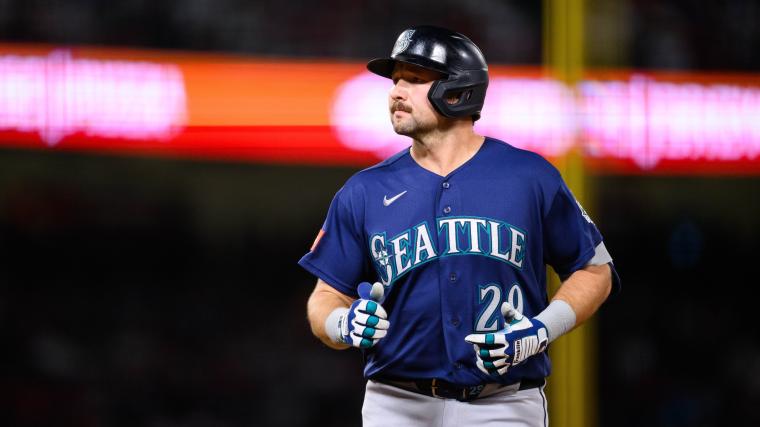
POLICY WIRE — Seattle, USA — It’s often the silence, not the roar, that truly reverberates. When a talent, once lauded as ascendant, finds his output suddenly muted, the clamor of past triumphs can morph into a whisper of current unease. Such is the precarious perch of Seattle Mariners catcher Cal Raleigh, whose early-season performance has, rather unexpectedly, become a de facto barometer for the fragile psychology of high-stakes investment and the often-unforgiving calculus of public expectation.
No, this isn’t merely about a slugger’s batting average, though his anemic .205 currently offers a stark contrast to last year’s heroics. It’s about the inherent fragility of outsized expectations themselves—how they’re built, how they shatter, and the subsequent ripple effects across an organization, an industry, and indeed, a broader societal narrative focused on quantifiable success. Raleigh, nicknamed ‘Big Dumper’ for his powerful swing, had been penciled in as a cornerstone, an almost geopolitical linchpin for a franchise desperate to escape decades of postseason drought. Now, the blueprint seems smudged, if not entirely redrawn.
Behind the headlines — and the casual fan’s lament, a more profound narrative unfolds. Sports, after all, are but a hyper-stylized microcosm of larger economic — and social forces. We invest heavily—financially, emotionally—in human capital, whether it’s a star athlete, a tech wunderkind, or a nation’s burgeoning industrial sector. And when that investment yields less than projected returns, the questions don’t just concern the individual; they encompass the entire framework of forecasting, risk assessment, and resource allocation.
But how, one might ask, does a baseball player’s early slump even register on the policy radar? Consider the multi-million dollar contracts, the public funds often tied to stadium deals, the civic pride linked to team success—it’s a massive, tangible economic ecosystem. General Manager Jerry Dipoto, often praised for his data-driven approach, probably isn’t losing sleep over Raleigh’s temporary struggles, but he’s certainly managing the optics. "We invest in talent for the long haul," Dipoto asserted recently, his voice betraying a hint of carefully modulated assurance. "Cal’s trajectory is still ascending, even if the short-term optics suggest otherwise. Patience isn’t just a virtue; it’s a strategic necessity in player development—and frankly, in any substantial economic venture." His words echo the sentiment of many a CEO facing quarterly pressures on a long-term strategic plan.
And then there’s the psychological toll. ESPN’s David Schoenfield, in a piece that kicked off much of this discourse, noted Raleigh’s early season struggles saw him hit a paltry .145 through his first 18 games, a stark regression from his previous year’s form. It’s a statistic that, while improving, still hangs like a specter. That kind of intense, often unforgiving public scrutiny isn’t unique to American baseball. In nations like Pakistan, where cricket holds near-religious fervor, national heroes face similar—perhaps even more visceral—pressure, with their every performance becoming a de facto referendum on national pride and investment. The weight of expectation, whether on a pitch or a diamond, can be crushing, irrespective of longitude or latitude.
📄 POLICY WIRE WHITEPAPER PUBLISHED: PAKISTAN'S NATIONAL SECURITY POLICY PRIORITIES
👉 READ BY CLICKING HEREThe Mariners, currently holding a respectable 14-16 record and hovering near a wild card spot, know their season isn’t defined by one player’s start. But the perceived disappointment of Raleigh, who some analysts had pegged for an MVP-caliber year, underscores a universal truth about human performance: consistency is elusive, and the journey to greatness is rarely linear. "The sophomore slump isn’t a a myth; it’s a crucible," shot back veteran baseball analyst Sarah Langs. "Raleigh soared last year, creating an almost impossible benchmark. Now, every swing is scrutinized against an idealized past, not his inherent skill. It’s a narrative that plagues many an emerging star across various fields." It’s a classic case of rising expectations often leading to perceived failure, even if the current output remains above average for the position.
Still, the market doesn’t care about narratives. It cares about numbers. And Cal Raleigh’s numbers—his .707 OPS, his 7 home runs and 17 RBIs—aren’t quite living up to the promissory notes issued last autumn. This isn’t just a sports story; it’s a case study in the capricious nature of human capital in a hyper-capitalist world, where past success sets an often insurmountable precedent for future evaluation. It’s why organizations meticulously craft strategies for talent retention and performance management, knowing that a single investment can sway fortunes.
What This Means
At its core, the Cal Raleigh situation encapsulates the broader policy challenge of managing expectations and investments in high-performing individuals within a public sphere. Economically, a player’s perceived underperformance can impact merchandise sales, ticket revenues, and future contract negotiations—a multi-million dollar ripple. From a talent management perspective, it highlights the need for robust support systems that acknowledge the psychological pressures alongside physical demands. Policy-wise, it forces a reckoning with how public and private entities evaluate and mitigate risk in human capital ventures, particularly when the ‘product’ is a person whose value fluctuates not just with skill, but with sentiment. It’s a nuanced dance between statistical reality and the often-unreasonable demands of a voracious market, a dynamic not confined to the baseball diamond but ubiquitous across industries that rely on exceptional human endeavor for their very existence. The lessons here aren’t just for general managers; they’re for anyone investing in talent, be it in Silicon Valley or Islamabad.