
Albuquerque’s Civic Plaza: A Spiritual Anchor in a Fractured Nation’s Public Square
POLICY WIRE — Albuquerque, New Mexico — In a national landscape perpetually fissured by ideological fault lines and the relentless clangor of political discourse, Albuquerque is...

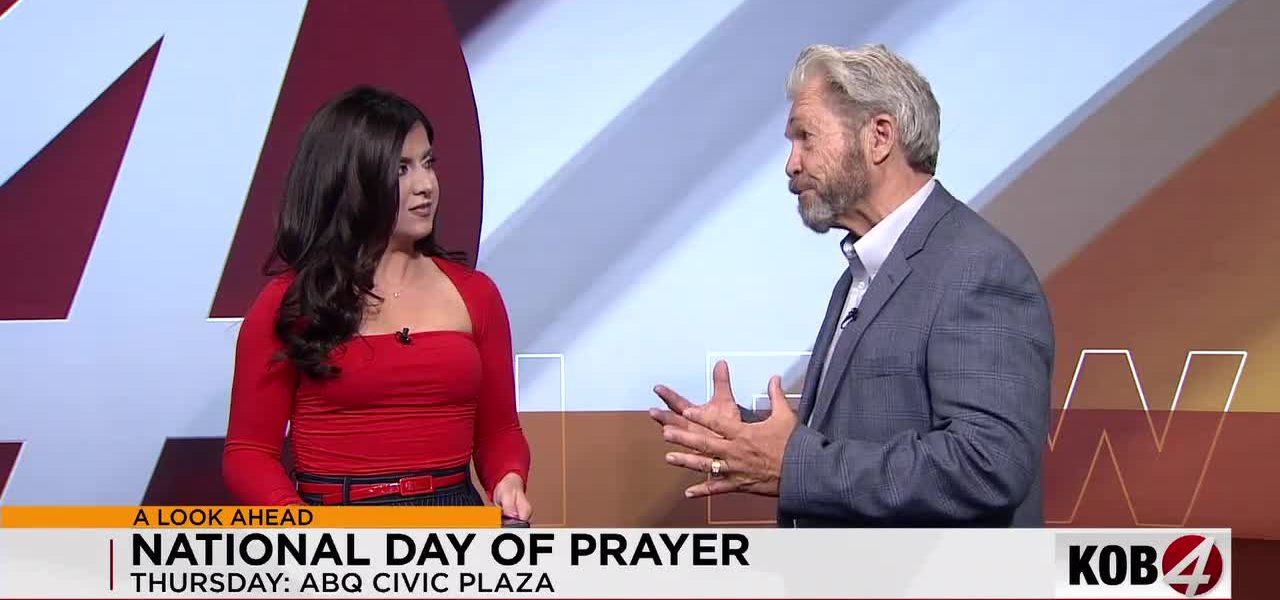
POLICY WIRE — Albuquerque, New Mexico — In a national landscape perpetually fissured by ideological fault lines and the relentless clangor of political discourse, Albuquerque is attempting to carve out a singular moment of collective introspection. Not with another protest, nor a policy debate, but by transforming its prosaic Civic Plaza into a temporary sanctuary for interfaith prayer. This Thursday, what’s ostensibly a local ‘National Day of Prayer’ service aims to transcend mere religious observance, seeking to knit together disparate community threads through shared spiritual aspiration.
It’s an audacious gambit, really. While cities across the country grapple with the cacophony of modern life, the Duke City opts for a collective hush, inviting residents of New Mexico’s diverse tapestry to converge, from 6-7:30 p.m., under a banner of universal spirituality. At its core, the event strives to foster what many believe is a dwindling commodity: genuine communal cohesion. And it’s not just about solemnity; earlier in the day, from 4 p.m., a kids’ zone, food trucks, and even a skate competition will precede the main spiritual event. A pragmatic blend of piety — and pacification, one might observe.
Local officials are predictably sanguine about the initiative. But they’re also keenly aware of the symbolism. “In a time when headlines scream division, our city is deliberately carving out a space for profound unity,” remarked Mayor Tim Keller, a visible proponent of the gathering. “This isn’t just about faith; it’s about fostering the kind of communal resilience Albuquerque desperately needs.” It’s a sentiment that, while perhaps boilerplate for civic leaders, resonates differently when set against the backdrop of an increasingly polarized public sphere.
Still, the notion of an ‘all-faiths’ prayer often invites skepticism — and sometimes, outright theological discomfort — from those who see religious practice as fundamentally distinct. Yet, proponents argue the underlying commonality of seeking connection, solace, or purpose provides sufficient ground for convergence. “To gather in prayer, regardless of our distinct paths, speaks to a fundamental human yearning for peace—a sentiment deeply understood in Muslim communities worldwide, from Fez to Faisalabad,” explained Imam Tariq ibn Zahir of the Albuquerque Islamic Center. “It’s a reminder that common grace often transcends political borders, echoing the multi-faith traditions often seen flourishing across the subcontinent, where diverse spiritual practices coexist, if not always without friction, then with a shared understanding of spiritual pursuit.” His observation subtly reminds us that while this might feel novel in some Western contexts, such syncretic impulses have deep roots elsewhere.
And the numbers hint at why such events hold an appeal. A 2021 study by the Public Religion Research Institute (PRRI) found that nearly 60% of Americans believe it’s important for people of different faiths to work together on social issues. This statistic underscores a public appetite for collaboration that often belies the more adversarial narratives dominating media cycles. It’s a pragmatic recognition that despite theological differences, shared values — and shared problems — require collective action.
But can a skate competition — and some food trucks truly pave the way for spiritual harmony? The organizers certainly hope so. New Mexico’s weatherman, Mr. Steve Stucker, is even lending his familiar face to promote the event, suggesting a broader, almost folksy, appeal beyond strictly religious circles. It’s an attempt to make spirituality accessible, even palatable, to a population that might otherwise shy away from overt religious messaging.
📄 POLICY WIRE WHITEPAPER PUBLISHED: PAKISTAN'S NATIONAL SECURITY POLICY PRIORITIES
👉 READ BY CLICKING HEREWhat This Means
Behind the headlines of goodwill and communal solidarity, the Albuquerque prayer event carries several layers of political and civic implication. For city leadership, hosting such an inclusive event isn’t merely a matter of piety; it’s a shrewd exercise in soft power. It projects an image of a tolerant, forward-thinking municipality — a welcome counter-narrative to the often-grim portrayals of urban challenges. It’s also an unspoken challenge to the growing trend of secularization in public life, subtly asserting that faith still has a place, not just privately, but prominently in the civic square.
Economically, while a few food trucks won’t redefine the city’s GDP (they’ll certainly contribute to a lively atmosphere, though), the broader implication is one of stability. Cities perceived as unified — and inclusive are often more attractive to businesses and residents alike. It fosters a sense of belonging, potentially reducing social friction that can otherwise translate into tangible economic costs. For religious leaders, it offers a platform — a public affirmation of their role in community building — even as it tests their capacity for inter-denominational cooperation.
So, while the prayers may ascend to the heavens, their reverberations certainly touch down on earthly matters of governance, social cohesion, and public perception. It’s a delicate balance, trying to unify a populace through a framework that can, paradoxically, also be a source of deep division. Albuquerque’s gambit this Thursday isn’t just about faith; it’s about whether a city can momentarily transcend its inherent contradictions to find common ground, even if just for an hour and a half.