


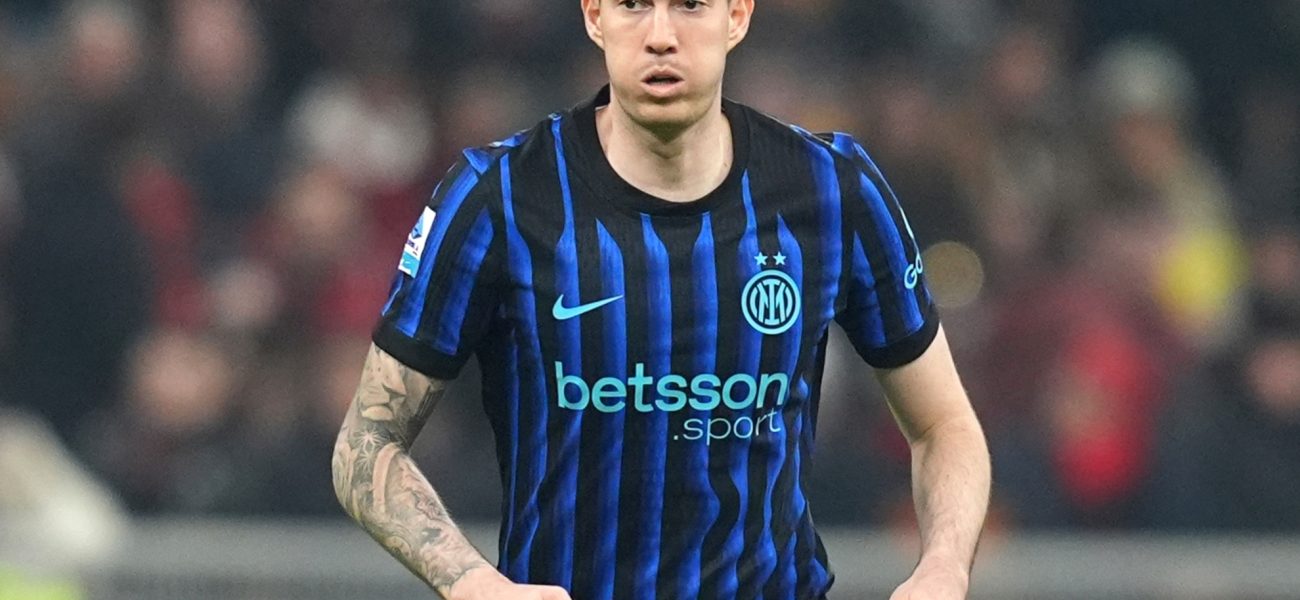
Bastoni’s Barcelona Ballet: A High-Stakes Transfer Saga Unravels in Conflicting Narratives
POLICY WIRE — Milan, Italy / Barcelona, Spain — The summer transfer window, with its ritualistic melodrama and choreographed leaks, has once again unfurled its familiar banner. This year,...

POLICY WIRE — Milan, Italy / Barcelona, Spain — The summer transfer window, with its ritualistic melodrama and choreographed leaks, has once again unfurled its familiar banner. This year, the spotlight, or perhaps the crosshairs, seems firmly fixed on Alessandro Bastoni, Inter Milan’s prodigious defender, and his putative dalliance with FC Barcelona. It’s less a negotiation, it seems, and more a tripartite theatrical production — complete with conflicting scripts, whispered motivations, and an audience unsure whether to applaud or boo the latest plot twist.
Barcelona, it’s been widely presumed, had earmarked Bastoni as the linchpin for their defensive re-armament. But Inter, custodians of the Scudetto winner, appear rather disinclined to part ways. Inter Sporting Director Piero Ausilio didn’t mince words when dismissing the burgeoning speculation. “We’ve made our position unequivocally clear: Bastoni isn’t for sale. We haven’t entertained any proposals, nor do we intend to. He’s integral to our plans, period,” Ausilio shot back, silencing, for a fleeting moment, the rumour mill. This wasn’t some novel stance, mind you; it’s been their consistent refrain. And Giuseppe Marotta, the club’s esteemed President, later softened the hardline just enough to acknowledge a certain reality, yet without yielding an inch of ground.
“I don’t deny that FC Barcelona is interested in him, but for now it’s a very superficial interest and there’s no basis for talking about anything else at this time. As we’ve always said, the player will only leave if he expresses that desire himself. For now, he’s our player, he wants to stay, and we’re happy with him,” Marotta conceded, painting a picture of Bastoni as a contented, indispensable asset.
Still, reports emanating from Catalonia tell a considerably divergent story. Barcelona, the narrative suggests, isn’t just interested; they’re exasperated. Their strategy, apparently, hinged on Bastoni forcefully agitating for an exit from San Siro, a move designed to deflate Inter’s demanding valuation. Without this internal pressure, the Blaugrana’s financial dexterity remains, shall we say, significantly constrained. Another Catalan daily sketches a slightly different tableau: Bastoni and Barcelona have actually advanced on personal terms, the player merely awaiting an official bid before unleashing his personal appeal to Inter. He’ll consider only Barcelona, they claim.
So, why the holdup? Barcelona, it appears, has politely informed the defender that other priorities — primarily, a marquee number nine striker — demand their immediate budgetary solicitude. It’s a precarious balancing act, isn’t it? The club’s notoriously complex financial situation, with a gross debt reportedly still hovering north of €1 billion as of early 2023 (source: Deloitte Football Money League report, citing club disclosures), inevitably dictates such difficult choices. Meanwhile, Italian broadsheets offer yet another twist: Bastoni, post-Scudetto glory, is reportedly experiencing a profound change of heart. The allure of Milan, the adoration of the tifosi, the tangible success — it’s all giving him pause. He’d decided on Barcelona, now he’s not so sure. Talk about a dizzying carousel of conjecture.
📄 POLICY WIRE WHITEPAPER PUBLISHED: PAKISTAN'S NATIONAL SECURITY POLICY PRIORITIES
👉 READ BY CLICKING HEREThis continental dance of desire — and constraint isn’t merely confined to the European theatre, though. The elaborate machinations of the transfer market, the high-stakes poker between global footballing behemoths, they resonate far beyond the Mediterranean. In bustling metropolises from Karachi to Dhaka, millions avidly follow these sagas. They don’t just consume the sport; they invest emotionally in the brands, the triumphs, and the occasional transfer quagmire. The aspirations represented by clubs like Barcelona, their enduring prestige, become potent cultural currency in regions like South Asia, where football’s global reach continues to expand at a relentless pace. (It’s a peculiar mirror to global economic power, really.)
What This Means
At its core, this Bastoni imbroglio isn’t merely about a talented defender changing clubs; it’s a microcosm of the contemporary football economy — a high-wire act where fiscal prudence clashes dramatically with boundless ambition. For Barcelona, it underscores the persistent, vexing challenge of rebuilding a squad under the long shadow of past fiscal profligacy. They’re on a transfer tightrope, balancing immediate sporting needs with the stringent demands of Financial Fair Play. Missing out on a top target like Bastoni, despite apparent mutual interest, signals a harsh reality: even for football’s traditional aristocracy, money talks, and sometimes, it says ‘not yet’. For Inter, it’s a testament to the growing strength of Serie A, perhaps, but also a stark reminder that retaining prized assets often requires more than just sentiment; it demands competitive wages and compelling sporting projects. Still, this saga, with its intricate web of conflicting reports, also highlights the increasingly performative nature of modern transfer negotiations — a public relations battle fought as fiercely as any on the pitch. Behind the headlines, there’s a careful calibration of player power, club leverage, and media manipulation, all designed to secure the most advantageous outcome.
So, as the European summer warms, the Bastoni narrative remains stubbornly unresolved. Will he stay, lured by the comfort of Milanese success? Will he go, driven by the siren call of Catalonia, even if Barcelona can’t quite afford the full orchestra? One thing’s for certain: this particular transfer drama, like so many others, isn’t likely to conclude without a few more bewildering twists and turns. We’re all just waiting for the final curtain.