


Giuliani’s Precipitous Fall: From ‘America’s Mayor’ to Hospital Bed Amidst Legal Turmoil
POLICY WIRE — New York, United States — The news landed with a quiet thud, barely registering amidst the cacophony of a relentless news cycle: Rudy Giuliani, once the undisputed...

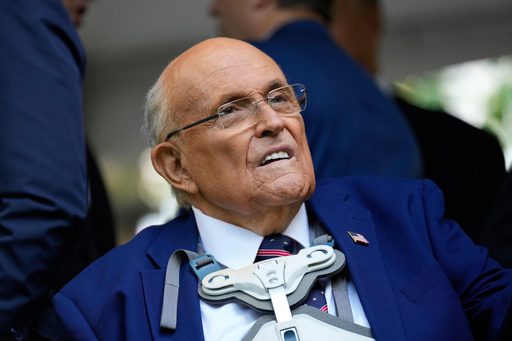
POLICY WIRE — New York, United States — The news landed with a quiet thud, barely registering amidst the cacophony of a relentless news cycle: Rudy Giuliani, once the undisputed ‘America’s Mayor,’ now reportedly clinging to a critical but stable condition in a hospital bed. It’s an endnote, perhaps, to a career defined by dizzying ascents and an equally precipitous decline, a narrative arc that’s both Shakespearean in its tragedy and distinctly American in its self-destruction.
His spokesman, Ted Goodman, offered little beyond the barest facts — the 81-year-old former federal prosecutor is in critical but stable condition. Don’t ask about the ailment, the duration of his stay, or the prognosis; those details remain shrouded in the kind of strategic opacity that has come to define much of Giuliani’s latter-day public persona. But Goodman did, predictably, double down on the fighter narrative: “Mayor Giuliani is a fighter who has faced every challenge in his life with unwavering strength, and he’s fighting with that same level of strength as we speak.” One can almost hear the prepared statement’s echo chamber, can’t one?
Behind the headlines of his latest health crisis lies a saga that began to unravel long before this latest episode. Giuliani, a man whose resolute leadership after the 9/11 attacks transformed him into a national icon, has spent the better part of the last decade meticulously dismantling that legacy. He morphed from “America’s Mayor” into former President Donald Trump’s most ardent, and often most litigious, defender, spearheading election fraud claims that numerous recounts and audits demonstrably disproved.
And those legal endeavors? They’ve certainly exacted a formidable toll. A federal judge found him in contempt for failing to pay a staggering $148 million defamation judgment to two former Georgia election workers, leading to court-ordered asset scrutiny. So, while he managed to preserve his homes and even those cherished World Series rings, the legal wrangling underscored a profound reversal of fortune. It’s a long way from busting mobsters to battling creditors, isn’t it?
Still, for his most loyal adherents, Giuliani remains a martyr. “A True Warrior, and the Best Mayor in the History of New York City, BY FAR,” Trump declared on Truth Social, lamenting how “the Radical Left Lunatics, Democrats ALL — AND HE WAS RIGHT ABOUT EVERYTHING!” This sentiment, however, doesn’t resonate universally. Congressman Hakeem Jeffries (D-NY), when asked about Giuliani’s situation, shot back, “While we wish everyone good health, Mr. Giuliani’s legal travails are a direct consequence of his own choices, particularly his zealous efforts to subvert democratic processes. It’s a stark lesson in accountability, no matter one’s past accomplishments.” Such disparate views illustrate the chasm his later actions have carved through public perception.
At its core, Giuliani’s story is one of profound political transformation — and a cautionary tale about the perils of unwavering loyalty in the nation’s highest political echelons. His early political career, marked by a staunch law-and-order stance and a somewhat moderate Republicanism, saw him take on significant challenges. He ran for president in 2007, entering the race as a frontrunner buoyed by his post-9/11 popularity, only to see his campaign founder amid questions about his past support for abortion and LGBTQ+ rights, not to mention those enigmatic “business ties to the Middle East.”
📄 POLICY WIRE WHITEPAPER PUBLISHED: PAKISTAN'S NATIONAL SECURITY POLICY PRIORITIES
👉 READ BY CLICKING HEREThe Middle East, a region forever intertwined with the 9/11 attacks — the very crucible of Giuliani’s “America’s Mayor” mythos — presents an interesting parallel. The political and security landscapes of countries like Pakistan, a key American ally in the War on Terror, were irrevocably shaped by the post-9/11 era. Giuliani’s own nebulous financial and advisory roles, touching on a geography often viewed through the lens of counter-terrorism and complex diplomacy, add another layer to his checkered public record. It’s a reminder that even domestic political figures aren’t immune to the intricate web of global entanglements.
His hospitalization isn’t just a personal tragedy; it’s a symbolic punctuation mark on a political era. And it comes at a moment when the very democratic institutions he was accused of undermining remain under fierce scrutiny.
What This Means
Giuliani’s precarious health condition underscores more than just a personal crisis; it reflects a broader moment of reckoning within the Republican party and America’s political landscape. His current legal and financial vulnerabilities, epitomized by the $148 million defamation award, serve as a stark reminder for other political figures — particularly those aligned with Trump’s more aggressive tactics — that inflammatory rhetoric can carry substantial personal and economic costs. It’s not just about public opinion anymore; it’s about actual legal precedent — and financial ruin.
Economically, the saga highlights the increasing weaponization of civil litigation as a check on political speech, especially when such speech is deemed defamatory. The potential for such massive judgments could theoretically temper the most extreme public pronouncements, introducing a financial deterrent where political accountability might otherwise lag. For the Trump campaign, Giuliani’s visible decline — both in health and public standing — presents an awkward optics challenge, complicating their narrative of unwavering loyalty and strength. It implicitly asks: is this the fate that awaits those who champion controversial causes? The question hangs heavy, like the New York air before a storm.