


Real Madrid’s Eleventh-Hour Gambit: A Prolonged Title Race Fuels Global Rivalry and Economic Intrigue
POLICY WIRE — Madrid, Spain — The collective sigh of relief — or perhaps, exasperation, depending on one’s allegiance — that rippled across Catalonia this past Sunday wasn’t just about a...

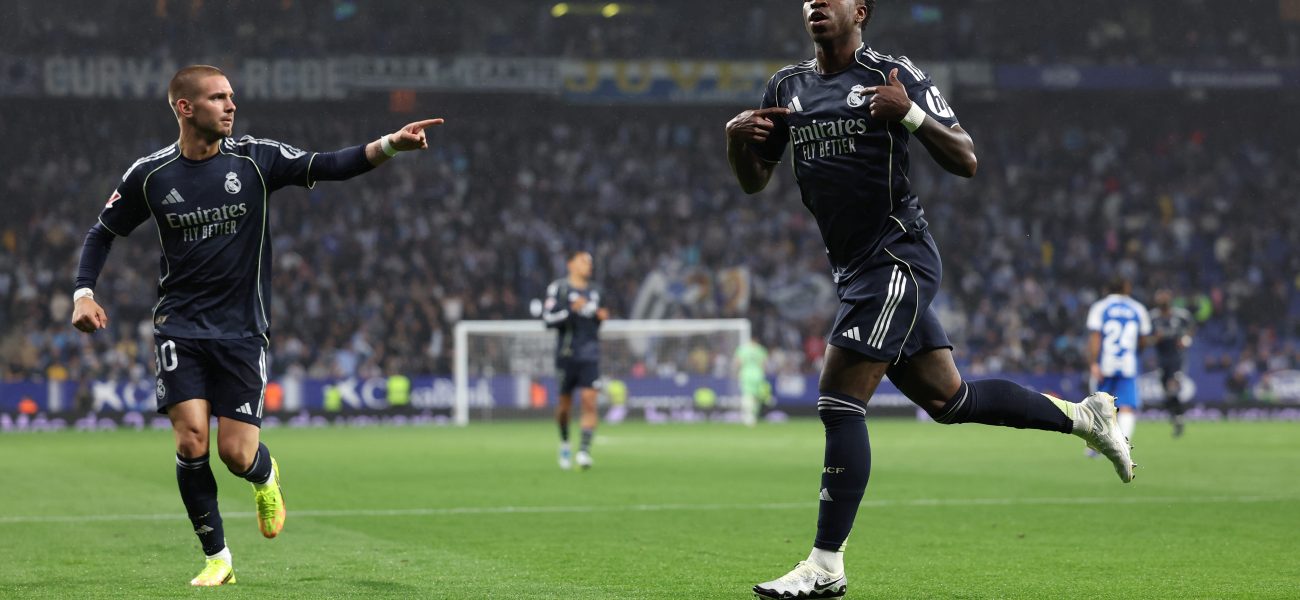
POLICY WIRE — Madrid, Spain — The collective sigh of relief — or perhaps, exasperation, depending on one’s allegiance — that rippled across Catalonia this past Sunday wasn’t just about a football match. It was a visceral reaction to Real Madrid’s gritty, if not entirely convincing, 2-0 dispatching of Espanyol. This victory, snatched from the jaws of Barcelona’s potential early coronation, ensures the Spanish La Liga title race grinds on, extending a rivalry whose economic and political undercurrents ripple far beyond the Iberian Peninsula.
Vinicius Junior, the prodigious Brazilian winger, found himself (again) at the epicenter of Madrid’s narrative. He bagged both goals, his second a dazzling one-two with Jude Bellingham that left Espanyol’s goalkeeper, Marko Dmitrovic, utterly flummoxed. But it wasn’t just Vinicius’s heroics; it was the sheer refusal of Real Madrid, under coach Álvaro Arbeloa, to yield. They’ve seen too many seasons culminate in dramatic shifts to simply lie down.
The match itself, played at the RCDE Stadium, offered moments of genuine tension amidst spells of midfield attrition. A VAR intervention, reversing an early red card for Espanyol’s Omar El Hilali after a cynical challenge on Vinicius, underscored the fine margins often dictating these high-stakes encounters. One could argue it was a reprieve, a stay of execution for a struggling side, but it certainly didn’t alter the inevitable. Madrid pressed, probed, — and eventually, prevailed.
“We weren’t just playing for three points; we were defending the integrity of a season-long fight,” asserted Arbeloa in a terse post-match conference, a faint, weary smile playing on his lips. “It’s never over until it’s mathematically done, — and our lads, they understand that implicitly. They don’t surrender. Not ever.” His words, delivered with a veteran’s gravitas, cut through the usual sports clichés.
This prolonged suspense, this deferral of the inevitable, carries significant weight. For Barcelona, the waiting game can be an anathema. They’d hoped to celebrate early, perhaps even against their fiercest rivals in the upcoming El Clásico, but Madrid’s stubbornness has complicated that narrative. “It’s a minor setback, isn’t it?” mused a board member from Barcelona, speaking off the record after the result. “We’ve faced harder obstacles. Their victory, it simply means we’ll celebrate our triumph on our own terms, perhaps with an even greater sense of accomplishment. Or, at least, that’s the party line we’re sticking to.”
And so, the stage is set for yet another climactic showdown. Real Madrid must secure another win next weekend to prevent Barcelona from clinching the title during their next encounter. The tension, already palpable, promises to escalate into a fever pitch.
📄 POLICY WIRE WHITEPAPER PUBLISHED: PAKISTAN'S NATIONAL SECURITY POLICY PRIORITIES
👉 READ BY CLICKING HEREWhat This Means
At its core, Real Madrid’s refusal to cede the title early isn’t merely about bragging rights; it’s a shrewd economic play, and perhaps, a subtle political statement. A protracted title race — especially one culminating in an El Clásico — injects millions more into the league’s coffers. Sponsorship deals, media rights, merchandise sales, and even the hospitality sector around match days all benefit immensely from extended drama. According to La Liga’s own financial reports, global viewership for El Clásico — the league’s flagship fixture — routinely surpasses 650 million, dwarfing many national sporting events. More uncertainty means more eyes, more clicks, more engagement.
Beyond the immediate financial gains, this drawn-out conflict resonates culturally, particularly in regions where European football clubs command almost religious devotion. In Pakistan, for instance, and across the broader Muslim world, millions follow these titanic clashes with an almost unshakeable fervor, their allegiances often split with fierce conviction between the two Spanish giants. This widespread passion doesn’t just manifest in viewership; it fuels a burgeoning market for sports-related technology and entrepreneurship. One can see parallels in the rise of innovators like Sualeh Asif, Pakistan’s $1.3B Mind Behind Cursor, whose ventures often tap into the global appetite for cutting-edge digital experiences surrounding sports. It’s a reminder that even a seemingly isolated football result in Spain can have surprising, far-reaching economic and technological tendrils.
Still, there’s a deeper, almost theatrical element at play. For Madrid, delaying Barcelona’s inevitable triumph offers a psychological victory, denying their rivals the satisfaction of an early, unblemished celebration. It’s a political chess match played on a global pitch, a stubborn assertion of relevance. And for Barcelona, it means the champagne, while still on ice, will taste all the sweeter when (or if) it’s finally popped after the ultimate test.