


Old Trafford’s Prodigy: The Unseen Crucible Forging a New Midfield Maestro
POLICY WIRE — Manchester, UK — The true measure of an organization’s sagacity often isn’t found in its peak performers, but in the unseen crucible where raw, unpolished talent is either...

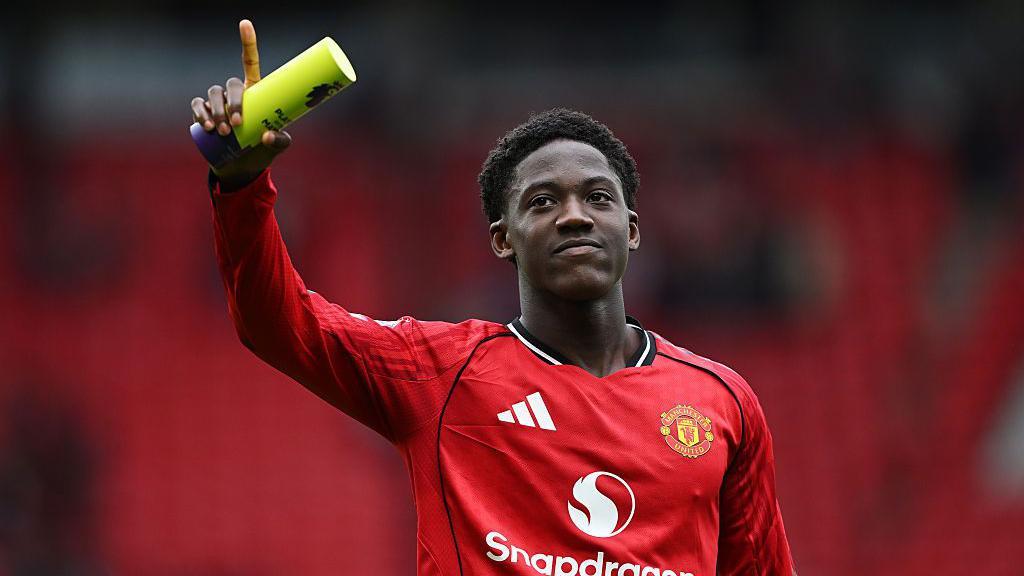
POLICY WIRE — Manchester, UK — The true measure of an organization’s sagacity often isn’t found in its peak performers, but in the unseen crucible where raw, unpolished talent is either forged into steel or left to rust. For Manchester United, and indeed for England, the ascendance of Kobbie Mainoo—a midfielder whose understated brilliance has suddenly become undeniable—speaks volumes about the precarious alchemy of youth development in a hyper-pressurized sporting ecosystem. It’s less a meteoric rise than a carefully managed, albeit often turbulent, cultivation process.
Mainoo’s recent trajectory, culminating in a fresh contract and a return to the senior England squad, isn’t merely a tale of individual prowess. No, it’s a compelling narrative woven through shifts in managerial disposition and a renewed organizational conviction in homegrown assets. He didn’t just “hit form”; he was permitted, then propelled, into a role that demanded conviction, a belief his former handlers evidently withheld. His self-belief, now palpable on the pitch, wasn’t spontaneously generated; it was meticulously instilled — and crucially, validated — by those willing to gamble on a burgeoning potential.
At its core, this isn’t just about a 19-year-old making good; it’s a stark reminder of how leadership’s faith — or its absence — can dictate the fate of millions in human capital. “Kobbie’s evolution isn’t merely about individual brilliance; it’s a testament to our steadfast belief in nurturing raw, homegrown aptitude,” Manchester United manager Erik ten Hag shot back recently when queried about the midfielder’s impact. “He’s embodied the fighting spirit we demand, proof that our long-term vision for this club — one rooted in academy success — is bearing fruit.” It’s a sentiment underscoring the philosophical pivot at Old Trafford’s shifting sands, where tactical redemptions are increasingly predicated on the emergence of such talents.
Still, the journey hasn’t been without its tortuous bends. For a period, commentators and even ardent supporters weren’t entirely certain of Mainoo’s definitive positional identity — was he a deep-lying orchestrator (the ‘six’) or a box-to-box dynamo (the ‘eight’)? His current exploits suggest a masterful synthesis, a player capable of shielding the defense with astute interceptions while possessing the audacious vision to surge forward, culminating in decisive contributions, as evidenced by his recent goal-scoring exploits. That tactical clarity, however, required explicit guidance — a guiding hand that only truly manifested itself with consistent game time.
And his performances haven’t gone unnoticed on the grander stage. England manager Gareth Southgate, known for his methodical approach to squad selection, has already signaled Mainoo’s importance. “The international stage demands an unflappable temperament. Mainoo possesses a maturity beyond his years, a quality that makes him a compelling proposition as we strategize for future tournaments,” Southgate confided to reporters, hinting at the trust already placed in the youngster. This isn’t just a nod to potential; it’s a strategic acknowledgment of immediate readiness.
📄 POLICY WIRE WHITEPAPER PUBLISHED: PAKISTAN'S NATIONAL SECURITY POLICY PRIORITIES
👉 READ BY CLICKING HEREBeyond the hallowed turf of English stadiums, Mainoo’s trajectory resonates globally. In nations across South Asia — from Karachi to Dhaka — where the Premier League’s viewership figures are skyrocketing, tales of academy graduates breaking through offer potent inspiration. Young hopefuls, often from challenging backgrounds, see in Mainoo a reflection of their own aspirations, a tangible pathway to global recognition and economic mobility — a “dream factory” that transcends geographical boundaries. It’s a soft power projection that governments would envy.
This calculated gamble on youth isn’t unique to football, nor is it without substantial financial underpinning. According to a 2023 report by the CIES Football Observatory, academy graduates collectively contributed an estimated €1.2 billion in transfer fees to Europe’s ‘Big Five’ leagues over the past decade, underscoring the immense economic value of successful youth development. It’s a return on investment that speaks directly to the global pursuit of unpolished talent, where the payoff for meticulous nurturing can be truly staggering.
What This Means
Mainoo’s narrative extends beyond mere sporting triumph; it offers a compelling case study in human capital management and the profound impact of organizational leadership. Economically, his rise significantly enhances Manchester United’s asset value, demonstrating that strategic investment in youth academies can yield substantial dividends, both on the balance sheet and the pitch. Politically, the ‘local lad done good’ story provides a powerful unifying symbol, fostering community pride and national identity, especially crucial in an era of fragmented allegiances. his success underscores a broader policy imperative: the critical need for structured pathways that allow latent talent to flourish, particularly in fields that require intensive, long-term development. When institutions foster an environment of belief and opportunity, the results — whether in sport, science, or public service — can redefine expectations and inspire an entire generation, proving that sometimes, the most consequential policies are those that simply empower potential.