

Germany’s Pitch of Peril: Complacency Costs Dortmund, Relegation Looms for St. Pauli’s Utopian Dream
POLICY WIRE — Mönchengladbach, Germany — Sometimes, the most telling narratives in sport aren’t spun from triumphs, but from moments of profound, almost existential relief —...

POLICY WIRE — Mönchengladbach, Germany — Sometimes, the most telling narratives in sport aren’t spun from triumphs, but from moments of profound, almost existential relief — or creeping, fatalistic dread. Such was the tableau unfolding across Germany’s Bundesliga pitches this past Sunday. It wasn’t the expected dominance of a European titan that captured attention, but rather the desperate, last-gasp scramble of a mid-table outfit securing its solvency and the increasingly dire straits of a club whose very existence challenges football’s commercial leviathans.
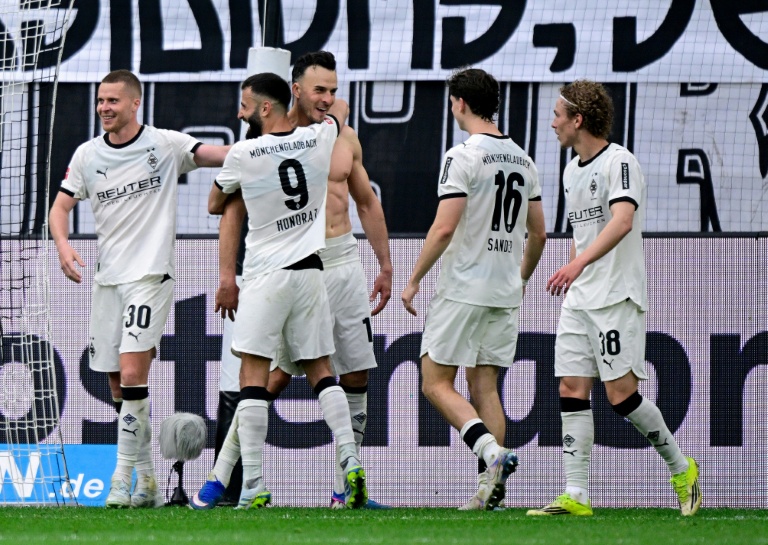
Borussia Mönchengladbach, in a stunning, eleventh-hour repudiation of their season’s inconsistency, clawed their way to a 1-0 victory over Borussia Dortmund. Haris Tabakovic, the Swiss-Bosnian forward, became the unlikely architect of Gladbach’s salvation, his late strike — initially ruled out, then validated by the glacial certainty of VAR — guaranteeing another season in Germany’s top flight. For Gladbach, the goal wasn’t just three points; it was a lifeline, a reprieve from the precipice of financial contraction that relegation inevitably brings. And it’s this razor’s edge that often defines survival in modern football, doesn’t it?
Dortmund, meanwhile, exhibited a lassitude that bordered on the theatrical. Already assured of their Champions League berth for next season, they played with the air of a side counting down the minutes to their summer holidays. Their attack remained inert, anemic even, against a Gladbach team whose every sinew strained for victory. Coach Niko Kovac didn’t mince words following the defeat. "It wasn’t just poor; it was frankly embarrassing," he shot back to DAZN, his voice tight with barely suppressed fury. "Gladbach were ravenous, they had bite — they played like their very livelihoods depended on it, because they did. It certainly looked like ours didn’t. The defeat was, unfortunately, entirely justified." It’s a stark reminder that even guaranteed riches don’t inoculate against the corrosive effects of complacency.
Still, the stakes were markedly different for St. Pauli. The cult club, with its fiercely independent fanbase and anti-establishment ethos, found themselves staring directly into the abyss after a 2-1 defeat to Mainz. Goals from Phillip Tietz — and Phillipp Mwene pushed Mainz to safety, but for St. Pauli, it meant sinking further into the relegation play-off spot. They’re now just one point ahead of Wolfsburg, themselves in an automatic drop zone, with only two matchdays remaining. The club — which spent much of its storied history toiling in the second and third tiers before their 2024 promotion — now faces a brutal fight to preserve their hard-won top-flight status. It’s a cruel twist, a testament to the unforgiving nature of sporting capitalism.
St. Pauli captain Jackson Irvine articulated the crushing weight of their predicament. "We’ve got absolutely no time to dwell on these results," he declared, his usual jovial demeanour replaced by a grim determination. "We’ve got two matchdays to fight for our very life — a genuine fight, mind you — and we’ve just got to try and put in a maximum performance and, well, see what happens. It’s all we can do." His words echo the desperate struggle faced by countless institutions when facing systemic threats — a rogue wave threatening to capsize an entire enterprise.
📄 POLICY WIRE WHITEPAPER PUBLISHED: PAKISTAN'S NATIONAL SECURITY POLICY PRIORITIES
👉 READ BY CLICKING HEREThe global appeal of German football, particularly the Bundesliga, means these dramas resonate far beyond Europe’s borders. In places like Pakistan, where millions avidly follow European leagues, the fortunes of teams like Dortmund or the heroic, last-minute efforts of players like Tabakovic — whose surname hints at a rich, diverse heritage — provide moments of shared excitement, transcending geographical and cultural divides. It’s a testament to football’s pervasive cultural diplomacy, its ability to connect disparate communities through shared passion.
What This Means
At its core, Sunday’s outcomes underscore a perennial truth in competitive arenas, be they sporting or geopolitical: complacency is a luxury few can afford, and desperation often births the most potent force. Dortmund’s languid performance, despite their established pedigree — they’ve secured second place behind Bayern Munich five times in the last eight seasons, according to Bundesliga archival data — serves as a cautionary tale for any entity that believes past laurels guarantee future success. A lack of acute pressure can lead to a decline in strategic sharpness and tactical execution, much like a dominant political party might lose its edge without a robust opposition.
Conversely, Gladbach’s improbable surge, driven by the existential threat of relegation, illustrates the galvanizing power of necessity. Their survival ensures continued access to substantial broadcast revenues, global sponsorship deals, and the prestige crucial for attracting talent. For St. Pauli, the threat of relegation isn’t just about sporting disappointment; it’s an economic cataclysm. Dropping a division means a drastic reduction in income, a loss of marketability, and a potential exodus of key players. This mirrors the precarious existence of smaller states or niche industries fighting for relevance against larger, more established powers, where a single misstep can trigger a cascade of adverse effects. Their battle is not merely for points, but for economic viability, a fight against the shifting sands of modern finance that define top-tier competition. It’s a ruthless ecosystem, this football business, — and it doesn’t suffer romantics lightly.