Bullet at the Ball: Pirro’s Stark Claim Ignites Security Firestorm Post-WHCA Gala
POLICY WIRE — Washington D.C., United States — The clink of champagne glasses, the forced laughter, the ritualistic self-congratulation of Washington’s Fourth Estate and its political masters — it...

POLICY WIRE — Washington D.C., United States — The clink of champagne glasses, the forced laughter, the ritualistic self-congratulation of Washington’s Fourth Estate and its political masters — it all dissolved into a chilling whisper when news filtered out: a Secret Service agent, wounded. Not on some distant battlefield, nor during a high-stakes motorcade, but at the glittering heart of the White House Correspondents’ Association dinner. A bullet, we’re told, ended the evening’s fleeting illusion of normalcy.
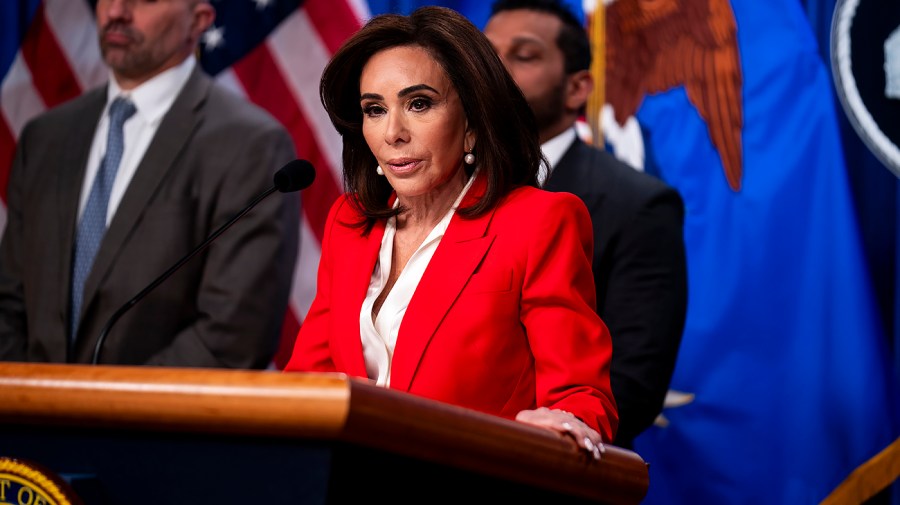
But whose bullet? That’s the question currently ricocheting through the capital’s echo chambers. And Judge Jeanine Pirro, Fox News firebrand, hasn’t just offered an opinion; she’s shot back with an unqualified declaration. This projectile, she asserted on air, wasn’t an errant ricochet or a tragic accident. No, she concluded, it was ‘definitively’ fired by a gunman, casting a stark, unsettling shadow over an event usually reserved for self-deprecating humor and veiled political jabs.
Her pronouncement cuts through the usual bureaucratic ambiguity like a scalpel. It bypasses ongoing investigations, sidesteps official caution, and thrusts a singular, incendiary narrative into the public discourse. Such certainty, in the aftermath of an incident still shrouded in official opacity, invariably invites scrutiny – and often, political opportunism. It’s not just a bullet; it’s a talking point, a lever for framing a broader story about national vulnerability and vigilance.
“This wasn’t some stray bullet, some tragic accident,” Pirro declared with characteristic vehemence. “This was a targeted attack, a direct assault on American authority. Anyone suggesting otherwise is either naive or complicit in undermining our national security.” Her words, sharp and unyielding, undoubtedly resonate with a segment of the population already primed to perceive external threats around every corner. They paint a picture of an America under siege, even at its most guarded social gatherings.
Yet, the official response has been, predictably, more circumspect. The Secret Service, an agency often operating in the quiet shadows, maintained a professional front. Special Agent Emily Thorne, a spokesperson for the Service, offered a measured counterpoint. “Our agents operate under immense pressure, protecting democracy’s very fabric. While investigations are active, we must prioritize facts over speculation. Our focus remains on the agent’s recovery and a thorough, unbiased assessment of the incident.” It’s a necessary caution, of course, but one that inevitably clashes with the immediate, visceral demands for definitive answers.
The incident itself, regardless of its ultimate provenance, serves as a jarring reminder of the precariousness even in the most secure locales. Federal spending on security details for high-level events has reportedly surged by nearly 30% over the last five years, according to a recent Congressional Budget Office analysis. And still, the breaches occur. The symbolism here is potent: if America’s political elite and its media vanguard aren’t safe at their own glittering assemblies, what does that say about the broader state of domestic security?
📄 POLICY WIRE WHITEPAPER PUBLISHED: PAKISTAN'S NATIONAL SECURITY POLICY PRIORITIES
👉 READ BY CLICKING HEREBehind the headlines, this episode reverberates far beyond the Potomac. In places like Islamabad or Karachi, where high-profile figures routinely navigate a genuine minefield of security threats, such an incident in Washington D.C. is observed with a mixture of detached concern — and morbid fascination. It underscores a shared fragility, a universal vulnerability to malevolent intent that transcends geography. It also feeds into narratives, both domestic and international, about the stability of major world powers – a concern not lost on leaders navigating their own complex security landscapes. From the Khyber Pass to the marble halls of Capitol Hill, the threat is omnipresent, merely changing its attire.
Still, the question of a ‘gunman’ adds a layer of dread. Was it a lone wolf? A coordinated plot? Or, is Pirro’s assertion a premature conclusion, designed to steer public opinion? These are the narratives battling for supremacy, shaping not just how we understand this specific event, but also how we perceive the broader threats facing the nation (and, indeed, the world).
What This Means
The immediate political implication of Pirro’s unequivocal claim is a potential fracturing of public trust in official investigations. Should the Secret Service’s eventual findings contradict her assertion, it will deepen the chasm between mainstream institutions and alternative media narratives, fueling accusations of cover-ups or incompetence. On the other hand, if a ‘gunman’ is indeed confirmed, it validates a more hawkish stance on security and could trigger a sweeping review of protocols for high-profile public events – potentially making them even more inaccessible and insulated from the public they ostensibly serve. This incident also serves as a potent reminder of how quickly global anxieties can be stirred by domestic security lapses, impacting everything from travel advisories to foreign policy discussions with allies who might view such events as indicators of internal instability.
Economically, heightened security concerns invariably lead to increased expenditure. We’re talking more agents, more technology, more surveillance. This isn’t just about the Secret Service budget; it’s about the economic ripple effects on event planning, tourism, and even the insurance industry, which will likely reassess premiums for large public gatherings. the psychological impact on attendees – the political class, the media, the celebrities – could alter the very nature of these formerly celebratory events, turning them into high-tension security zones rather than relaxed social occasions. It’s a sobering thought, isn’t it? That a bullet, real or imagined in its precise origin, can redefine an entire sector of public life.