


Dolphins’ Gridiron Gambit: Sullivan’s Stark Shift Reinvents South Florida’s Football Folly
POLICY WIRE — Miami, USA — The emerald green of the NFL draft stage shimmered under the fluorescent glare, but for the Miami Dolphins, it wasn’t about glitz or immediate gratification this...

POLICY WIRE — Miami, USA — The emerald green of the NFL draft stage shimmered under the fluorescent glare, but for the Miami Dolphins, it wasn’t about glitz or immediate gratification this year. No, this was an unapologetic, almost brutal, pivot away from the past. Forget the erstwhile reign of ‘speed kills’ and celebrity wideouts; South Florida’s perpetually sun-drenched gridiron now pledges fealty to a different, altogether more bruising, doctrine: the sheer, unyielding force of brawn and character.
It’s a bold departure, particularly for a franchise that, just seasons prior, had hitched its wagon to explosive, albeit often fragile, athleticism. New General Manager Jon-Eric Sullivan, a man whose tenure began amidst the wreckage of a complete roster immolation (star quarterback Tua Tagovailoa, the electrifying Jaylen Waddle, and the mercurial Tyreek Hill all jettisoned alongside pass-rushing menace Bradley Chubb), wasn’t just handed a wrench; he was tasked with demolishing the entire engine and fabricating a new one from scratch.
And so, on a Wednesday night that will undoubtedly be dissected for years to come, Sullivan’s inaugural draft class drew an unusual, almost reverent, encomium from inside the league’s notoriously cynical echo chambers. ESPN’s Jeremy Fowler, after canvassing coaches, executives, and grizzled scouts, revealed a consensus: Miami, against all odds, might’ve just ‘killed it.’ It’s high praise, indeed, considering the scale of the demolition.
At its core, this wasn’t merely a talent acquisition drive; it was an ideological realignment. Gone are the days of prioritizing gadgetry — and elusive speed over fundamental trench warfare. The new ethos, championed by Sullivan and reinforced by incoming Head Coach Jeff Hafley, signals a return to a more primitive, visceral brand of football. They’re constructing a fortress, not a speedway.
“We aren’t chasing highlight reels anymore; we’re building an edifice,” Jon-Eric Sullivan, not one for euphemisms, posited during a post-draft availability. “It’s about spine, about the men who can endure the fourth quarter when the cameras are off. It’s an unglamorous pursuit, perhaps, but the only path to sustainable dominion.” His words, steeped in a sort of stoic pragmatism, cut sharply through the usual draft-day platitudes.
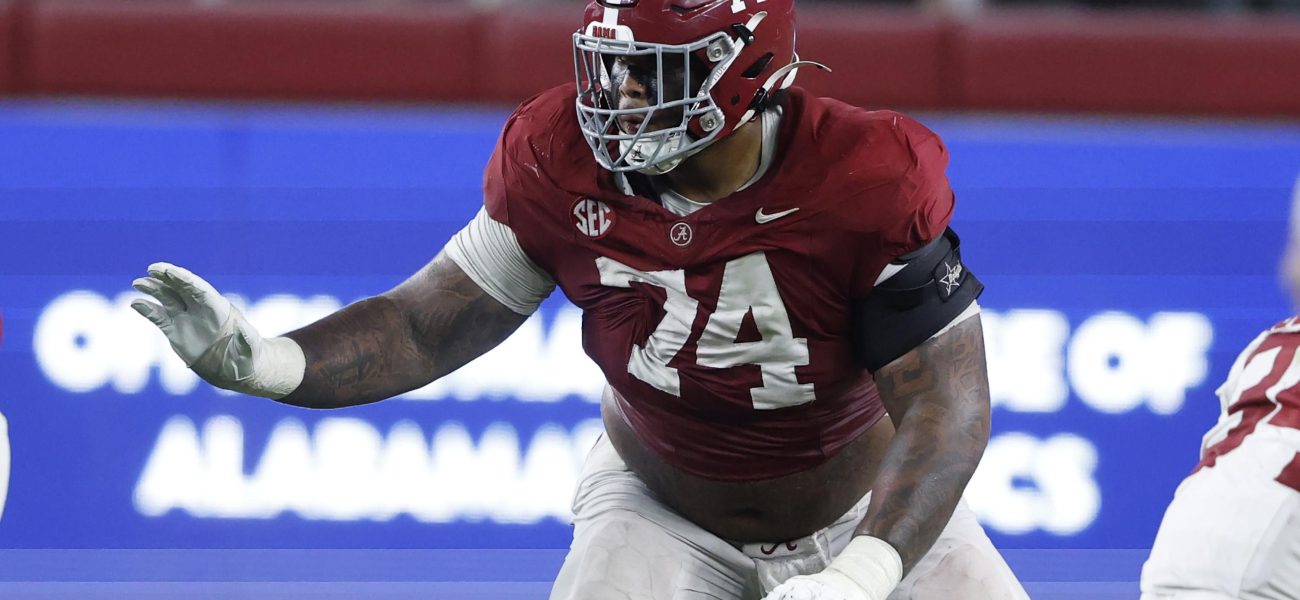
The headline grabber, of course, was Kadyn Proctor, the monolithic offensive tackle from Alabama, snared with the 12th overall pick. Widely considered a top-five talent, his presence immediately telegraphs a renewed commitment to controlling the line of scrimmage – a stark contrast to recent seasons where Miami’s offensive front often resembled a revolving door. But the strategic haul extended far beyond Proctor’s gargantuan frame.
First-round cornerback Chris Johnson out of San Diego State and second-round linebacker Jacob Rodriguez from Texas Tech weren’t just picked for their athleticism; they were, by the team’s own admission, ‘culture-builders.’ And the value plays, like fourth-round linebacker Kyle Louis from Pitt — a player one executive declared “he’ll be a good starter in the league” — and Louisville receiver Chris Bell, a third-round ‘steal,’ underscored a calculated approach. It’s a roster reset that prioritizes grit, accountability, and the sort of locker-room ballast that doesn’t show up on a stat sheet.
📄 POLICY WIRE WHITEPAPER PUBLISHED: PAKISTAN'S NATIONAL SECURITY POLICY PRIORITIES
👉 READ BY CLICKING HERE“You can scheme all you want, but eventually, the biggest, meanest dog wins the fight,” Jeff Hafley, the new head coach, shot back when pressed on the shift in philosophy. “Our locker room, come September, will reek of that ethos. No apologies.” It’s a sentiment that suggests a complete overhaul of the team’s psychological makeup. This isn’t your older brother’s Dolphins; it’s a squad forged in the image of its new architects.
Still, the stakes couldn’t be higher. According to data compiled by ESPN, only 35% of NFL first-round draft picks ultimately play out their entire rookie contracts with their original team, underscoring the formidable attrition rate in professional football. Sullivan’s early picks, particularly Proctor, carry immense pressure to defy those odds and solidify the foundational shift.
What This Means
This draft isn’t just about football players; it’s a masterclass in strategic recalibration, a policy decision in athletic form. In an era where sports franchises increasingly mirror multinational corporations, Sullivan’s move represents a decisive break from a failed growth strategy. It’s a tacit admission that chasing dazzling, ephemeral talent, much like a developing nation solely relying on resource extraction without investing in its infrastructure, inevitably leads to instability. The emphasis on ‘culture’ and ‘toughness’ isn’t merely a platitude; it’s an investment in a robust internal framework, a cohesive unit that can withstand external pressures. Think of it as nation-building on turf – establishing a strong, unified identity rather than a collection of disparate, albeit individually brilliant, components.
For a region like South Asia, frequently navigating complex geopolitical alliances and internal societal divergences, the Dolphins’ strategic pivot offers an intriguing, if abstract, parallel. Just as policymakers in Pakistan, for instance, must balance the disparate loyalties of various ethnic and tribal groups to forge a unified national identity, Sullivan is attempting to homogenize a locker room into a singular, resilient force. It’s about more than just individual skill; it’s about creating a collective will, a shared purpose that transcends personal glory. This isn’t just about winning games; it’s about establishing a sustainable organizational philosophy, a long-term policy for competitive relevance. And that, in the cutthroat world of professional sports, is an undertaking as intricate as any diplomatic endeavor.