
Italian Football’s Delicate Dance: Dybala’s Fitness, Koné’s Return, and the Global Stakes of Serie A
POLICY WIRE — Rome, Italy — In the often-fevered ecosystem of Italian football, where passion and precarious finance frequently collide, the tactical minutiae of a single Serie A fixture can, at its...

POLICY WIRE — Rome, Italy — In the often-fevered ecosystem of Italian football, where passion and precarious finance frequently collide, the tactical minutiae of a single Serie A fixture can, at its core, reveal far grander strategic plays. Tomorrow, at the Olimpico, AS Roma’s encounter with Fiorentina isn’t just another match; it’s a delicate balancing act for manager Gian Piero Gasperini, fraught with injury doubts and the monumental pressure of European aspirations. But the true stakes, often obscured by the roar of the crowd, extend far beyond the ninety minutes.
Gasperini, a man whose career has been a masterclass in extracting maximum output from often-unheralded squads, faces a particularly vexing puzzle. His infirmary, a revolving door for key players all season, has finally begun to empty. Manu Koné, the dynamic French midfielder, has been reintegrated into group training, a welcome sight for a side grappling with Neil El Aynaoui’s suspension. And it’s Koné’s availability, after weeks on the sidelines, that now presents both an opportunity and a fresh strategic conundrum. Will the coach, known for his bold gambles, indeed plunge the Frenchman into the starting XI?
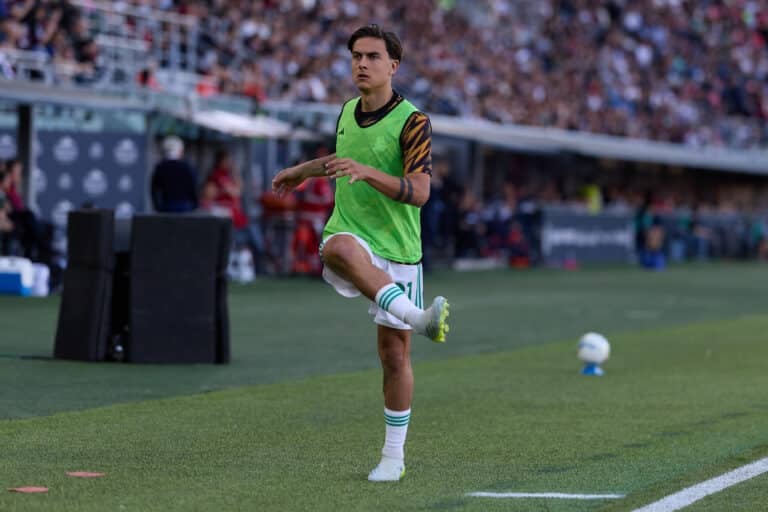
But the more electrifying quandary involves Paulo Dybala, ‘La Joya’ (The Jewel), whose mercurial brilliance remains Rome’s most potent, if frustratingly inconsistent, weapon. His presence, even a cameo, electrifies not just the Stadio Olimpico but also countless screens across continents. Gasperini must weigh the temptation of pairing Dybala with Matias Soulé against the safer, perhaps more predictable, option of Niccolò Pisilli. Donyell Malen, alongside the reliable No. 18 (presumably a placeholder for another confirmed starter like Romelu Lukaku, given the context of the original text’s implication of two certainties), remains a lock. Still, Dybala’s fitness — his body’s unpredictable whispers— dictates much of Roma’s attacking blueprint. “It’s not just about his skill, it’s about his ability to withstand ninety minutes at this intensity,” Gasperini reportedly lamented to close aides this week, underscoring the tightrope walk between immediate gain and long-term player welfare.
Behind the headlines of player availability, however, lies the relentless churn of modern football economics. Italian clubs, operating in a highly competitive global market, rely heavily on star power to attract investment, broadcasting deals, and merchandise sales. Dybala’s brand, for instance, transcends local allegiances. His social media following alone dwarfs that of many national leaders, commanding attention from Buenos Aires to Lahore. And it’s this global appeal that transforms a domestic league fixture into a significant cultural — and economic event.
The Italian Serie A, while perhaps not enjoying the consistent financial dominance of its English counterpart, remains a cultural lodestar, particularly across the Muslim world and South Asia. Anecdotal evidence suggests a passionate following for top clubs like Roma, AC Milan, and Juventus in countries like Pakistan, Indonesia, and Egypt. The sheer volume of digital viewership emanating from these regions contributes measurably to the league’s global broadcasting revenue, a figure that according to a recent Deloitte report, now constitutes approximately 40% of Europe’s top five leagues’ total income. So, when players like Dybala or Koné take to the pitch, they’re not just playing for three points; they’re performing for an audience stretching across time zones and cultural divides, an audience whose engagement translates directly into tangible financial returns for their clubs.
“The global resonance of Serie A is something we actively cultivate,” asserted Luigi De Siervo, CEO of Serie A, in a recent policy briefing. “A strong league, with compelling narratives and world-class talent, reinforces Italy’s soft power and attracts commercial partners from emerging markets. Every starting decision, every tactical tweak, has implications far beyond the pitch.” He’s not wrong; it’s a nuanced dance of performance, perception, and profit.
The dilemma over Dybala — and Koné, therefore, isn’t simply a matter of who plays where. It’s a microcosm of the challenges facing contemporary football management: balancing immediate sporting imperatives with the long-term health of star assets, all while navigating the relentless demands of a truly globalized, multi-billion-dollar industry. Tomorrow’s match might be about securing a European spot, but it’s also about maintaining brand value, captivating international audiences, and demonstrating the strategic acumen that keeps a club—and a league—relevant on the world stage.
What This Means
The nuanced team selection decisions facing AS Roma underscore a broader, systemic tension within European football: the imperative to win now versus the economic necessity of preserving high-value assets for future commercial and sporting viability. For Roma, securing a European competition berth—be it Champions League or Europa League—isn’t merely about prestige; it’s a financial lifeline, potentially worth tens of millions of euros in prize money, broadcasting revenue, and enhanced sponsorship deals. An injured Dybala, even if he delivers a vital goal, represents a diminished asset in the transfer market, a risk clubs are increasingly unwilling to take given the escalating costs of player acquisition.
Politically — and economically, Serie A’s health impacts Italy’s national brand. A vibrant, competitive league attracts foreign investment, boosts tourism (football tourism is a significant, if often overlooked, sector), and provides a cultural export that fosters international goodwill. Conversely, a struggling league can signal broader economic malaise. The fascination from regions like South Asia and the Muslim world for players such as Dybala and Koné transforms these athletes into informal ambassadors, bolstering Serie A’s viewership numbers—crucial for negotiating lucrative international media rights. It’s a compelling feedback loop: star players attract viewers, viewers drive revenue, and revenue allows clubs to acquire more star players. Gasperini’s choices, then, aren’t just for the local Romanisti; they’re for a global constituency whose engagement is vital to the league’s—and, by extension, the nation’s—economic and cultural leverage.