


Ephemeral Drizzle, Enduring Drought: New Mexico’s Subtler Climate Crisis Echoes Global Water Woes
POLICY WIRE — ALBUQUERQUE, N.M. — It’s often in the mundane meteorological pronouncements – a forecast for a ‘mostly dry Sunday’, then a ‘chance of rain’ – that the most profound policy challenges...

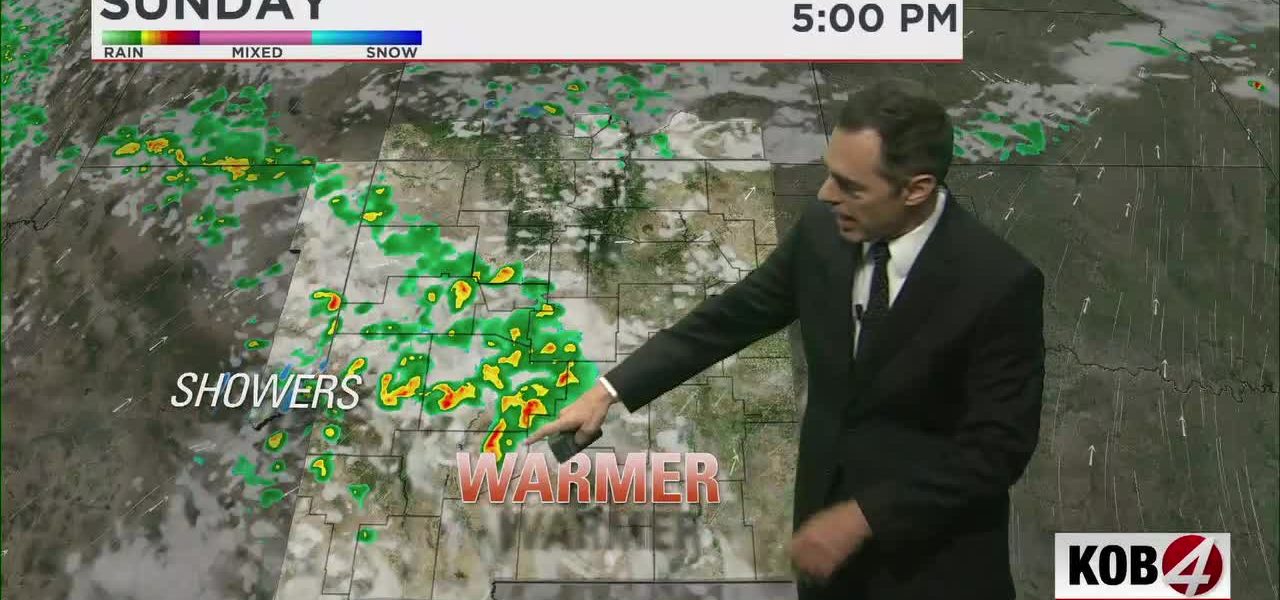
POLICY WIRE — ALBUQUERQUE, N.M. — It’s often in the mundane meteorological pronouncements – a forecast for a ‘mostly dry Sunday’, then a ‘chance of rain’ – that the most profound policy challenges reveal themselves. New Mexico, (a state that quite literally thrives on scarcity), doesn’t merely experience weather; it metabolizes it into economic policy, agricultural strategy, and even, at its core, a perpetual, low-grade existential negotiation. A week of relatively clement skies, followed by a slight uptick in precipitation probability, isn’t just a note for weekend plans here. It’s a bellwether, a micro-indicator of macro-pressures, silently chronicling the delicate dance between human ambition and an unforgiving desert ecology.
Behind the headlines of predictable sunshine, an anxious calculus plays out across the Land of Enchantment. While other regions might shrug off a few days of dryness, New Mexico’s hydrological ledger operates on razor-thin margins. The prospect of Tuesday showers, before Albuquerque warms back into the 80s by week’s end, might sound like seasonal variability. But in a state where water rights are historically contentious — and legally labyrinthine, every milliliter matters. Dr. Elena Rodriguez, New Mexico’s venerable State Climatologist, didn’t mince words during a recent virtual symposium on arid land management. “What might appear as benign meteorological shifts to an outsider are, for us, daily calibrations of survival,” she asserted, her voice carrying the weariness of decades charting diminishing flows. “Every drop counts; every forecast, a policy brief in waiting.”
Still, the state’s return to largely dry conditions overnight, coupled with light winds and skies ranging from clear to partly cloudy, offers little respite from a persistent, overarching threat. Data from the U.S. Drought Monitor indicates that as of early May 2024, approximately 85% of New Mexico remained in some stage of drought, an omnipresent threat to its agrarian lifeblood and municipal supply. That’s not a temporary blip; it’s a systemic vulnerability, reshaping everything from crop selection to urban development patterns. And so, the tentative increase in rain chances later Monday, intensifying into Tuesday as a storm system ambles west to east, isn’t a celebration. It’s a momentary deferral of dread, a sip from an often-empty glass.
It’s not just the immediate agricultural sector that holds its breath. New Mexico’s burgeoning tech scene, particularly around Albuquerque and Los Alamos, relies on a stable, predictable water supply for everything from semiconductor fabrication to research cooling. Even the most cutting-edge innovations – like new touch-table technologies redefining desert innovation – become precarious without the fundamental resource. State Representative Miguel Chavez (Democrat, Albuquerque), whose district grapples with both urban expansion and rural water rights, has frequently underscored this reality. “We’re not just managing clouds, we’re legislating liquid,” Chavez opined with characteristic bluntness. “Investment in infrastructure, water recycling – it’s no longer optional. It’s our economic lifeline, period.”
This localized struggle for hydrological equilibrium isn’t an isolated phenomenon. Across the globe, from the parched plains of the American Southwest to the verdant but increasingly vulnerable deltas of South Asia, the rhythm of rain dictates the beat of nations. Pakistan, for instance, a nation heavily reliant on the Indus River System fed by Himalayan glaciers and monsoon rains, faces its own acute water security challenges. Fluctuations in seasonal precipitation or glacial melt have profound implications for its vast agricultural sector, social cohesion, and even geopolitical stability. Such environmental pressures, when mismanaged or ignored, often cascade into complex policy dilemmas – not unlike how the illicit exotic pet trade in South Asia exposes a darker side of global supply chains and ecological neglect.
📄 POLICY WIRE WHITEPAPER PUBLISHED: PAKISTAN'S NATIONAL SECURITY POLICY PRIORITIES
👉 READ BY CLICKING HEREThe forecast, then, isn’t just about degrees Fahrenheit or percentage chances. It’s about the underlying policy infrastructure that buttresses a society against the caprices of nature. It’s about long-term planning, about tough political choices, and about acknowledging that the era of abundant, unchallenged resources is, for many, a relic of the past. The mild warmth expected later in the week, pushing temperatures into the low 80s, doesn’t simply portend pleasant afternoons. It suggests increased evaporation, more pressure on reservoirs, — and a further tightening of the policy screws. Every ray of sunshine has its shadow.
What This Means
The seemingly innocuous weather report out of Albuquerque underscores New Mexico’s unenviable position as a front-line state in the broader climate crisis, even during periods of relative meteorological calm. Politically, the implications are immediate: water policy continues to dominate legislative agendas, pitting agricultural interests against urban demands, and often, both against environmental conservationists. This constant friction necessitates innovative governance models and, frankly, brave political leadership willing to make unpopular decisions regarding allocation and infrastructure investment. Economically, the state’s trajectory is inextricably linked to its water future. Businesses considering relocation or expansion into New Mexico must factor in long-term water availability, potentially chilling investment in sectors that aren’t inherently low-water usage. The rising temperatures, even if seasonal, exacerbate this, increasing evaporative losses and pushing up energy demands for cooling, adding further strain to the grid and household budgets. Ultimately, New Mexico serves as a compelling, if unsettling, case study for how global climate trends manifest at the local level, forcing communities to confront profound policy questions even when the sun is shining.