


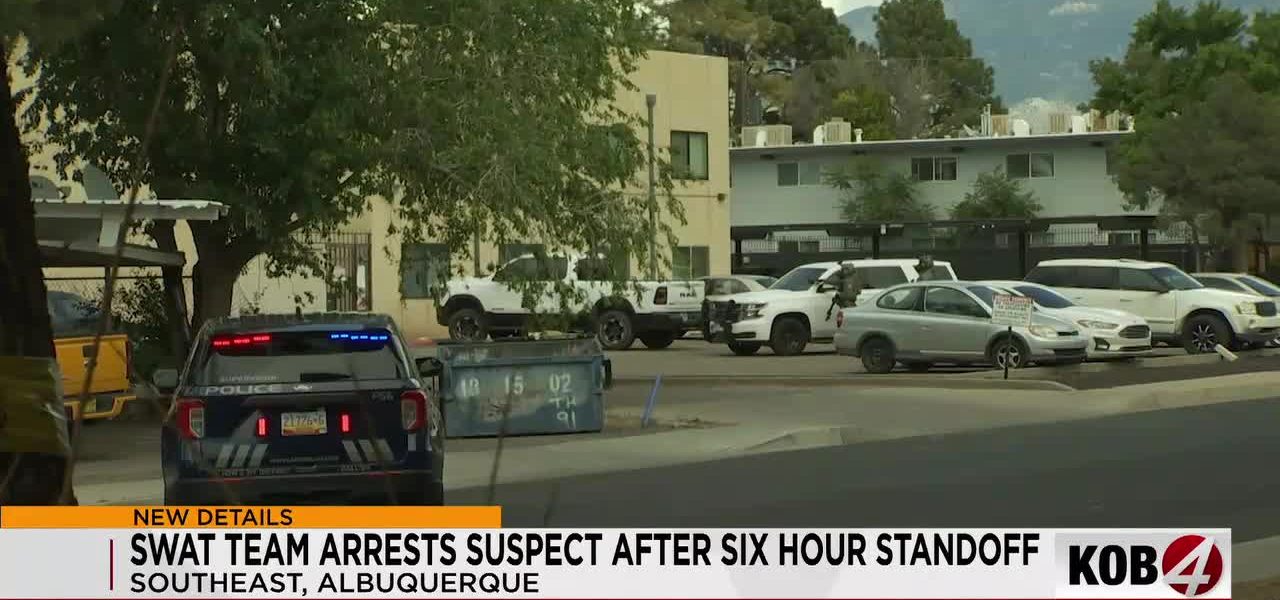
Albuquerque’s Siege: A Neighborhood’s Long Ordeal Culminates in SWAT Standoff
POLICY WIRE — Albuquerque, United States — It wasn’t the sound of sirens that marked the end of Jonathan Rhoades’ reign of localized terror, but rather the collective, if unspoken, exhale...

POLICY WIRE — Albuquerque, United States — It wasn’t the sound of sirens that marked the end of Jonathan Rhoades’ reign of localized terror, but rather the collective, if unspoken, exhale of an entire neighborhood. For hours, a tranquil corner of southeast Albuquerque had been held captive, not by a foreign power, but by a domestic threat whose volatility had become a grim fixture in daily life. Saturday’s six-hour SWAT standoff, culminating in Rhoades’s apprehension, didn’t just resolve an immediate crisis; it momentarily lifted a pervasive, suffocating anxiety that had long settled over Valencia Drive.
At its core, this wasn’t a sudden eruption. Neighbors had endured a prolonged, grinding campaign of intimidation. One resident, preferring anonymity, recounted years of verbal abuse and menacing threats – including explicit vows against her and her family – making the very idea of home a precarious proposition. “He’s had some threats to my boyfriend before,” she divulged, her voice still laced with lingering trepidation. “And then when I told him, in not so nice words, but to knock it off, he told me he would kill me and my family.” Such casual menace, delivered from behind a seemingly impenetrable wall of rage, defined the daily rhythm of this block. It’s a testament to the slow erosion of community peace, an insidious process often overshadowed by more dramatic, distant conflicts.
The catalytic moment arrived shortly after 7 a.m. Saturday when a neighbor’s 911 call pierced the morning quiet. Albuquerque Police Department officers, arriving around 9 a.m., were immediately confronted by Rhoades’s defiant refusal to cooperate. Court documents paint a chilling picture: threats to shoot officers through his door, punctuated by the unmistakable, metallic click of a rifle being chambered. This wasn’t merely a dispute; it was a siege in miniature. The discovery of an active arrest warrant for Rhoades—tied to an earlier bomb threat—only intensified the gravity of the situation. It wasn’t just a rogue individual; it was a known entity, flagged by the justice system, yet still operating with alarming impunity within the urban fabric.
Hours bled into a tense afternoon as SWAT teams moved in, their presence a stark visual reminder of the escalating danger. This wasn’t a quick arrest; it was a meticulous, resource-intensive operation designed to neutralize a high-risk individual without further bloodshed. By 4:45 p.m., the standoff concluded. Photos shared by another neighbor depicted the apartment door, now a shattered relic of resistance, and officers moving deliberately through the threshold. Rhoades was finally in custody, facing charges that included shooting threats and aggravated assault on a peace officer – fitting epitaphs for a six-hour defiance of law and order.
Sgt. Elena Rodriguez, spokesperson for the Albuquerque Police Department, later emphasized the gravity of such encounters. “This incident underscores the volatile nature of community-based threats and the meticulous coordination required to de-escalate without further incident,” Rodriguez stated unequivocally. “Our primary objective is always public safety and the safe resolution for all involved.” Indeed, the city’s police force has, like many across the nation, found itself increasingly engaged in complex scenarios demanding tactical finesse and extensive resources.
But the relief, however profound, is inherently transient. Councilwoman Sarah Chen, addressing the deeper societal implications, shot back with a crucial observation. “While we commend the swift action of our officers, this incident also compels us to examine the underlying currents of distress in our communities. We can’t merely react; we must invest in prevention and support networks that address the root causes of such volatile situations.” Her remarks highlight the perennial challenge: is law enforcement merely a clean-up crew, or should society—and its policymakers—be tackling the festering issues that breed such dangerous isolation?
📄 POLICY WIRE WHITEPAPER PUBLISHED: PAKISTAN'S NATIONAL SECURITY POLICY PRIORITIES
👉 READ BY CLICKING HEREThe prevalence of violent crime in cities like Albuquerque remains a pressing concern. According to the FBI Uniform Crime Reporting Program, Albuquerque’s violent crime rate hovered around 10.9 incidents per 1,000 residents in 2022, notably higher than the national average. This particular incident, while confined to a single apartment, reflects a broader tension in urban environments globally, where localized disputes can escalate into full-blown crises demanding significant state intervention. It’s a challenge not dissimilar, in its urban policy implications, to how authorities in bustling South Asian metropolises manage persistent, low-level threats that, if unchecked, can erode public trust and necessitate costly security operations. This incident, while seemingly localized, echoes a broader global struggle against individuals who disregard civic order—a struggle that plays out from the bustling streets of Bangkok’s illicit trade networks to the quiet cul-de-sacs of American suburbs.
“We’ll probably be nice and quiet tonight,” one neighbor mused, her words carrying the weary hope of someone who’d seen too much. For families like hers, the safe removal of Jonathan Rhoades wasn’t just a police success; it was a reprieve, a chance to reclaim a semblance of peace in their own homes – a precious commodity in an increasingly unpredictable world (it’s often the small, local battles that truly define our sense of security).
What This Means
The resolution of the Albuquerque standoff, while a tactical victory for law enforcement, illuminates several critical policy considerations. Economically, prolonged standoffs like this drain significant public resources, diverting police, SWAT, and potentially emergency medical services from other pressing city needs. This isn’t merely the cost of a few hours; it’s the cumulative burden of managing repeat offenders and individuals in crisis, often with underlying mental health challenges. Politically, such incidents place immense pressure on municipal governments to demonstrate effective public safety strategies. There’s a delicate balance to strike between robust, well-funded police responses and proactive community-based interventions that address the root causes of volatility. Without adequate investment in mental health support, housing stability, and de-escalation training for chronic issues, cities risk being trapped in a cycle of reactive policing.
the neighbor’s testimony points to a systemic failure in addressing persistent threats *before* they escalate to barricade situations. It suggests a need for more accessible reporting mechanisms for ongoing harassment and faster, more decisive intervention by social services or community justice initiatives. The psychological toll on affected residents, often overlooked, represents an invisible cost to urban planning and social cohesion. Policymakers must ponder whether current frameworks adequately empower communities to deal with individuals who consistently disrupt local peace, or if they inadvertently place the entire burden on overstretched emergency services. The incident serves as a stark reminder that true public safety is a complex tapestry woven from immediate response, long-term prevention, and robust social infrastructure.