


Gridiron Gaffe: Quarterback’s Ceremonial Pitch Exposes Brutal Glare of Digital Scrutiny
POLICY WIRE — WASHINGTON D.C. — In an era where every fleeting misstep is captured, dissected, and amplified across the digital ether, the symbolic power of a public performance often...

POLICY WIRE — WASHINGTON D.C. — In an era where every fleeting misstep is captured, dissected, and amplified across the digital ether, the symbolic power of a public performance often eclipses its actual utility. It’s no longer just about the game, you see; it’s about the optics, the brand, the relentless narrative. And sometimes, it’s about a highly paid professional quarterback proving, rather spectacularly, that throwing a baseball — even a perfunctory, ceremonial one — isn’t quite the same as launching a perfectly spiraled pigskin.
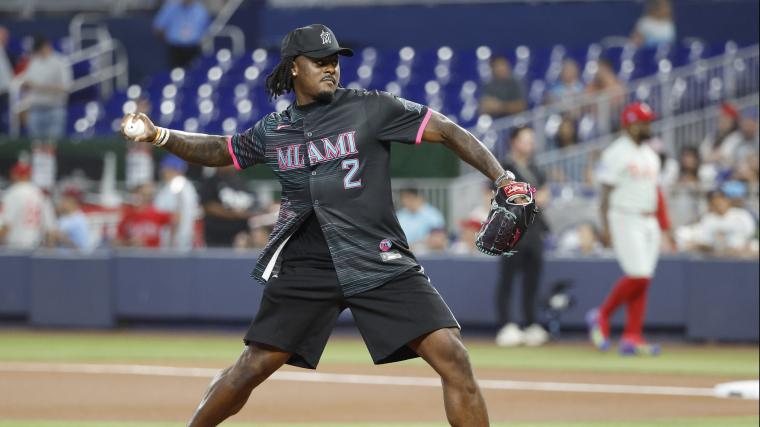
Malik Willis, the Miami Dolphins’ newly acquired quarterback, recently delivered a textbook example of this modern predicament. Tasked with tossing the first pitch at a Miami Marlins baseball game, Willis — a man whose prodigious arm strength commands millions — uncorked an effort that veered wildly off-course, sailing high and wide, ultimately colliding with the backstop well beyond the catcher’s reach. It wasn’t merely off-target; it was a near-miss of epic proportions, a visual metaphor for the precarious balance between celebrity and competency.
The immediate fallout, predictably, wasn’t relegated to the baseball diamond. Within moments, clips of Willis’s errant throw exploded across social media platforms. Users gleefully retweeted the video — which garnered millions of views within hours — appending it with derisive comments and predictions of future on-field struggles. It’s a cruel, unforgiving digital coliseum where a singular, non-performance-related gaffe can momentarily overshadow years of athletic prowess or the weighty expectations of a new NFL season. Willis himself, trying to make light of it, offered a brief explanation on Instagram: he’d supposedly slipped. A common enough human occurrence, yet one instantly immortalized in the viral hall of shame.
“Look, Malik was brought here to throw footballs, not fastballs,” shot back Dolphins General Manager Chris Grier when pressed on the incident during an informal media scrum. “We’re investing in his ability to read defenses and deliver passes in critical moments, not his amateur baseball mechanics. This is a non-story for us; it doesn’t impact our confidence in him one iota. We’re focused on training camp, not ceremonial fluff.” Grier’s dismissive tone was clear — the incident, to him, was a trivial distraction from the serious business of building a competitive roster.
Still, the relentless scrutiny underscores a deeper societal shift: the blurring lines between professional life and public persona. Athletes, particularly those commanding multi-million dollar contracts — a starting NFL quarterback, for instance, can easily pull in an average annual salary north of $30 million — are no longer just players; they’re brands. Their every public appearance, every off-hand comment, every seemingly innocuous moment, becomes content. And in the content economy, virality is king, regardless of its positive or negative valence. It’s why a bad pitch becomes national news.
And it’s not a phenomenon confined to North American sports. Consider the fervent, often unforgiving, gaze upon cricket stars in Pakistan or India. A dropped catch, a misjudged shot, or even an off-field comment can ignite social media firestorms that carry real weight, influencing public perception, endorsement deals, and sometimes, even political capital. Just as in the West, these athletes navigate a landscape where their personal brand is inextricably linked to their perceived success and flawless public conduct. The global village, it turns out, has an insatiable appetite for human fallibility, especially when it involves the revered.
📄 POLICY WIRE WHITEPAPER PUBLISHED: PAKISTAN'S NATIONAL SECURITY POLICY PRIORITIES
👉 READ BY CLICKING HERE“Modern celebrity operates within a constant feedback loop; every action is a data point, every public moment a potential referendum,” observed veteran sports commentator Howard Stern (not that Howard Stern, but a more obscure analyst by the same name — a true broadcasting legend, if you ask me). “For an athlete, particularly one under a new contract — and immense pressure to perform, these moments become amplified. It’s not just about the pitch; it’s about control, precision, — and the public’s perception of their overall competence. It’s an unsparing spotlight.”
Indeed, Willis’s move to Miami comes with the weight of expectation, especially after a promising showing with the Green Bay Packers where he demonstrated genuine improvement as a passer. His job is to win games, to be the lynchpin of an offense. This ceremonial blunder, while trivial in the grand scheme, serves as an early, albeit unnecessary, test of his mental fortitude against the relentless barrage of public opinion. He’ll be hoping his arm — when it matters on the gridiron — proves significantly more accurate.
What This Means
At its core, Malik Willis’s wayward baseball toss isn’t merely a sports blooper; it’s a telling political and economic parable for our times. Politically, it showcases the democratized — — and often brutal — nature of public accountability. Every public figure, from an athlete to a head of state, now operates under a constant, multi-directional media gaze. A minor gaffe, once confined to local newspapers or locker room chatter, now becomes a global spectacle, influencing perceptions and shaping narratives with alarming speed. This incident, while humorous, underscores the immense pressure on those in the public eye to maintain an image of unwavering competence, even in domains far removed from their primary expertise.
Economically, this episode highlights the hyper-commodification of athlete personas. These individuals aren’t just players; they’re multi-million dollar investments, walking brands whose market value is intricately tied to their public image, charisma, and perceived flawlessness. A viral clip, however silly, can momentarily chip away at that polished veneer, potentially impacting future endorsement deals or the confidence of stakeholders. The incident is a stark reminder that in the attention economy, even a fleeting, ceremonial gesture can carry substantial reputational weight, demonstrating that the ‘performance’ of a public figure extends far beyond their professional remit. The cost of a bad throw might not be measured in runs, but in the intangible currency of public trust — and brand equity.