


Ice Rage, Policy Fallout: McAvoy’s Ejection Incites Debate on Pro Sports’ Disciplinary Imperatives
POLICY WIRE — Boston, USA — The spectacle of raw, untamed emotion — a primal outburst in an otherwise meticulously choreographed ballet of athleticism and corporate sponsorships — rarely escapes the...

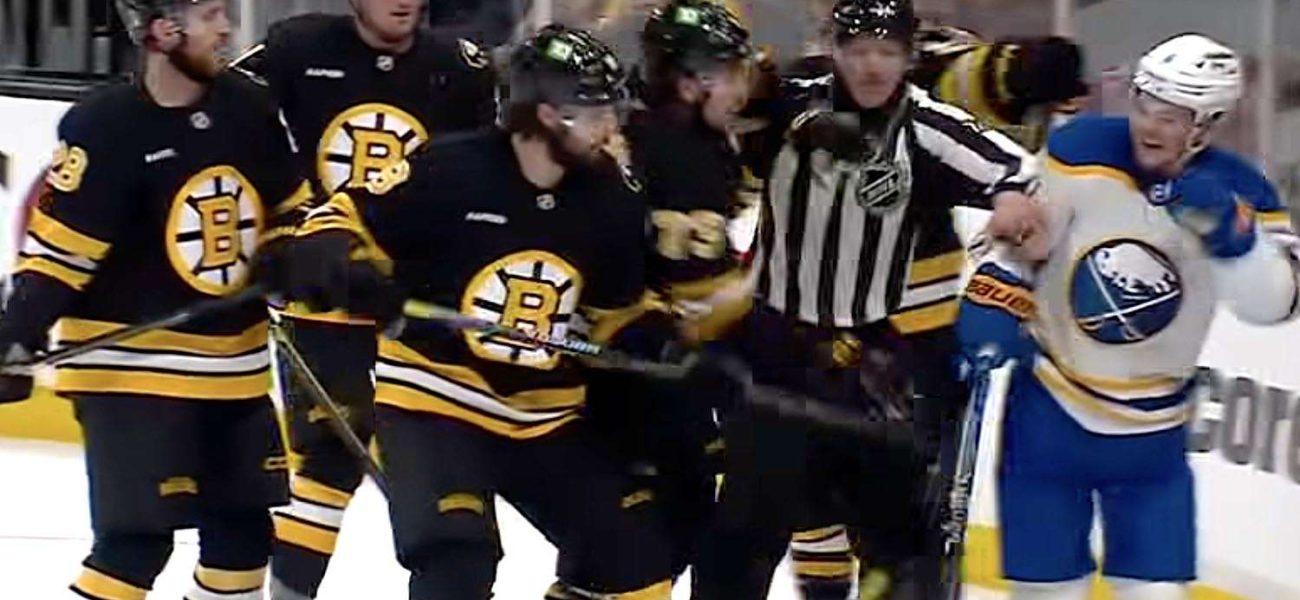
POLICY WIRE — Boston, USA — The spectacle of raw, untamed emotion — a primal outburst in an otherwise meticulously choreographed ballet of athleticism and corporate sponsorships — rarely escapes the punitive gaze of professional sports. Such was the immediate reckoning for Boston Bruins defenseman Charlie McAvoy. His swift ejection from a pivotal May 1 NHL contest wasn’t merely for a violent infraction; it was for a public, unequivocal act of retaliatory justice, served with a stick across the torso of Buffalo Sabres forward Zach Benson. It’s a moment that, despite its swiftness, reverberates far beyond the ice, raising uncomfortable questions about player accountability, the league’s disciplinary tightrope, and the volatile economics of passion.
Benson, a relatively fresh face at 20, had (perhaps inadvertently, perhaps not) tripped the seasoned 28-year-old McAvoy late in the third period. A slew-foot, the rulebook clarifies, is an illegal maneuver designed to unbalance an opponent—a swift, often brutal, way to knock a player’s feet from beneath him. McAvoy, sprawling ungracefully into the end boards, didn’t hesitate. Rising quickly, a palpable fury propelling him, he skated directly to Benson and delivered a forceful, two-handed chop to the Sabres player’s torso. Not subtle, this. The sequence was captured, replayed, and instantly dissected, solidifying the incident as more than just another penalty.
Sabres head coach Lindy Ruff, whose team ultimately secured a 4-1 victory and advanced, expressed a measured disapproval. “You don’t want to see a guy take a chop like that at somebody else,” he lamented post-game, acknowledging the perceived provocation. “I’m just going to say [it was] raw emotion. Charlie’s a hell of a player. Cares about winning. Anybody would want Charlie on his team. Probably went a little too far, though.” Ruff’s words, a careful dance between condemnation and recognition of competitive fire, underscore the perennial dilemma facing coaches and league officials: how to temper aggressive instinct without extinguishing the very competitive spirit that fuels the sport.
And indeed, the NHL’s Department of Player Safety, the arbiter of on-ice decorum (a primary function, arguably, in modern professional sports), faced just such a dilemma. While Benson received a minor penalty for his trip, McAvoy was assessed a five-minute major for slashing and a game misconduct—the scarlet letter of immediate expulsion. “Our commitment to player safety isn’t merely a tagline; it’s a foundational tenet,” a spokesperson for the league’s disciplinary committee, requesting anonymity, later opined. “Retaliatory acts, regardless of initial provocation, undermine game integrity. We can’t — and won’t — tolerate them.” This stance, often viewed as draconian by fiercely loyal fanbases, aims to prevent the ice from devolving, maintaining a veneer of civility even amidst violent collisions.
Still, the economic undercurrents of such decisions are profound. The NHL’s Department of Player Safety issued 17 suspensions for on-ice infractions during the 2023-2024 regular season, totaling over $700,000 in forfeited player salaries, according to official league records. These aren’t just statistics; they represent tangible financial hits to players and, by extension, a disruption to team rosters and competitive balance. McAvoy, a cornerstone defenseman for the Bruins, now faces potential further sanctions, possibly spilling into next season, given his dismissal of immediate implications: “I can’t imagine it really matters much,” he’d said, alluding to the off-season. His perspective, while perhaps glib, highlights the temporal disconnect between an infraction — and its ultimate cost.
📄 POLICY WIRE WHITEPAPER PUBLISHED: PAKISTAN'S NATIONAL SECURITY POLICY PRIORITIES
👉 READ BY CLICKING HEREBehind the headlines, this incident also resonates with the broader global discourse on competitive ethics. Consider the fervent, often volatile, rivalries in South Asian cricket—particularly between India and Pakistan. There, a perceived slight or aggressive gesture can escalate quickly, drawing not only fines and bans but also intense public scrutiny and even diplomatic ripples. The stakes, both sporting and economic, are immense; a superstar’s ban can cost millions in advertising revenue and drastically alter a team’s fortunes. It’s a parallel underscoring how deeply ingrained ‘fair play’ versus ‘retribution’ are, irrespective of hemisphere. The passion driving athletes in Boston isn’t so different from that fueling players in Karachi; the organizational challenge, however, remains universal: how to channel that fire constructively. Beyond the Boundary: How India’s IPL Rivalries Fuel a South Asian Economic Crucible.
What This Means
This episode isn’t just about a hockey stick meeting a torso; it’s a microcosm of the delicate balance professional sports organizations continually navigate. Politically, it reinforces the league’s often-criticized, yet consistently applied, zero-tolerance policy on deliberate aggression—a policy protecting players and, perhaps more importantly, the league’s brand. Economically, a suspension for a player of McAvoy’s caliber represents a significant, if unquantified, cost: loss of on-ice talent, potential playoff revenue impacts, and a hit to fan morale. For the Sabres, the victory — and their advancement for the first time since 2007 is sweet. But for the NHL, every such incident becomes another data point in its ongoing effort to police a high-octane, high-contact sport where emotion and aggression are both currency and liability. It’s a perpetual tightrope walk for commissioner Gary Bettman’s office, weighing the spectacle of raw intensity against player safety and perceived fairness.
And so, while immediate drama unfolded on ice, the repercussions will likely play out in boardrooms and hearing rooms, serving as a stark reminder. This wasn’t merely a penalty call; it was a policy enforcement—a moment where competition’s unwritten rules violently collided with a multi-billion-dollar enterprise’s meticulously drafted regulations. McAvoy’s passion, while admirable, became a liability to the rulebook. The message is clear: even in battle’s heat, consequences loom large, shaping not just game outcomes but the very fabric of how professional sports maintain order.