


Silent Scramble: Japan’s Resource Diplomacy Pivots to Vietnam Amidst Global Supply Chain Jitters
POLICY WIRE — Tokyo, Japan — The true measure of modern diplomacy often isn’t found in grand pronouncements, but in the quiet, methodical restructuring of supply lines. So it goes with...

POLICY WIRE — Tokyo, Japan — The true measure of modern diplomacy often isn’t found in grand pronouncements, but in the quiet, methodical restructuring of supply lines. So it goes with Japan’s deepening embrace of Vietnam, a partnership now overtly pivoting towards the raw materials crucial for tomorrow’s technologies—and, indeed, for today’s industrial might.
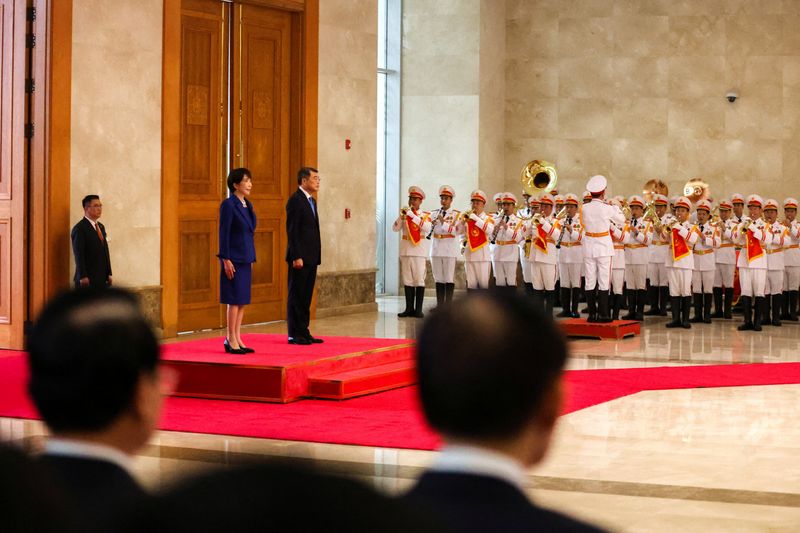
Beneath the recent flurry of high-level visits and convivial photographic opportunities, a far more consequential game unfolds. It’s a strategic re-orientation, necessitated by an increasingly unpredictable global landscape where access to critical minerals—like rare earths, cobalt, and lithium—isn’t merely an economic concern, it’s a matter of national security. Japan, an industrial juggernaut profoundly dependent on imports, isn’t just looking for partners; it’s actively cultivating alternatives to single-source dependencies, particularly those governed by geopolitical rivals.
And Vietnam? It’s hardly a passive participant. The Southeast Asian nation, boasting significant yet largely underdeveloped natural resources, possesses the very bedrock materials Japan’s advanced industries crave. This isn’t charity; it’s a symbiotic dance of necessity. Tokyo offers capital, technology, and sophisticated refining know-how—elements Hanoi covets for its own industrialization ambitions. But it also offers something more subtle: a counterbalance.
At its core, this nascent alliance speaks volumes about the pragmatic realities of global commerce. Japanese Prime Minister Fumio Kishida, articulating his nation’s strategic imperative, recently underscored, “Our nation’s industrial bedrock demands stability. Vietnam represents a pivotal partner in securing the raw materials essential for our future, fostering a resilient supply chain that’s insulated from geopolitical vagaries.” It’s a candid admission that economic stability isn’t a given; it’s something one must actively construct, piece by laborious piece.
Still, the arrangement isn’t simply a one-way street, where Vietnam is merely a quarry for Japanese industry. Hanoi’s leadership is acutely aware of its country’s potential leverage. Nguyen Chi Dung, Vietnam’s Minister of Planning and Investment, posited, “Vietnam isn’t merely a source of raw materials; we’re cultivating a sophisticated economy. Tokyo’s technological prowess and investment capacity are instrumental in this evolution, ensuring our resources translate into sustained national prosperity and genuine sovereignty.” His statement, delivered with characteristic Vietnamese resolve, underscores a clear demand for value-added processing within national borders.
The numbers don’t lie: Vietnam holds substantial, though largely untapped, rare earth reserves—estimated by the U.S. Geological Survey (2023) to be the world’s second-largest, at approximately 22 million tons. That’s a staggering figure, enough to pique the interest of any industrial power. But extracting, refining, and integrating these minerals into global supply chains requires immense investment and expertise, often beyond the reach of developing nations alone.
Behind the headlines, nations across the Asian continent, from Japan to Pakistan, are scrutinizing their supply chain dependencies. Islamabad, for instance, has long navigated a complex web of foreign investment and resource extraction, keenly aware of the delicate balance between foreign capital and national interest. This Japan-Vietnam pact subtly highlights a broader regional shift, where countries seek diversified partnerships to avoid over-reliance on any single dominant player, a lesson learned, often painfully, by many developing economies within the Muslim world and beyond.
📄 POLICY WIRE WHITEPAPER PUBLISHED: PAKISTAN'S NATIONAL SECURITY POLICY PRIORITIES
👉 READ BY CLICKING HEREIt’s an effort not merely to find new sources, but to build entirely new, more secure pipelines—pipelines less susceptible to the shifting winds of great power competition. This quest for energy independence and mineral security isn’t unique to East Asia; it’s a global phenomenon, as evidenced by Germany’s own struggle for energy transition and resource procurement.
What This Means
This bilateral push between Tokyo — and Hanoi carries significant geopolitical and economic implications. Politically, it deepens the strategic alignment between two nations wary of regional hegemonies, subtly bolstering a network of relationships designed to maintain a balance of power in the Indo-Pacific. It’s not an explicit anti-any-country alliance, but its outcomes inherently serve to diversify influence.
Economically, it promises a more resilient global supply chain for critical minerals, which are indispensable for everything from electric vehicles to defense systems. Japan secures essential inputs, while Vietnam gains invaluable investment, technology transfer, and job creation in high-value sectors. The arrangement also underscores the escalating resource nationalism seen across the globe. Nations possessing these coveted materials are increasingly demanding more than just royalties; they want a seat at the industrial table, insisting on domestic processing and technology diffusion. For resource-rich nations like Vietnam—or, indeed, other South Asian countries exploring their own mineral wealth—this sets a precedent for how they might negotiate future deals. It’s a careful calibration of give and take, where geopolitical considerations invariably intertwine with economic expediency (and quite often, supersede it), reshaping the very architecture of international trade and cooperation.
But there’s an environmental dimension too. The global push for green energy paradoxically intensifies the demand for mining, an industry often fraught with ecological challenges. The terms of extraction and environmental safeguards embedded in these new partnerships will dictate whether this quest for strategic autonomy inadvertently creates new environmental burdens.