


New Mexico’s Ephemeral Dousing: A Fleeting Respite Amidst Enduring Aridity
POLICY WIRE — ALBUQUERQUE, N.M. — The high desert, often a tableau of bleached earth and relentless sun, has momentarily softened. Yes, ephemeral showers have swept across parts of New Mexico,...

POLICY WIRE — ALBUQUERQUE, N.M. — The high desert, often a tableau of bleached earth and relentless sun, has momentarily softened. Yes, ephemeral showers have swept across parts of New Mexico, drenching east-central and southeast quadrants while sending more moisture scudding east. It’s a transient dousing, surely, one that leaves high-elevation roads slick under Friday night’s fading light—a minor inconvenience compared to the existential thirst that defines much of the state’s modern history.
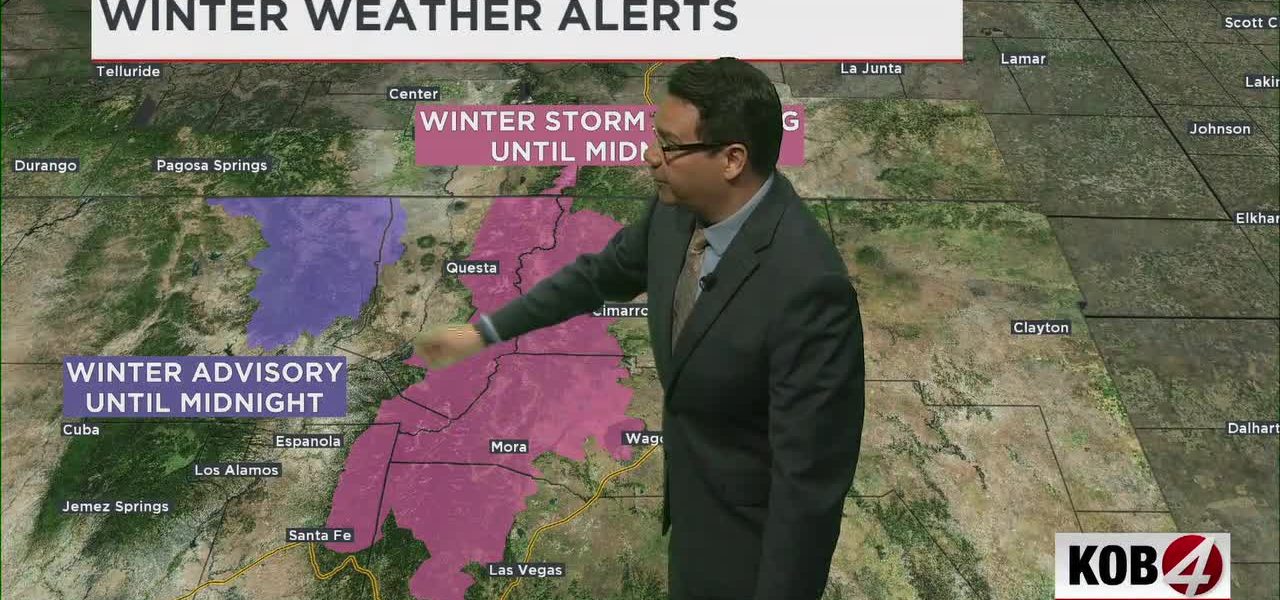
Early Friday evening, the skies wept over Roswell, Artesia, Carlsbad, — and Portales, localities accustomed to extremes. The precipitation, though welcome, will taper off through the evening hours, a fleeting balm. Showers, some punctuated by brief, isolated storms, tracked along the Continental Divide, drifting from areas near Gallup and Grants, across the sprawling Jemez Mountains, and toward Albuquerque’s Rio Grande Valley before caressing the northern peaks. The best odds for significant accumulation, they say, shifted late into Santa Fe, Los Alamos, Taos, and the rugged terrain surrounding Red River.
But don’t mistake this for a definitive turn in the arid narrative. This isn’t a biblical deluge, it’s a whisper of water, a subtle nod to the capriciousness of atmospheric mechanics. Winter highlights, almost an anachronism in late spring or early summer, persist for the highest peaks; light snow remains possible tonight in the Sangre de Cristo and Tusas mountains. Impacts, we’re told, will be limited. Still, for a state that’s battled a multi-decade megadrought, where the very bedrock of its agricultural economy — and indeed, its burgeoning urban centers — hinges precariously on every elusive drop, even a brief, localized downpour offers a psychological, if not hydrological, solace.
Overnight, some clearing is anticipated. And with wet ground and light winds, patchy fog may coalesce silently over Albuquerque, Santa Fe, Roswell, and sections of eastern New Mexico. Visibility, it’s worth noting, might drop quickly in spots, a minor navigational hazard in the grand scheme of water management. Saturday, the celestial roulette wheel spins again, delivering another round of showers and a scattering of isolated storms as a weak disturbance meanders through. The most concentrated coverage Saturday will be over the western and central mountains, including Gallup, Grants, and the aforementioned Jemez. Temperatures, blessedly, will run about 5 to 15 degrees below average, a slight recession from the usual sun-baked norm.
Warmer conditions, however, are slated to return Sunday, accompanied by isolated afternoon showers and storms primarily over the western and northern mountains. Temperatures will continue their upward climb into Monday, bringing breezy to locally windy conditions that are expected to sweep across Albuquerque, Clines Corners, and eastern New Mexico. It’s an ebb and flow, this atmospheric dance, a delicate balance that informs every policy decision concerning the state’s most precious resource.
“Every drop is precious, a brief balm on an arid landscape,” Governor Michelle Lujan Grisham shot back when pressed on the state’s water outlook, echoing a sentiment often heard in this perennially parched region. “But we aren’t deluding ourselves. This doesn’t erase decades of deficit; it merely buys us another moment to strategize for the inevitable dry spells ahead.” Dr. Elena Montoya, the state’s chief hydrologist, offered a starker assessment. “While these localized events provide temporary surface moisture, they rarely penetrate deep enough to significantly replenish the state’s crucial aquifers or alleviate the systemic drought conditions plaguing our primary water sources, like the Rio Grande,” she observed, her voice tinged with the weary wisdom of years spent chasing every weather model and measuring every cubic foot.
📄 POLICY WIRE WHITEPAPER PUBLISHED: PAKISTAN'S NATIONAL SECURITY POLICY PRIORITIES
👉 READ BY CLICKING HEREAt its core, New Mexico’s struggle is a microcosm of a global crisis. Much like the vast Indus Basin, which faces erratic monsoons, glacial melt uncertainty, and the compounding pressures of an ever-expanding populace, New Mexico’s reliance on dwindling mountain snowpack and increasingly unpredictable seasonal rains underscores a shared, planetary vulnerability. The policy responses in both regions—be it sophisticated canal irrigation systems in Pakistan’s Sindh province or stringent water rationing measures in Albuquerque—speak to an increasingly desperate calculus of survival, a constant renegotiation with nature’s shifting terms. According to the U.S. Drought Monitor, as of earlier this year, over 60% of New Mexico was experiencing some form of drought, a figure that punctuates the chronic nature of the problem, rain or no rain.
What This Means
This transient wet spell, while offering immediate relief to parched soils and perhaps a momentary psychological uplift, barely dents the profound water deficit New Mexico has accumulated over decades. Politically, it allows elected officials to acknowledge the problem without necessarily forcing immediate, painful decisions on water allocation or infrastructure investment. Economically, agricultural sectors, particularly in the east-central and southeast where rain was more pronounced, might see a marginal benefit, perhaps mitigating some irrigation costs for a short period. Still, the long-term economic outlook for an agriculture-dependent state in an increasingly arid climate remains grim, necessitating bold, perhaps unpopular, policy shifts towards more water-efficient crops or entirely different economic models.
Behind the headlines of slick roads and localized drizzle lies a deeper narrative of climate adaptation and resource precarity. The sporadic nature of these events highlights the increasing variability inherent in a warming world. It forces a reckoning with how urban planning, industrial development, — and agricultural practices must evolve. Policymakers, from Santa Fe to Islamabad, are grappling with similar dilemmas: how to manage finite resources in an era of unprecedented climatic instability. The question isn’t just about how much rain falls, but what policy questions these increasingly erratic weather patterns ignite for our collective future. It’s a conversation that’s only just begun, even as the temporary puddles start to evaporate.