

The Silent Summit: A Life’s Final Chapter on Albuquerque’s Iconic La Luz Trail
POLICY WIRE — Albuquerque, N.M. — The scent of ponderosa pine and damp earth usually signals an escape, a communion with the rugged grandeur of the Sandia Mountains. It’s a sensory cocktail for the...

POLICY WIRE — Albuquerque, N.M. — The scent of ponderosa pine and damp earth usually signals an escape, a communion with the rugged grandeur of the Sandia Mountains. It’s a sensory cocktail for the countless souls who ascend Albuquerque’s iconic La Luz Trail each year, seeking solace, exertion, or simply a panoramic vista that stretches to eternity. Yet, for one Tuesday hiker, that familiar embrace of wilderness turned starkly profound, morphing into the grim discovery of a human body near a gurgling stream — a silent, unexpected punctuation mark on an otherwise ordinary day.
It wasn’t a sudden storm, nor a perilous fall that drew the initial attention; it was simply the presence of stillness where there should have been none, a male figure motionless amidst the scrub oak and granite. And so, the wilderness, a canvas of vibrant life for so many, became a solemn stage. The hiker’s report swiftly initiated a cascade of coordinated, precision-driven responses from multiple agencies, transforming a recreational path into an active, respectful recovery zone. Bernalillo County Sheriff’s Office (BCSO) deputies, flanked by Bernalillo County Fire Rescue personnel, rapidly confirmed the unspeakable: a life had ended here.
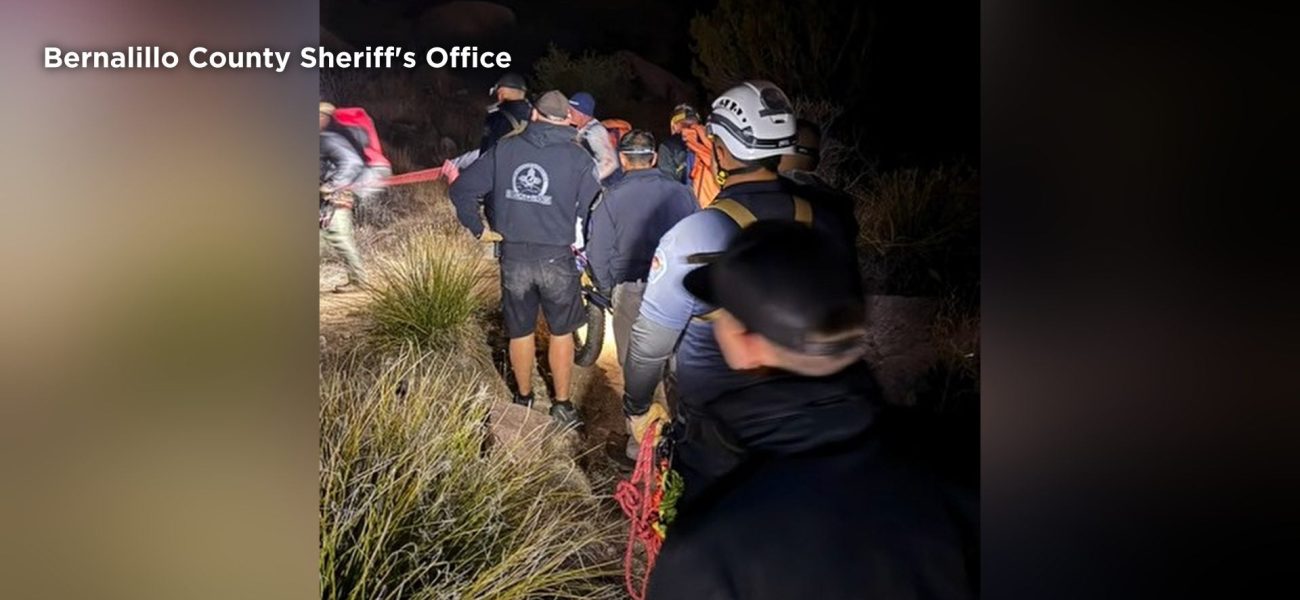
Behind the headlines of mere discovery lies an intricate ballet of logistics — and human dedication. BCSO’s Homicide Unit, though initially finding no overt signs of foul play, joined forces with the Office of the Medical Investigator (OMI) and Albuquerque Police Open Space. Their collective mandate? To navigate the formidable terrain not for rescue, but for dignified retrieval. It’s a painstaking process, often under unforgiving conditions, that highlights the unseen sacrifices made by those who answer such calls. They meticulously placed the individual into a wheeled basket — a specialized litter designed for such arduous tasks — and carefully guided the remains down narrow, rock-strewn passages, a somber procession against the backdrop of an indifferent sky.
Sheriff’s officials, ever stoic, were quick to temper speculation. “We’re treating this with the utmost gravity, as we do any loss of life in our jurisdiction,” stated Deputy Elena Rodriguez, a spokesperson for the Bernalillo County Sheriff’s Office. “While initial indicators suggest no foul play, the Office of the Medical Investigator’s findings will be paramount in understanding the precise circumstances. We owe that to the deceased and their loved ones.” This methodical approach underscores the complex truth that not every death in nature carries the sensational weight of a crime, sometimes it’s just the quiet surrender to the elements, or to an unseen internal foe.
Still, the La Luz Trail isn’t merely a path; it’s an institution, drawing some 100,000 visitors annually, many of whom underestimate its challenges. It’s a brutal ascent, gaining nearly 4,000 feet in altitude over eight miles, testing even the most seasoned hikers. And while the mountains offer breathtaking beauty, they don’t distinguish between the prepared — and the presumptuous. In 2022 alone, New Mexico Search and Rescue (NMSAR) responded to 455 incidents across the state, resulting in 31 fatalities, underscoring the inherent risks. (Source: New Mexico Department of Public Safety). These numbers, frankly, only tell part of the story.
Dr. Imogen Davies, Chief Medical Investigator for Bernalillo County, articulated the somber reality from her office, far removed from the trail’s immediate demands. “The mountains, as beautiful as they’re, demand respect — and preparedness,” she observed, her voice measured. “Our role now is to meticulously piece together the narrative this individual’s body tells, ensuring every detail is accounted for with dignity and scientific rigor.” It’s a profound responsibility, interpreting the silent language of the deceased to provide answers to the living.
📄 POLICY WIRE WHITEPAPER PUBLISHED: PAKISTAN'S NATIONAL SECURITY POLICY PRIORITIES
👉 READ BY CLICKING HEREAnd so, while the immediate focus remains on identifying the individual and determining the cause of death, the incident quietly resonates beyond New Mexico’s high desert. It’s a stark reminder of humanity’s fragile place within nature’s unyielding embrace — a universal truth that echoes from the peaks of the Sandias to the rugged Hindu Kush. In places like Pakistan, where vast mountain ranges dominate, the discovery of remains in remote, revered landscapes often elicits a similar collective solemnity, emphasizing the profound respect for human life and the delicate balance of existence. The arduous efforts by first responders to retrieve the deceased from challenging terrain aren’t merely logistical exercises; they’re profound acts of reverence, reflecting a shared human commitment to dignity, even in death, across disparate cultures and geographies.
What This Means
This incident, though localized, carries broader implications for policy — and public perception. For one, it spotlights the considerable strain placed on emergency services, which are already stretched thin in a state where New Mexico’s climate continues to present environmental challenges. The costs associated with such multi-agency recovery operations are substantial, involving specialized equipment, highly trained personnel, and many man-hours — resources that draw from budgets intended for broader public safety initiatives. It’s an economic burden that seldom makes headlines, but it’s undeniably real.
Politically, incidents like these — though tragic and infrequent — can prompt renewed calls for public awareness campaigns regarding wilderness safety. Don’t be surprised if discussions surface about increased signage, enhanced trail maintenance, or even the strategic placement of emergency beacons along popular, challenging routes. These aren’t trivial considerations; they represent tangible policy decisions aimed at mitigating risk in beloved public spaces. there’s an intangible impact on the community itself: a subtle, collective re-evaluation of nature’s benevolence, a reminder that even in places of profound beauty, life remains exquisitely ephemeral. It’s a sobering thought, one that lingers long after the emergency lights have faded from the trailhead.