


F1 Star’s Missing $22M Hypercar: A Tale of Blackmail, Wagner, and Global Intrigue
POLICY WIRE — Munich, Germany — It’s hardly the typical narrative arc for a former Formula 1 driver. Adrian Sutil, a man who once navigated the world’s most demanding circuits at breakneck...

POLICY WIRE — Munich, Germany — It’s hardly the typical narrative arc for a former Formula 1 driver. Adrian Sutil, a man who once navigated the world’s most demanding circuits at breakneck speeds, now finds himself enmeshed in a far more treacherous, albeit stationary, drama: an alleged blackmail plot, shadowy figures invoking the Wagner Group, and the spectacular disappearance of his nearly priceless Koenigsegg One:1 hypercar.
But this isn’t just about a missing vehicle; it’s a stark, opulent symptom of a global underworld where extreme wealth intersects with audacious crime. At its core, the surreal saga began not with the car’s vanishing act, but with Sutil’s November 2025 arrest and subsequent pre-trial detention on suspicion of fraud and embezzlement. And while he vehemently denies these charges, the plot thickened considerably when his attorney, Dirk Schmitz, unveiled a stunning counter-narrative.
“The message was clear – cars out, or else,” Schmitz shot back, painting his client as the victim. It’s a chilling directive, especially considering the unparalleled rarity of the missing Swedish marvel. Only seven Koenigsegg One:1s ever rolled off the production line between 2014 and 2015, each a technological paragon, achieving an unheard-of 1:1 power-to-weight ratio. Autoevolution estimates this particular machine’s worth at a staggering $22 million, making its disappearance a theft not just of property, but of a veritable automotive legend. (Imagine trying to hide something that conspicuous.)
Behind the headlines of Sutil’s legal troubles lies an even more disquieting detail: an anonymous phone call. German publication Auto Motor und Sport previously reported that Sutil received a menacing call from an individual identifying himself only as ‘Vladimir,’ purportedly linked to Russia’s notorious Wagner Group. This particular thread — the specter of a paramilitary organization dabbling in high-value asset extortion — lends the incident a profoundly unsettling geopolitical dimension, far removed from the glitz of F1 paddocks.
Interpol has since launched an international investigation, casting a wide net for the missing vehicular unicorn. Such cases, involving assets of immense liquidity and clandestine value, highlight the labyrinthine challenges global law enforcement confronts. “This isn’t a simple joyride; it’s an intricate play for leverage or illicit profit, demanding cross-border cooperation on an unprecedented scale,” an Interpol spokesperson, who requested anonymity due to the ongoing nature of the investigation, commented to Policy Wire, underscoring the complexity.
Still, the notion that a car of such limited production and extreme value could simply vanish points to a highly organized, international operation. It suggests a black market sophisticated enough to absorb such a unique asset, potentially re-registering it or dismantling it for parts, even in regions far from Europe’s economic centers. And this is where the implications reach even into developing luxury markets. Countries like Pakistan, for instance, with burgeoning ultra-high-net-worth individuals and less stringent oversight in some financial corners, could theoretically become transit points or even end-destinations for such highly sought-after, though illicit, goods. While there’s no direct evidence linking this case to the region, it illustrates the global reach of such criminal networks, as explored in articles like Gwadar’s Moment Has Arrived, which discusses new economic corridors and potential investment flows.
📄 POLICY WIRE WHITEPAPER PUBLISHED: PAKISTAN'S NATIONAL SECURITY POLICY PRIORITIES
👉 READ BY CLICKING HERESutil’s broader car collection is, in itself, a testament to prodigious wealth and discerning taste: a Mercedes 600 once owned by Elvis Presley, a Rolls-Royce Phantom, a Ferrari California, and another Koenigsegg, the Regera, are all part of his extensive fleet. But it’s the One:1 that’s taken center stage in this unfolding drama.
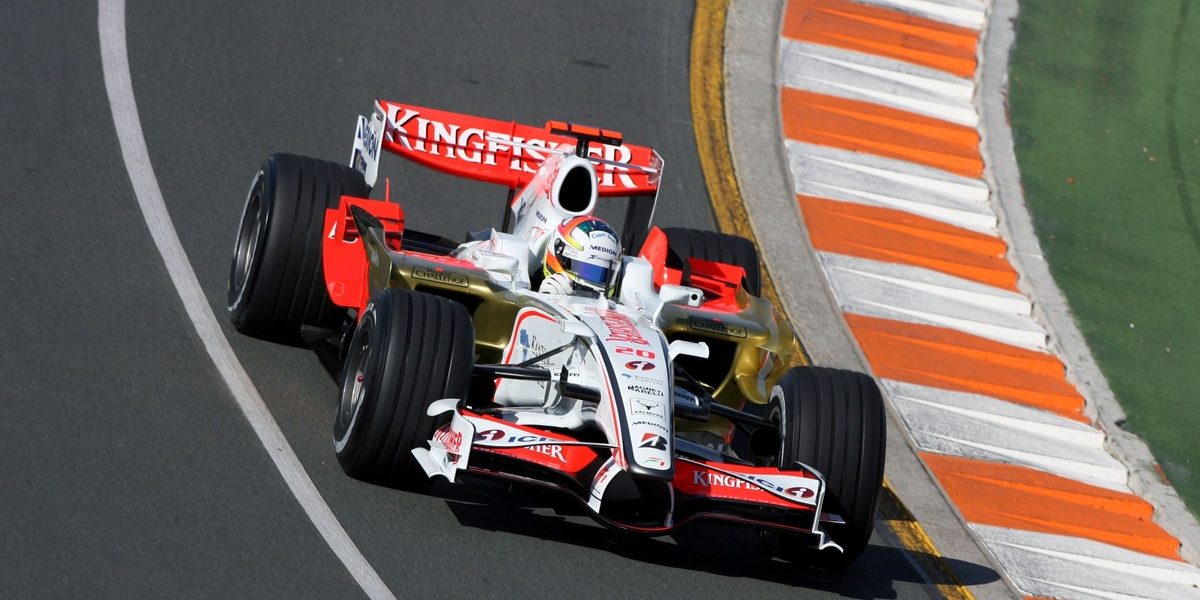
A veteran of 128 F1 starts across seven seasons from 2007 to 2014, Sutil’s career saw him race for Spyker, Force India, and Sauber. He’s always been an individual accustomed to high stakes, but this off-track ordeal presents a wholly different kind of risk – one where the finish line isn’t a checkered flag, but perhaps, the retrieval of his automotive treasure and the clearing of his name.
What This Means
The disappearance of Adrian Sutil’s Koenigsegg One:1, set against a backdrop of blackmail accusations and alleged ties to a notorious mercenary group, underscores a darker facet of hyper-luxury markets. It signals a growing, pernicious intersection between extreme wealth, organized crime, — and geopolitical leverage. For one, it highlights the vulnerability of even the most unique, ostensibly un-hideable, assets to sophisticated illicit networks. These aren’t opportunists; they’re often professional actors with cross-border capabilities. Economically, such high-profile thefts can momentarily spook the collectors’ market for ultra-rare items, emphasizing the need for enhanced security protocols and more robust international cooperation frameworks.
Politically, the alleged involvement of the Wagner Group, a private military contractor with a murky and often violent global footprint, raises unsettling questions about their diversification into criminal enterprises beyond their conventional, brutal operations. If confirmed, it suggests a broader trend of non-state actors leveraging their fearsome reputations for direct financial gain through extortion or theft, complicating the efforts of national and international law enforcement bodies like Interpol. It’s a stark reminder that wealth, especially when concentrated and conspicuous, can attract attention from unsavory elements operating far outside traditional criminal syndicates, pushing the boundaries of what constitutes ‘organized crime’ in the 21st century.