


Germany’s Whale of a Tale: A Geopolitical Lifeline Navigates the North Sea
POLICY WIRE — Wilhelmshaven, Germany — It wasn’t a diplomatic motorcade, nor was it a flotilla carrying humanitarian aid to some beleaguered shore. Instead, a several-ton emblem of...

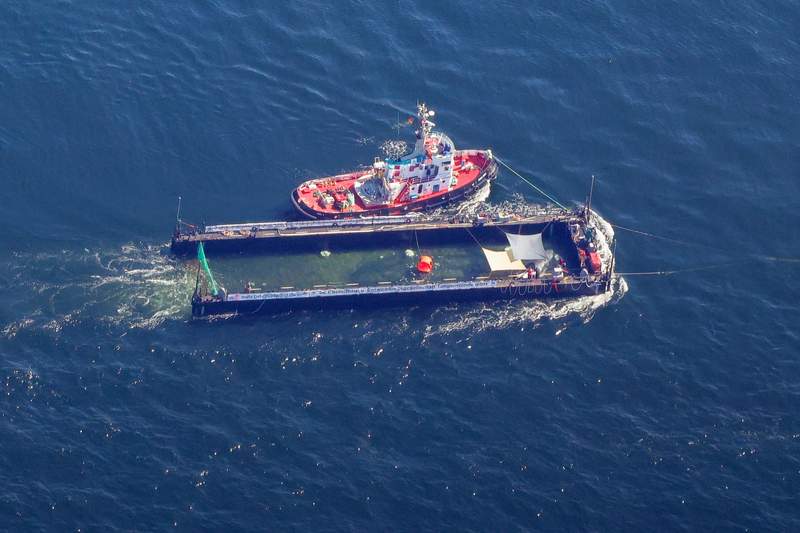
POLICY WIRE — Wilhelmshaven, Germany — It wasn’t a diplomatic motorcade, nor was it a flotilla carrying humanitarian aid to some beleaguered shore. Instead, a several-ton emblem of Europe’s environmental conscience—a young sperm whale, disoriented and far from its deep-water kin—is presently traversing the German Bight. Its journey isn’t voluntary; it’s the subject of a meticulously choreographed, immensely expensive rescue operation, culminating in its release into the North Sea, a stark, wet testament to the continent’s commitment to its marine biome.
The creature, believed to be a juvenile male, became a national cause célèbre after stranding itself near the shallow Wadden Sea coast, a UNESCO World Heritage site known for its delicate ecosystem. German authorities, in conjunction with international conservation groups, initiated what some cynics might term an ‘aquatic rendition’ — a complex recovery and transport mission involving specialized vessels, environmental scientists, and no small amount of political will. It’s a colossal undertaking, one that pits the fragile life of a single cetacean against the brutal economic calculus of such endeavors. (And let’s be honest, the PR value alone is priceless).
Behind the headlines of this feel-good narrative lurks a more sobering reality: such incidents are becoming distressingly frequent. But it’s also a demonstration of robust national infrastructure and a capacity for coordinated response that many nations—especially those grappling with more immediate existential crises—can only observe with a mix of admiration and perhaps a touch of envy.
Steffen Hebestreit, Germany’s Government Spokesperson, shot back at suggestions of excessive cost. “Our commitment to biodiversity isn’t just rhetoric; it’s a living, breathing imperative, even if it weighs a considerable amount,” he declared from Berlin, clearly referencing the whale’s substantial bulk. “This rescue represents the very best of our values, a signal that our environmental responsibilities extend to every creature, however large or small. We won’t waver.”
The convoy, a small fleet of support ships and tugs shepherding the leviathan in a custom-built floating pen, isn’t just a spectacle of German engineering and ecological altruism. It’s also a microcosm of broader global challenges facing marine life. Maritime traffic in European waters, for instance, has increased by over 50% in the last two decades, contributing to noise pollution that disrupts marine mammal communication and migration patterns, according to the European Environment Agency. And it’s not just Europe; similar pressures bear down on the Arabian Sea, where shipping lanes vital to Pakistan’s economy intersect with critical habitats for whales and dolphins, often with far less capacity for intervention.
📄 POLICY WIRE WHITEPAPER PUBLISHED: PAKISTAN'S NATIONAL SECURITY POLICY PRIORITIES
👉 READ BY CLICKING HEREStill, the German effort underscores a shared global imperative. From the frigid North Sea to the warm currents off Karachi, ocean health is interconnected. It’s a point not lost on Brussels. “These aren’t isolated incidents. They’re stark reminders of the ocean’s silent plea, and frankly, our collective responsibility,” observed Virginijus Sinkevičius, the EU Commissioner for Environment, Oceans and Fisheries, speaking from Luxembourg. “The success of this operation sends a powerful signal far beyond the North Sea—a signal for international cooperation in marine conservation that benefits us all, from the Baltic to the Bay of Bengal.”
The logistical bill for such a complex operation can be staggering. Transporting something weighing upwards of 30-40 tons, requiring continuous monitoring and specific environmental conditions, isn’t cheap. It demands resources that often feel disproportionate to a single life, yet proponents argue it’s an investment in principle. It’s akin to the high cost of maintaining air ambulance lifelines—the financial strain is immense, but the moral imperative often outweighs the raw numbers.
What This Means
At its core, this German whale rescue isn’t merely a feel-good story; it’s a profound political — and economic statement. It signals Germany’s continued role as a leading environmental advocate within the European Union, influencing policy and setting a precedent for resource allocation towards conservation. Economically, while the immediate costs are high, the longer-term implications involve safeguarding valuable marine ecosystems that underpin fishing industries and coastal tourism—sectors that, frankly, can’t afford further degradation. the episode subtly reinforces Germany’s soft power, projecting an image of a conscientious, capable nation committed to global well-being. And it’s a quiet challenge, too, to other maritime nations—especially those in developing regions—to consider their own marine stewardship in an increasingly interconnected and vulnerable aquatic world.