

Pakistan’s Perilous Diplomacy: When Mediation Efforts Meet a Precarious Economy
POLICY WIRE — Islamabad, Pakistan — The subtle tremors from the Strait of Hormuz often reach far beyond the Persian Gulf, but for Pakistan, those distant rumbles now feel like a direct hit....

POLICY WIRE — Islamabad, Pakistan — The subtle tremors from the Strait of Hormuz often reach far beyond the Persian Gulf, but for Pakistan, those distant rumbles now feel like a direct hit. It’s a cruel irony, isn’t it? A nation attempting to broker peace between Washington and Tehran finds itself increasingly imperiled by the very instability it seeks to quell, its economic scaffolding — painstakingly erected with IMF backing — showing conspicuous cracks. Islamabad’s ambitious diplomatic gambit, aimed at de-escalating one of the globe’s most incendiary flashpoints, has inadvertently positioned its already delicate finances squarely in the line of fire.
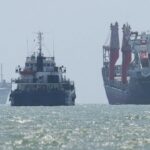
No lasting calm has materialized. Instead, global energy markets remain a tempest, oil prices oscillate wildly, and shipping lanes — those crucial arteries of global trade — are frequently fraught with peril. Pakistan, a perennial tightrope walker on the international financial stage, simply doesn’t possess the fiscal cushions to absorb such relentless blows. Its foreign exchange reserves, perpetually thin, offer minimal insulation against exogenous shocks. Dependence on imported energy, especially crude oil, means every uptick in global prices sends a shiver down the spine of its economic planners, accelerating inflationary pressures and further eroding purchasing power for ordinary citizens. They’ve got enough on their plate already, don’t they?
And so, the mediation effort, born of a desire for regional stability and perhaps a quiet nod from both Washington and Tehran, has become a double-edged sword. On one hand, it elevates Pakistan’s diplomatic profile, positioning it as a potentially pivotal player in Muslim world affairs. But on the other, it ties its economic fortunes directly to the vicissitudes of a conflict far grander and more intractable than Islamabad can possibly control. Behind the headlines, the nation’s technocrats — those quiet custodians of its financial fate — are quietly despairing.
“Our commitment to regional de-escalation isn’t just about lofty diplomatic ideals; it’s a stark, undeniable economic necessity,” opined Pakistan’s Foreign Minister, Jalil Abbas Jilani, during a recent press briefing in Islamabad. “Every barrel of crude that surges past $90 threatens to unravel years of painstaking fiscal tightening and the hard-won confidence of international lenders.” He’s not wrong, of course. For a country that has endured 23 IMF programs since 1958 — more than almost any other nation — even a flicker of instability can spell disaster. The consequences of such widespread economic distress, let’s be frank, extend far beyond just numbers on a ledger.
Still, Washington offers little in the way of succour for Pakistan’s economic anxieties, choosing instead to maintain its firm line on Iran. “While we appreciate all diplomatic overtures aimed at reducing tensions in the region, our policy towards Tehran remains unequivocal,” shot back a U.S. State Department spokesperson, Matthew Miller, when questioned about Pakistan’s dual role. “There can be no compromise on nuclear proliferation, state-sponsored terrorism, or destabilizing regional actions.” It’s a message that underscores the profound chasm Pakistan is attempting to bridge, often with little tangible reward for its efforts.
📄 POLICY WIRE WHITEPAPER PUBLISHED: PAKISTAN'S NATIONAL SECURITY POLICY PRIORITIES
👉 READ BY CLICKING HEREThe International Monetary Fund (IMF), a ubiquitous presence in Pakistan’s economic narrative, remains a watchful overseer. Its latest $3 billion standby arrangement, a lifeline extended last year, came with stringent conditions: fiscal discipline, energy reforms, and revenue generation. But how does one implement revenue generation when the cost of living spirals due to external energy shocks? It’s a Gordian knot, isn’t it? Brent crude oil, a global benchmark, briefly surged past $90 a barrel in September 2023, a significant escalation that immediately translates into higher import bills for energy-dependent nations like Pakistan, according to data from the U.S. Energy Information Administration (EIA).
This precarious situation is further compounded by Pakistan’s broader South Asian context. Its strategic location — bordering Iran, Afghanistan, India, and China — means it’s perpetually navigating complex geopolitical currents. Any conflagration in the Middle East sends ripples through its own security calculus, demanding increased vigilance and resource allocation, diverting funds from much-needed development. The perilous calculus is clear: regional stability isn’t just an aspiration; it’s an existential prerequisite for economic survival.
What This Means
At its core, Pakistan’s predicament highlights the harsh realities of middle-power diplomacy in an increasingly multipolar yet volatile world. The attempt to mediate, while laudable on humanitarian and diplomatic grounds, has exposed the nation’s profound economic vulnerabilities in ways that can’t be easily dismissed. Politically, President Asif Ali Zardari’s administration faces a delicate balancing act. Maintaining credibility as a regional peacemaker while simultaneously placating an electorate grappling with skyrocketing inflation and energy costs is no small feat. A prolonged period of elevated oil prices could necessitate further austerity measures, risking social unrest and political instability — a familiar ghost for Pakistan’s leadership.
Economically, the country’s dependence on external financing and imported energy means its destiny is, to a disconcerting degree, tied to global geopolitical winds. Should the US-Iran stalemate harden into open conflict, or simply continue to fester, Pakistan’s debt servicing — already a monumental burden — will only intensify. Its currency would likely depreciate further, exacerbating inflation — and pushing more of its populace into poverty. For a nation that has often sought to leverage its strategic position, the current episode serves as a sobering reminder that geopolitical ambition, without a robust domestic economy, can exact a truly punishing price.
📖 GET YOUR FREE COPY NOW OF POLICY WIRE DIGITAL MAGAZINE JULY 2026 EDITION
👉 READ & DOWNLOAD FREE MAGAZINE