


The Calculus of Command: Shanahan’s Distilled Wisdom in a Data-Driven Draft Landscape
POLICY WIRE — San Francisco, USA — In the cutthroat arena of professional football, where a single personnel decision can alter a franchise’s trajectory for years, the San Francisco...

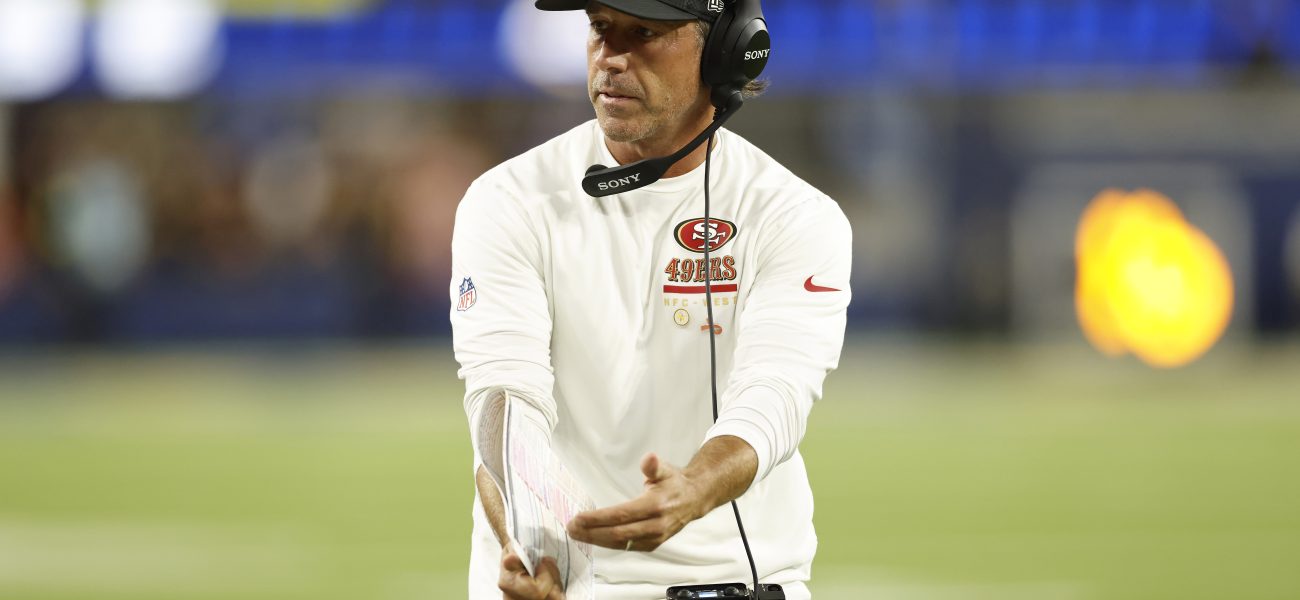
POLICY WIRE — San Francisco, USA — In the cutthroat arena of professional football, where a single personnel decision can alter a franchise’s trajectory for years, the San Francisco 49ers’ Head Coach Kyle Shanahan employs a decidedly counter-intuitive approach to talent evaluation. He doesn’t pore over college film until February, a revelation that recently rippled across social media, sparking predictable digital merriment. Yet, behind the headlines and internet jests, lies a masterclass in executive delegation and highly specialized information triage — a model, perhaps, for high-stakes decision-making far beyond the gridiron.
It’s a peculiar dichotomy: the man ultimately responsible for the on-field product largely abstains from the year-round grind of collegiate scouting. Shanahan, a tactician famed for his offensive prowess, dedicates himself wholly to the NFL calendar. That’s his purview. His scouts, his general manager John Lynch, they’re the eyes — and ears in the collegiate trenches. “I feel like I’m just always playing catch-up,” Shanahan opined on the Rich Eisen Show, a candid admission from a figure accustomed to meticulous control. He explained that Lynch’s department shoulders the heavy lifting throughout the year, arriving at an informed consensus by January’s close, post-season. Pro Days — and Combines might fine-tune things, but the core assessment remains rooted in film.
And that’s where Shanahan steps in, months after the initial deluge. He isn’t watching games in real-time, nor is he delving into every prospect’s full collegiate career. His method? Highlight reels, meticulously curated by his own position coaches. “We give all the position coaches a responsibility to make highlight tapes on everybody,” he confessed. It’s an aggressive filter, a system designed to distill hundreds of potential candidates into digestible, impactful summaries. Shanahan’s rationale is stark, almost brutal in its efficiency: if a player can’t impress him in a concentrated burst of top-tier action, what’s the point of investing more precious time? “If I don’t like their highlight tape, then I’m not going to watch anything after,” he stated unequivocally. It’s a pragmatic, if dispassionate, winnowing process.
This isn’t mere laziness; it’s a strategic necessity within a system where the head coach’s focus must remain razor-sharp on the active roster and immediate tactical challenges. It’s a hierarchical information flow, where specialized departments feed filtered data up the chain, allowing the principal decision-maker to focus on synthesis and final judgment. The NFL, after all, is a global enterprise these days, with scouting departments increasingly casting wider nets (see: CFL Draft Pick Navigates NFL Dreams Amidst Global Talent Flow). One could draw a parallel to certain bureaucratic structures in the Muslim world, particularly in countries like Pakistan, where leaders rely heavily on trusted, specialized advisors to distill complex intelligence and policy options. The leader, burdened with the totality of governance, simply cannot—and shouldn’t—be bogged down in every granular detail. They depend on the fidelity and competence of their trusted inner circles, much like Shanahan relies on his coaches to pre-digest the raw material.
📄 POLICY WIRE WHITEPAPER PUBLISHED: PAKISTAN'S NATIONAL SECURITY POLICY PRIORITIES
👉 READ BY CLICKING HEREStill, the process isn’t without its heartaches. Shanahan admitted to occasionally falling for prospects he knows the 49ers have no prayer of acquiring. You get worked up, he says, — and then reality bites. Out of perhaps 200 prospects he reviews via highlight packages, the team might ultimately draft a mere 4 to 8 individuals. That’s a success rate of 2-4% from his filtered pool, a stark reminder of the immense competition and the often-unrequited investment of emotional capital.
What This Means
This highly centralized yet delegated scouting model speaks volumes about modern organizational leadership, particularly in environments characterized by immense data flow and extreme performance pressure. Economically, it underscores the value of specialization: the time Shanahan *doesn’t* spend scouting is time he dedicates to refining game plans, developing players, and optimizing on-field strategy – activities directly correlated with wins and, consequently, franchise revenue. Politically, it highlights the inherent challenges of informed decision-making at the apex of any complex institution. Leaders, be they coaches or heads of state, aren’t omniscient. Their effectiveness hinges on their ability to cultivate — and trust — robust information pipelines, even if those pipelines present them with a highly refined, sometimes truncated, view of reality. The ‘highlight reel’ approach, while derided by some as superficial, might just be the logical evolution of executive function in an age of overwhelming information. It’s a calculated gamble on efficiency over exhaustive, personal immersion. For Shanahan, it’s about making the best decisions possible with the most relevant, pre-processed intelligence available, ensuring his precious bandwidth remains focused on the strategic maneuvers that truly define a championship contender.