


Pickleball’s Billions: How a Senior Pastime Became Wall Street’s Latest Plaything
POLICY WIRE — New York, United States — It used to be the genteel pastime of America’s sun-belt retirees, a seemingly innocuous fusion of tennis, badminton, and ping-pong played with perforated...

POLICY WIRE — New York, United States — It used to be the genteel pastime of America’s sun-belt retirees, a seemingly innocuous fusion of tennis, badminton, and ping-pong played with perforated plastic balls. Now, however, the thwack of a pickleball paddle resonates with the distinct clang of cold, hard cash, having captured the imagination – and wallets – of some of the most formidable players in global finance. This isn’t just about sporting prowess; it’s about market capture, about the relentless pursuit of growth in every conceivable niche.
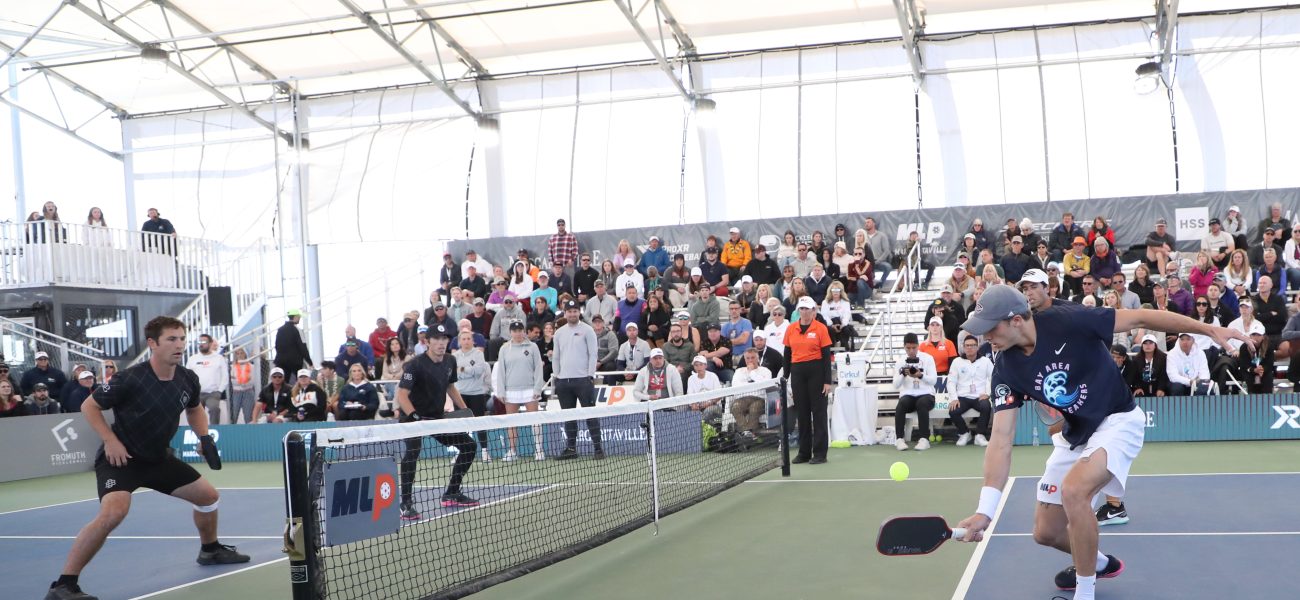
The latest, and certainly the most audacious, maneuver involves an colossal $225 million capital infusion into Pickleball Inc. – the umbrella entity orchestrating Major League Pickleball (MLP) and the Professional Pickleball Association (PPA Tour). Apollo Sports Capital, the dedicated sports fund of private equity titan Apollo Global Management, alongside Dundon Capital Partners, helmed by the indefatigable Tom Dundon (owner of the Carolina Hurricanes and Portland Trail Blazers, among other ventures), are the architects of this financial gambit. It’s a remarkable sum for a sport whose primary demographic once concerned itself more with early bird specials than enterprise valuations.
And what does such an astounding sum signify? For Connor Pardoe, the founder of the PPA Tour — and CEO of Pickleball Inc., it’s nothing short of a paradigm shift. “This is a seismic day for the rapidly growing business of pickleball at all levels,” Pardoe asserted, his words echoing across the nascent empire. “This investment allows us to fully integrate the sport into one cohesive ecosystem – uniting professional pickleball, consumer goods, technology, and media under a single, unified platform. By bringing together the best companies in the space, we’re creating an end-to-end experience that serves every pickleballer on their journey, whether they’re a casual enthusiast or a dedicated fanatic.” He’s not just talking about games; he’s talking about an entirely new industry sector.
Behind the headlines, this investment catapults Pickleball Inc.’s total fundraising to a staggering $315 million, valuing the company at a cool $750 million, according to CNBC. Such figures underscore a palpable belief in pickleball’s future, a conviction that it’s no mere fad. Still, one can’t help but observe the almost comically rapid ascent of what was, until very recently, an obscure diversion.
The sheer velocity of the sport’s expansion offers some justification for the financial fervor. A 2025 report from the Sports & Fitness Industry Association revealed that the estimated number of players in America has ballooned from 4.2 million in 2020 to over 24 million last year. That’s a nearly six-fold increase in just three years (a growth rate most startups can only dream of).
MLP Commissioner Samin Odhwani shot back at any lingering skepticism. “This capital raise will allow us to expand our focus into new and scalable opportunities like content, media, and the development of infrastructure to support our fast growing events,” Odhwani conveyed in a statement, clearly eyeing an aggressive path forward. “The continued and dynamic year-over-year growth data has proven without doubt that pickleball is no longer an emerging sport, and is instead quickly becoming the next tier one sport in America.” It’s a bold claim, one demanding a substantial return on investment.
Last year, the MLP and PPA Tour collectively garnered $30 million in sponsorships, contributing to a total revenue of $60 million. Projections for 2026 hint at a combined revenue of $74 million. It’s an undeniable surge, reflecting a broader trend where investment capital, particularly from sophisticated players like Apollo, seeks out undervalued or rapidly expanding cultural phenomena. The quest for the ‘next big thing’ isn’t confined to tech anymore; it’s increasingly permeating sports and entertainment, as evidenced by similar investment surges across various sporting disciplines, from Formula 1 to esports.
📄 POLICY WIRE WHITEPAPER PUBLISHED: PAKISTAN'S NATIONAL SECURITY POLICY PRIORITIES
👉 READ BY CLICKING HEREWhat This Means
This monumental investment isn’t merely about pickleball; it’s a bellwether for the evolving landscape of private equity in sports. It demonstrates a strategic pivot by major financial houses towards cultural assets perceived to have significant, untapped monetization potential. For policymakers, this signals a need to consider the economic implications of grassroots sports development – or, in this case, its hyper-accelerated commercialization. Rapid growth demands infrastructure, community engagement, and potentially, regulatory frameworks that ensure fair play not just on the court, but in the marketplace.
Economically, it suggests a new frontier for capital deployment, where consumer participation numbers translate directly into investment opportunities. We’re witnessing the financialization of leisure, where what was once a simple recreational activity becomes a managed, optimized product. This phenomenon isn’t geographically constrained either; while pickleball’s current epicenter is North America, the global hunt for returns means similar capital injections could eventually target emerging sports or even cultural exports in diverse regions, including the rapidly growing middle-class markets across South Asia and the Muslim world. One needs only to look at the increasing investment in sports infrastructure and professional leagues in the Gulf states, or the unpredictable economics of football clubs, to understand that capital’s global hunger is boundless. It’s a testament to capital’s fluidity – its relentless search for yield, even in the most unlikely of venues.
The cultural implications are equally profound. Will this financialization homogenize the sport, stripping away its laid-back charm in favor of ruthless professionalism? Or will it genuinely elevate pickleball to a global spectacle, much like how cricket became a unifying passion across nations, including Pakistan and other parts of the subcontinent? (Indeed, the path from backyard game to national obsession is a well-trodden one). The calculus of victory, it seems, now extends far beyond the scoreboards, reaching deep into balance sheets and investor portfolios, redefining what ‘play’ truly means in the 21st century.