


Dukono’s Relentless Whisper: Indonesia’s Persistent Volcano and the Geopolitical Ash Cloud
POLICY WIRE — Jakarta, Indonesia — It isn’t the sudden, apocalyptic burst that grips global headlines, but the relentless, almost mundane exhalation of ash and gas from Indonesia’s Mount...

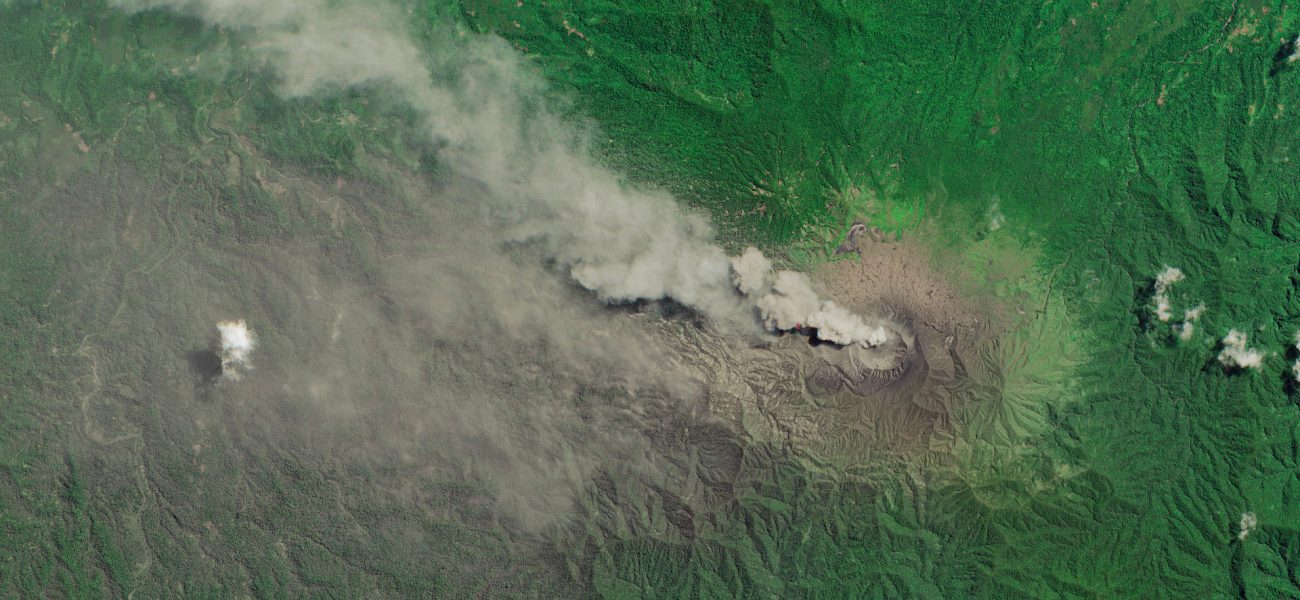
POLICY WIRE — Jakarta, Indonesia — It isn’t the sudden, apocalyptic burst that grips global headlines, but the relentless, almost mundane exhalation of ash and gas from Indonesia’s Mount Dukono. Day after day, for decades, this venerable stratovolcano on Halmahera island performs its quiet, debilitating dance, a persistent grumble in the Earth’s crust that seldom registers beyond local misery. Still, its ongoing, low-grade activity — a ceaseless plume reaching often kilometers into the sky — quietly underscores a profound geopolitical vulnerability, shaping lives and economies in ways more insidious than an explosive cataclysm.
For those residing in its shadow, Dukono’s daily routine isn’t a distant geological curiosity; it’s a tangible, suffocating reality. Volcanic ash, fine and abrasive, blankets crops, clogs water sources, and infiltrates homes, transforming the quotidian into an exercise in endurance. This isn’t merely an environmental nuisance; it’s an economic stranglehold on agricultural communities, a public health crisis affecting respiratory systems, and a logistical nightmare for regional air travel. But it’s also a testament to human resilience, of a kind that Western media rarely captures. Communities here, they’ve adapted, building lives around an active crater that’s a constant reminder of nature’s indifference.
And the cumulative toll is substantial. Indonesia, sitting squarely on the Pacific Ring of Fire, hosts over 120 active volcanoes, with an estimated 5 million people residing within hazardous proximity, according to data from the Indonesian Center for Volcanology and Geological Hazard Mitigation (PVMBG). Dukono represents the grinding, unsung front of this geological reality. Its current alert level, often at Level II (Watch), doesn’t warrant mass evacuations for every puff, but necessitates continuous vigilance and drains local resources.
“We’ve learned to coexist with nature’s fury here,” stated General Suhardiyanto, head of the National Disaster Management Agency (BNPB), during a recent press briefing. He spoke with a weary pragmatism borne of countless emergencies. “But our paramount duty remains the safety of our citizens, and we won’t falter in providing the necessary resources for evacuation and recovery, however frequent the need.” His words, delivered against the backdrop of Jakarta’s bustling political machinery, felt a world away from the ash-choked villages of Halmahera.
This unending geological performance has wider, if less obvious, repercussions. Airspace restrictions due to ash plumes can disrupt shipping lanes and flight paths crucial for intra-archipelago trade and beyond, affecting supply chains throughout Southeast Asia. Imagine the minor but persistent delays – a thousand small cuts to an already intricate logistical network. For a sprawling maritime nation like Indonesia, with its myriad islands reliant on air and sea connections, even a localized, persistent disruption cascades.
“Dukono isn’t a showy, explosive threat like some of its brethren; it’s more akin to a persistent, irritating cough on the landscape,” observed Dr. Lena Khan, a volcanologist at the Singapore Earth Observatory. Her assessment, delivered with crisp academic detachment, cut to the core of the problem. “Its relentless, low-level activity poses a unique, debilitating challenge for long-term regional planning and community health – it’s a slow burn, not a sudden conflagration.” It’s this protracted struggle that often escapes the urgent, episodic news cycle, yet it quietly erodes the foundations of stability.
📄 POLICY WIRE WHITEPAPER PUBLISHED: PAKISTAN'S NATIONAL SECURITY POLICY PRIORITIES
👉 READ BY CLICKING HERESo, while the world often fixates on the dramatic eruptions, Dukono’s enduring exhalation forces a critical look at how nations, particularly those in vulnerable regions like South Asia and the broader Muslim world, manage chronic environmental threats. It’s a policy conundrum, isn’t it? How do you fund continuous mitigation and adaptation for an event that’s always happening but never quite reaching the threshold of global emergency? It requires a different kind of foresight, a long-game strategy that many governments, perpetually focused on the next electoral cycle, find elusive. Climate cracks, whether glacial or volcanic, don’t respect political timelines.
What This Means
At its core, Dukono’s persistent activity reveals the delicate balance between human habitation and the planet’s raw geological power, especially for nations like Indonesia that straddle volatile tectonic plates. Politically, the ongoing low-level crisis presents a significant test for local — and national governance. It demands consistent allocation of resources for monitoring, public health initiatives, and economic relief programs – funds that could otherwise be directed towards development. Failure to effectively manage such chronic natural challenges can erode public trust and potentially exacerbate social inequalities, particularly among marginalized communities directly impacted by ashfall and livelihood destruction.
Economically, the indirect costs are staggering. Beyond agricultural losses, tourism (even niche adventure tourism) suffers, while crucial regional air routes experience unpredictable delays, adding to operational costs for airlines and freight carriers. This subtly impacts Indonesia’s standing as a growing economic power in Southeast Asia, diverting investment and attention from other development priorities. For the broader Muslim world and South Asia, this serves as a potent reminder of shared vulnerabilities to climate change and geological instability, urging greater regional cooperation in disaster preparedness and response mechanisms. Think about it: a persistent ash plume can ground flights carrying vital goods or even religious pilgrims, creating unexpected friction points. The economic ripples from a seemingly minor, continuous natural event can, over time, be more damaging than a single, headline-grabbing disaster – it’s a slow-motion unraveling.
Ultimately, Dukono is more than just a volcano; it’s a barometer for long-term national resilience and an object lesson in the complexities of governing a vast, geologically active archipelago. The silent exhalations speak volumes.