

Europe Eyes Broader Naval Presence as Red Sea Tensions Mount
POLICY WIRE — Brussels, Belgium — The ancient spice routes, now arteries for oil and container ships, have never been more riddled with peril. Recent months’ve seen an alarming surge in attacks...

POLICY WIRE — Brussels, Belgium — The ancient spice routes, now arteries for oil and container ships, have never been more riddled with peril. Recent months’ve seen an alarming surge in attacks targeting commercial vessels, consequentially recalibrating the geopolitical map of maritime security. And yet. Amidst this swirling vortex of instability, Europe isn’t just watching; it’s actively seeking to buttress its own naval muscle.
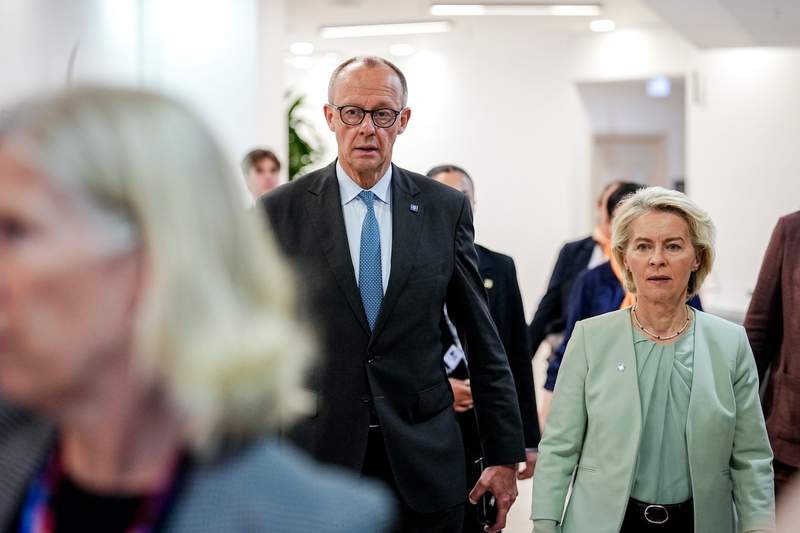
Behind the headlines, a consequential metamorphosis in European strategy’s quietly taking shape. It isn’t merely about reacting to current crises, but about projecting long-term stability in a region vital to global commerce. European Commission President Ursula von der Leyen, (you know, the pragmatist), has thrown her considerable weight behind calls for closer naval coordination in the Middle East.
For weeks, diplomats’ve privately acknowledged the mounting trepidation emanating from shipping magnates and insurance companies. Apparently, they’re not thrilled about the new shipping costs. The recent snafus in the Red Sea, for instance, have forced numerous shipping lines to reroute around the Cape of Good Hope, adding weeks and significant costs to journeys. This isn’t just a vexation; it’s a direct threat to Europe’s supply chains — and energy security.
“The security of our maritime routes is non-negotiable,” President von der Leyen asserted recently, her voice firm during a policy discussion on global trade. “Europe relies on these waters for everything from energy imports to export markets. We can’t, — and won’t, allow rogue actors to hold global commerce hostage. Closer coordination among our naval forces isn’t just an option; it’s an imperative for economic stability and regional peace.”
That’s a consequential metamorphosis from previous, often fragmented European engagements — the kind that felt more like patching holes than building a seaworthy vessel — what von der Leyen champions is a more cohesive, integrated approach, propelling beyond ad-hoc reactions toward an enduring, cooperative footprint.
The Shifting Tides of Commerce
Consider the Suez Canal. It handles approximately 12% of global trade by volume, according to data compiled by Lloyd’s List Intelligence. Disruptions there ripple outwards, impacting economies as far-flung as Jakarta — and Karachi. For South Asian nations, particularly energy-hungry giants like Pakistan and India, unhindered passage through the Red Sea and the Strait of Hormuz is the lifeblood of their economies, fueling industries and keeping lights on.
Still, navigating these treacherous waters isn’t just about naval hardware. It requires a delicate diplomatic touch, understanding the nuances of regional politics, and engaging with local stakeholders. It’s a high-stakes poker game, where every move matters.
A military solution? Not everyone buys it. Josep Borrell, the EU’s High Representative for Foreign Affairs and Security Policy, has consistently emphasized the need for a multi-faceted approach. “Military presence alone won’t solve the underlying political grievances,” Borrell noted in a recent (and refreshingly candid, I might add) interview. “We must engage all regional partners, including those in the wider Muslim world, to ensure that maritime security is a shared responsibility, not a burden foisted from outside. De-escalation remains our primary diplomatic goal.”
Indeed, countries like Pakistan, with its considerable naval capabilities and strategic location, hold a significant stake in the stability of these waterways. Collaborative exercises and intelligence sharing could offer an avenue for broader engagement, fostering a sense of shared ownership over regional security challenges.
But Europe’s historical presence in these waters, often tinged with colonial legacies, means any expansion of influence must be carefully framed as a partnership, not an imposition. Are regional powers ready to welcome a stronger European maritime footprint, or will they view it with suspicion?
What This Means
So, this push for deeper naval coordination carries profound implications. Politically, it signals Europe’s growing intent to act as a potent, autonomous global security player, rather than simply deferring to Washington. Economically, shielding these trade routes could mitigate inflationary pressures stemming from increased shipping costs, potentially saving billions for European consumers and businesses.
Diplomatically, it presents both opportunities — and pitfalls. Engaging regional navies — from the Gulf states to Pakistan, a chess move that could forge stronger alliances and shared security frameworks — might seem straightforward; however, it also risks entanglement in complex regional rivalries, demanding an almost preternatural diplomatic skill to avoid missteps or the perception of choosing sides in deeply entrenched conflicts. Related: EU Seeks Deeper Naval Coordination Amid Middle East Maritime Crisis
The arithmetic’s unyielding: unprotected global trade routes? They’re a direct threat to prosperity. Seriously, a sustained European naval presence could well be the only viable solution to the current maritime mayhem.
One senior defense analyst, Dr. Anja Schmidt of the European Policy Centre, put it plainly: “This isn’t about projecting force for its own sake. It’s about shielding global interests. Without a more robust, coordinated European presence, the global economy faces continued precarity, and the costs’ll only climb. Expect to see Europe’s blue-water ambitions materialize significantly in the coming year, whether through joint patrols or expanded mandates for existing missions.” The question isn’t if. It’s how quickly these plans can be fully actualized.