

The High Desert’s Unyielding Embrace: Santa Fe’s Sacred Ground Fights for Verdant Dignity Ahead of Memorial Day
POLICY WIRE — Santa Fe, New Mexico — It’s a paradox of profound import: a national cemetery, a hallowed patch of ground consecrated to the nation’s fallen, engaged in a tenacious, years-long struggle...

POLICY WIRE — Santa Fe, New Mexico — It’s a paradox of profound import: a national cemetery, a hallowed patch of ground consecrated to the nation’s fallen, engaged in a tenacious, years-long struggle against the very earth it inhabits. Just weeks before Memorial Day, a time when solemn remembrance demands pristine reverence, the Santa Fe National Cemetery finds itself in a protracted, decidedly un-serene skirmish with New Mexico’s high-desert landscape, a battle epitomized by persistent patches of stubborn, unyielding dirt.
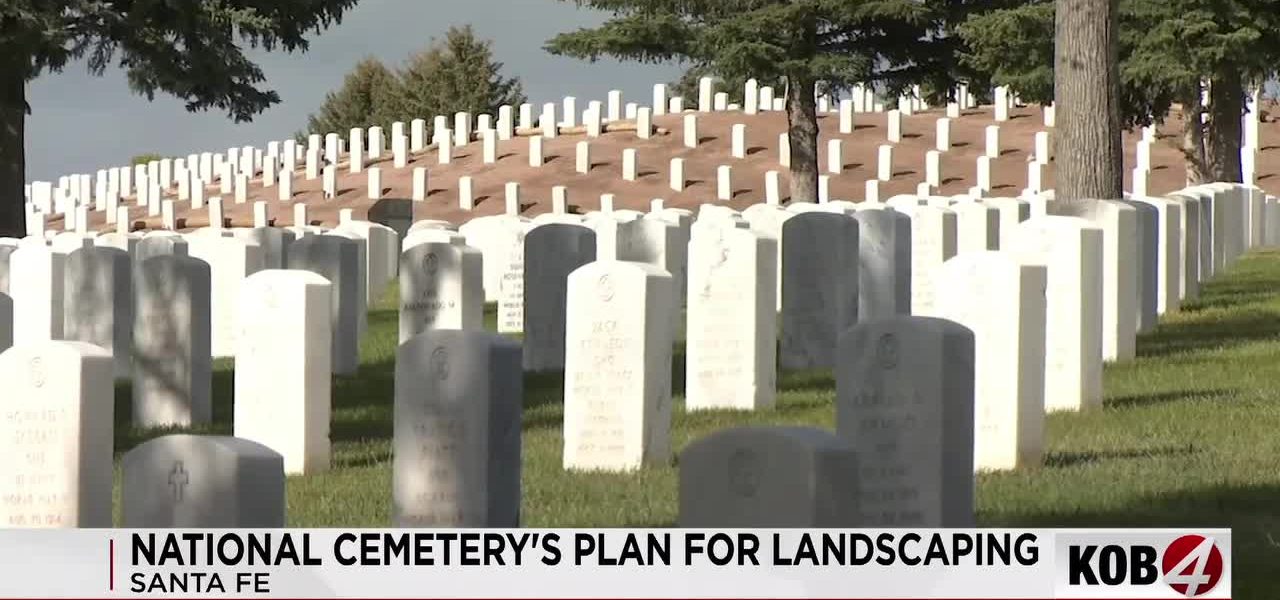
Behind the headlines of approaching holidays and patriotic tributes, a more mundane — but no less consequential — saga unfolds. For over a year now, visitors arriving to pay homage have occasionally encountered not the expected carpet of emerald green, but rather significant swaths of barren soil, particularly in Section Nine, one of the cemetery’s most expansive sectors. It’s a visual dissonance, certainly, for a place dedicated to eternal repose — and dignified remembrance.
Still, progress, however glacial, is being clocked. Last year’s stark images of desolate ground have softened somewhat. During a recent visit, Policy Wire observed new sod taking root on hillsides and around headstones, yet the underlying challenge remains acutely visible. Denise Baker, the cemetery’s director, doesn’t equivocate. “It’s a work in progress,” she told Policy Wire, her voice conveying a mix of tireless dedication and pragmatic frustration. “We’ve mobilized all of our contractors, — and we’ll keep on working to try and get that completed in a timely fashion.”
And what a complex, often exasperating, task it’s. The high desert isn’t exactly conducive to lush lawns. It’s an environment that demands profound patience — and considerable capital. Grass installed here goes dormant annually in late October or early November, only awakening in early April with the activation of irrigation systems. “We’re growing grass in the desert,” Baker explained, a simple declaration that encapsulates the Sisyphean nature of their endeavor. Each phase — soil preparation, sod installation, root establishment — demands two to three months. This isn’t a quick fix; it’s an agrarian marathon.
Compounding the climatic crucible is the cemetery’s unceasing daily rhythm. They’re conducting anywhere from eight to thirteen interment services every single day. Each one, Baker underscores, is a deeply personal, dignified ceremony for grieving families and their departed veterans. This operational tempo means crews must meticulously plan resodding around burials, ensuring minimal disruption to these most sacred moments. It’s a logistical ballet under the vast New Mexico sky.
KOB 4, a local affiliate, estimates that three to four acres of new sod have been installed since this time last year alone. That’s a significant effort, a testament to the laborers on the ground, yet it’s still insufficient to achieve the unbroken verdure many might expect. Baker, ever the diplomat, is asking the public for patience. “We hope every single year that we get it greener than the year before,” she shot back, a hint of steel in her tone. “We work hard, and we’ll continue to work hard for our public, for our veterans and their families.” She added, with genuine sentiment, that much of her staff consists of veterans themselves, imbuing the work with a deeply personal resonance. It’s not just a job; it’s a solemn trust.
📄 POLICY WIRE WHITEPAPER PUBLISHED: PAKISTAN'S NATIONAL SECURITY POLICY PRIORITIES
👉 READ BY CLICKING HEREBut bureaucratic timelines often chafe against public expectations. Representative Elena Chavez (D-NM), whose district includes the cemetery, didn’t mince words when queried by Policy Wire. “Our veterans, and their families, deserve nothing less than impeccably maintained final resting places,” Chavez asserted. “While I understand the environmental challenges, federal agencies tasked with this sacred duty must find more efficient, perhaps even innovative, solutions to ensure these grounds reflect the honor and respect due to those interred there. It’s not just about aesthetics; it’s about a foundational promise.” Her statement reflects a broader sentiment that for such essential services, climate shouldn’t be an insurmountable obstacle.
What This Means
At its core, this seemingly localized landscaping issue at Santa Fe National Cemetery is a microcosm of larger, often unaddressed, challenges facing federal land management and infrastructure — especially in regions grappling with extreme climates. Politically, the optics of a less-than-pristine national cemetery just before Memorial Day aren’t ideal for any administration. It can easily become a lightning rod for criticism regarding government efficiency, or indeed, perceived neglect of veteran welfare. The public expects federal agencies to be paragons of execution, particularly when it concerns the reverence shown to those who’ve served.
Economically, the ongoing resodding represents a recurring expenditure. It’s not just the initial cost of sod and labor, but the continuous irrigation, maintenance, and the cyclic nature of battling a desert environment. This drains resources that could, theoretically, be allocated elsewhere within the Department of Veterans Affairs or other federal programs. It highlights the often-overlooked fiscal strain of maintaining facilities in diverse and challenging geographical locations, a problem that isn’t unique to New Mexico. For instance, in arid regions across the Muslim world — from the ancient graveyards of Pakistan to the sprawling modern cemeteries of Saudi Arabia — the challenge of maintaining dignified, green spaces often requires significant and ongoing investment, echoing the struggle seen here in Santa Fe. It’s a universal struggle for reverent upkeep, regardless of creed or continent.
Still, the enduring dedication of cemetery staff, many of whom are veterans themselves, underscores a deeper, more profound commitment that transcends mere contractual obligations. It’s a promise, written not in legislation but in the quiet dignity of their daily toil, to honor the fallen with the respect they earned. So, while Memorial Day approaches with the goal of a “good portion” of Section Nine resodded, the real victory lies in the unwavering effort to cultivate not just grass, but a perpetual, tangible tribute in the heart of the high desert.
📖 GET YOUR FREE COPY NOW OF POLICY WIRE DIGITAL MAGAZINE JULY 2026 EDITION
👉 READ & DOWNLOAD FREE MAGAZINE