


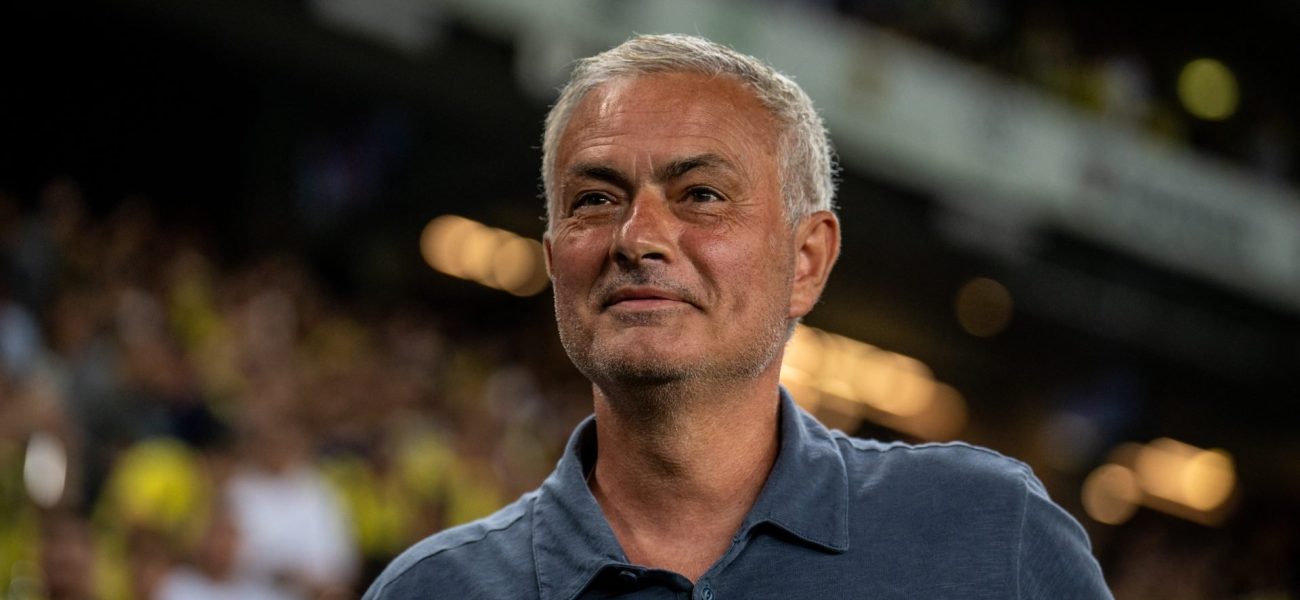
The Santiago Bernabéu’s Shadow Play: Mourinho’s Discreet Gambit for Real Madrid’s Throne
POLICY WIRE — Madrid, Spain — It’s often said that football is more than just a game; it’s a global industry, a cultural touchstone, and, for a select few, a crucible of immense geopolitical and...

POLICY WIRE — Madrid, Spain — It’s often said that football is more than just a game; it’s a global industry, a cultural touchstone, and, for a select few, a crucible of immense geopolitical and financial power. And nowhere is this truism more vividly underscored than in the hallowed, often turbulent, corridors of Real Madrid. But forget the usual fanfare, the public declarations, the agent provocations – the current drama unfolding at the Bernabéu is a masterclass in strategic discretion, a whisper campaign with continent-spanning ramifications.
At its core, Real Madrid’s quest for its next head coach isn’t merely about tactics or trophies; it’s about safeguarding a global brand, a financial juggernaut whose every twitch sends ripples through countless markets. That’s why the recent, notably quiet, inquiries from José Mourinho, the proverbial ‘Special One,’ about the club’s inner sanctum aren’t just managerial gossip. No, they represent a calculated move by a seasoned operator, signaling an intent that could recalibrate the very axis of European football.
Mourinho, a figure whose magnetism is matched only by his occasional combustibility, isn’t dispatching press releases from Lisbon. Instead, sources close to the situation suggest he’s been making delicate, almost imperceptible, overtures—a series of carefully placed phone calls, informal chats with trusted confidantes within Valdebebas, even discreet probes into the dressing room’s current disposition. It’s an information-gathering exercise of meticulous scope, an almost forensic examination of the club’s pulse before any public pronouncement.
Behind the headlines, this isn’t an unsolicited job application; it’s an investigation. Mourinho, currently steering Benfica, wants to understand the precise contours of the challenge, the exact mood music emanating from a club perpetually teetering on the edge of glorious chaos. What’s the internal chemistry like? What are the expectations, both stated — and unsaid, from the board? These aren’t trivial questions for a man whose last tenure, while glittering with a record 100-point La Liga title, ended amidst palpable friction.
Florentino Perez, Real Madrid’s omnipotent president—a man whose vision has transformed the club into a sporting conglomerate—has always maintained a curious reverence for Mourinho. Their relationship, despite past storms, endures. “This institution demands not just trophies, but a certain gravitas, a market presence that transcends mere sport,” Perez might offer, his voice measured, as if addressing shareholders in a quarterly earnings call. “We require leadership that understands the weight of this badge, the global expectations it carries.” That sentiment, many believe, is a tacit nod to Mourinho’s unique blend of ambition and brand appeal.
Still, the situation remains fluid. Mourinho isn’t simply idling, waiting for a call. He’s got objectives at Benfica, — and he’s known for his single-minded focus. And while his agent, the ubiquitous Jorge Mendes, has reportedly engaged in preliminary discussions – one might say navigating the labyrinthine world of managerial transfers – nothing concrete has materialized. Meanwhile, Real Madrid, ever the pragmatist, keeps its options sprawlingly open, with whispers of interest in other top-tier names, including Jürgen Klopp, adding further layers to the intrigue.
But the true implications of this managerial merry-go-round stretch far beyond the Iberian Peninsula. Real Madrid, after all, isn’t just a Spanish club; it’s a global phenomenon. Its fan base, particularly fervent in regions like South Asia and the Middle East, translates into tangible economic power. From Karachi to Dubai, millions follow every pass, every goal, — and crucially, every managerial decision. A change at the helm of such a behemoth isn’t just about football; it’s about safeguarding—or boosting—a colossal global economic engine, much of which relies on markets beyond Europe’s traditional strongholds.
📄 POLICY WIRE WHITEPAPER PUBLISHED: PAKISTAN'S NATIONAL SECURITY POLICY PRIORITIES
👉 READ BY CLICKING HEREThe emotional investment of a fan in Lahore or Dhaka is as real, as monetizable, as that in Madrid itself. This global reach means that managerial appointments are scrutinized not just by European pundits but also by vast audiences (and potential investors) in emerging markets where football is a rapidly expanding passion. A figure like Mourinho, with his established global appeal, brings not just tactical acumen but also an undeniable marketing heft—a factor of no small consequence for a club valued by Forbes in 2024 at $6.6 billion, making it the world’s most valuable football club.
“The Special One,” a moniker he rather enjoyed, I gather, “isn’t one for half-measures,” a source close to Mendes once quipped, sketching the man’s demanding approach. “He wants to know the full lay of the land, the precise contours of the challenge, before he commits.” And that’s precisely what’s happening now. This isn’t just about finding a coach; it’s about a corporation choosing its next CEO, a political entity selecting its next leader—a decision weighed down by history, finance, and the hopes of a worldwide constituency.
What This Means
This subtle dance between Real Madrid — and José Mourinho is a microcosm of modern football’s profound political economy. It’s not just a coaching decision; it’s a strategic corporate maneuver with global implications. The appointment of a manager at a club like Real Madrid, a multi-billion-dollar enterprise, directly influences not only on-field performance but also brand valuation, merchandise sales, and media rights revenue across continents. A high-profile, charismatic, and controversial figure like Mourinho can ignite fan bases in lucrative markets like South Asia and the Middle East, translating directly into economic growth for the club. Conversely, a misstep could lead to financial erosion — and reputational damage.
this situation underscores the evolving power dynamics within elite football. Managers are no longer mere trainers; they’re brand ambassadors, strategic planners, and sometimes, political figures within their own right. Their decisions, and those of the clubs hiring them, reflect a blend of sporting ambition and sophisticated market positioning. The discretion employed by Mourinho and the meticulous vetting by Real Madrid aren’t just about avoiding media speculation; they’re about controlling narratives and maximizing leverage in a high-stakes negotiation where billions, both in currency and cultural capital, are on the line. It’s a reminder that even in sports, the pursuit of power is a game best played in the shadows, its impact ultimately felt in boardrooms as much as on the pitch.