


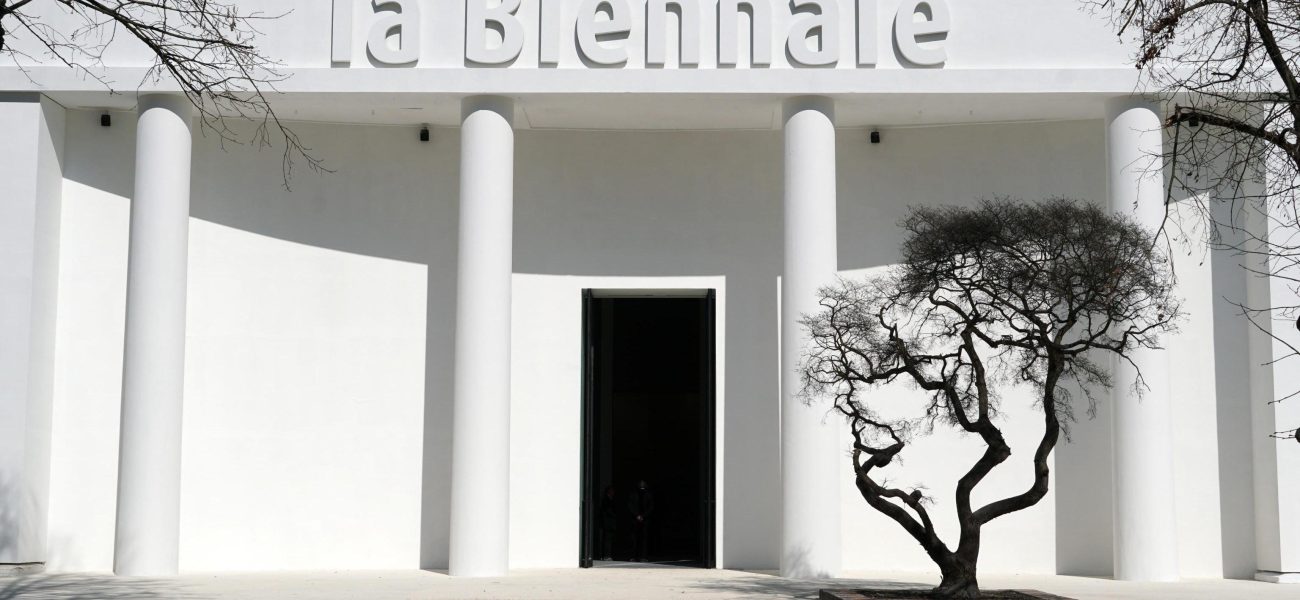
Venice Biennale’s Jury Abdicates Amid Geopolitical Crosscurrents, Casting Long Shadow on Artistic Independence
POLICY WIRE — Venice, Italy — The hallowed canals of Venice, usually a placid backdrop for art’s grandest spectacle, have found themselves rippled not by gondolas, but by a sudden, seismic...

POLICY WIRE — Venice, Italy — The hallowed canals of Venice, usually a placid backdrop for art’s grandest spectacle, have found themselves rippled not by gondolas, but by a sudden, seismic jolt. Just days before the curtain was set to rise on one of the world’s most consequential contemporary art exhibitions, the entire jury for the Venice Biennale abruptly abdicated their posts. It’s a move that transcends mere procedural hiccup; it’s a stark, public rejection, a declarative refusal to participate in what many now perceive as an irreconcilably politicized cultural arena.
The institutional upheaval, though officially couched in vague references to “unforeseen circumstances” by some parties, unfurls against a backdrop of escalating geopolitical tensions. And, it didn’t take a semiotician to decipher the subtext. Critics, ever keen to inject contemporary relevance into art discourse, were quick to connect the dots to broader global fault lines – those particularly acute in regions grappling with conflict and protracted humanitarian crises. This isn’t just about art anymore; it’s about the very space art occupies in a fractured world.
Behind the headlines, a deeper narrative emerges: the increasingly perilous tightrope walk cultural institutions must perform, attempting to maintain neutrality while simultaneously reflecting—or sometimes, conspicuously avoiding—the most pressing global issues. For some, the jury’s mass exodus is a courageous stand; for others, it’s an unfortunate capitulation to external pressures, needlessly politicizing a forum intended for creative expression. Still, the resignation has left a significant void, forcing Biennale organizers into a scramble for replacements before the hordes descend on the Giardini and Arsenale.
“We’re, of course, disappointed by the unexpected developments,” shot back Roberto Cicutto, President of La Biennale di Venezia, in an official statement that managed to convey both regret and a subtle hint of exasperation. “Our mission remains to foster artistic dialogue and showcase global creativity, irrespective of the transient political winds. We’re committed to ensuring the Biennale proceeds with the integrity it deserves.” It’s a carefully worded attempt to steady a listing ship, but one that perhaps glosses over the fundamental challenge of disassociating art from the human condition—and by extension, human politics.
But the Italian government, usually keen to leverage the Biennale’s soft power, has maintained a more nuanced public stance. Gennaro Sangiuliano, Italy’s Minister of Culture, offered a slightly different perspective. “Art, at its core, is meant to provoke, to question, even to disturb. But it mustn’t be held hostage by partisan agendas,” he remarked to Policy Wire, his tone measured but firm. “We’ve seen similar pressures attempt to derail cultural exchange in regions like South Asia – where art and identity are often inseparable from political struggles, sometimes to far more violent effect. It’s a delicate balance, one we’re constantly striving to maintain for all artistic voices, including those from the Muslim world who often feel marginalized.” The minister’s allusion underscores the global sensitivity surrounding such events.
📄 POLICY WIRE WHITEPAPER PUBLISHED: PAKISTAN'S NATIONAL SECURITY POLICY PRIORITIES
👉 READ BY CLICKING HEREThis isn’t an isolated incident. The art world, despite its perceived ivory tower status, has increasingly become a battleground for sociopolitical statements. And, for artists from countries like Pakistan, grappling with their own complex histories of colonialism, religious identity, and geopolitical entanglement, such Western institutional crises resonate deeply. They’ve long navigated the intricate dance between artistic expression and political censorship, often with far higher stakes and fewer international platforms to push back. The implicit question here, then, isn’t just about Venice, but about whether any major cultural event can truly remain apolitical in this interconnected, often turbulent, epoch.
Last year’s Art Biennale, for instance, attracted over 800,000 visitors, a staggering figure that underscores its economic and cultural gravitas. Such numbers represent not just ticket sales, but hotel bookings, restaurant patrons, and a significant boost to the local Venetian economy. (It’s not just a pretty facade, you know.) The economic implications of sustained controversy could be quite severe.
What This Means
The jury’s dramatic departure serves as a potent, if unwelcome, reminder of the increasing entanglement of art and geopolitics. Politically, it signals a growing unwillingness among cultural figures to lend their imprimatur to events perceived as complicit or insufficiently responsive to global crises. This isn’t just a minor administrative shuffle; it’s a profound statement about the moral obligations of cultural leadership. It could well embolden similar acts of protest within other major cultural institutions, transforming them into unwitting arenas for political grandstanding or genuine ethical stands. Economically, while one incident won’t cripple the Biennale overnight, repeated controversies chip away at its perceived neutrality and universal appeal. A tarnished reputation could eventually impact attendance, sponsorship, and, crucially, the lucrative satellite art market that flourishes alongside the main exhibition. This could, in turn, affect Italy’s broader soft power projection on the global stage, especially as competing cultural hubs vie for dominance. Ultimately, it forces a reckoning with the very premise of a global art exhibition: can it truly be a neutral ground when the world outside its gates is ablaze with conflict and division? It’s a question without an easy answer, and one that resonates far beyond the Venetian Lagoon, even touching on the Byzantine power dynamics seen in places like Iran.