


The Phantom Whistle: When ‘Football’s Finest’ Collides With Rules of Interpretation
POLICY WIRE — Nyon, Switzerland — The cacophony of a European semi-final — that rarefied air where sporting glory tangles with colossal financial stakes — can often be reduced...

POLICY WIRE — Nyon, Switzerland — The cacophony of a European semi-final — that rarefied air where sporting glory tangles with colossal financial stakes — can often be reduced to the singular shriek of a referee’s whistle. But what happens when that whistle, amplified by slow-motion replays and punditry’s relentless scrutiny, leaves an indelible mark of contentious injustice? It’s a question reverberating through the hallowed halls of football’s establishment after a particularly vexing penalty decision reshaped the Champions League narrative, casting a long shadow over an otherwise compelling encounter.
It wasn’t merely the awarding of a spot-kick against Arsenal’s Ben White that stoked the embers of outrage; it was the chilling familiarity of it all. Another high-profile match, another incident — a fleeting contact between ball and arm — triggering a game-altering intervention. The Gunners, having seized a precious away lead through Viktor Gyokeres, seemed poised for a strategic triumph in Madrid. Their defensive lines held firm, their counter-attacks hinting at further larceny. But football, as we’re frequently reminded, isn’t always about what you deserve; it’s often about what the rules, however anachronistic, dictate.
And so, the second half began with a tremor. The ball struck White, its trajectory altered. A moment later, the official’s arm pointed to the spot, a gesture now loaded with more immediate consequence than ever before. Julian Alvarez dispatched the penalty, leveling the score, and snatching a psychological advantage from Arsenal’s grasp. This particular incident — one of hundreds each season — underscores a deeper malaise within the sport, where technology designed for clarity often precipitates a deeper well of confusion.
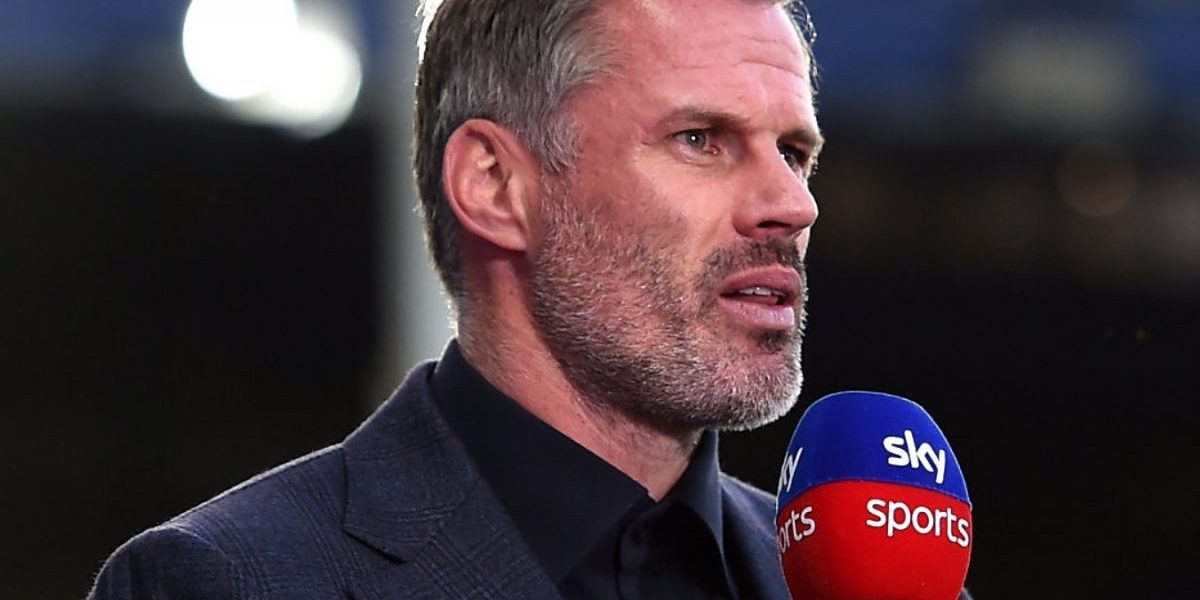
Jamie Carragher, a fixture in post-match analysis, didn’t pull his punches. “The Champions League is the best football by a mile,” he shot back on air, his voice edged with a familiar exasperation, “but these penalty decisions for handball really are a stain on the competition. Last night’s was worse, but that shouldn’t be a penalty against White.” His blunt assessment captured the sentiment of legions of fans and professionals alike, who perceive a growing disconnect between the written law and the unwritten spirit of the game.
But the arbiters of these rules often inhabit a different reality. “The spirit of the game is vital, yes, but referees must enforce the written law,” stated Dr. Klaus Richter, Head of UEFA’s Technical Refereeing Panel, in a recent online seminar. (He doesn’t usually comment on specific matches, mind you, but his general remarks illuminate the official stance.) “And while interpretations evolve, the directive on handball is clear: intent isn’t always paramount when a defender’s arm creates an unnatural barrier.” This often-repeated mantra leaves little room for the intuitive understanding of a game that’s fundamentally about fluid motion and accidental contact.
Indeed, the sheer volume of such contentious decisions seems to be increasing. According to a 2023 analysis by Opta, roughly 32% of all penalty decisions in UEFA Champions League knockout stages since VAR’s introduction have involved a handball infraction, highlighting the persistent interpretive challenge and the official’s tightrope walk between clarity and controversy. That’s a significant slice of match-defining moments hinging on an interpretation few outside the refereeing fraternity seem to embrace wholeheartedly.
📄 POLICY WIRE WHITEPAPER PUBLISHED: PAKISTAN'S NATIONAL SECURITY POLICY PRIORITIES
👉 READ BY CLICKING HEREThis isn’t merely a European problem; it’s a global phenomenon. In countries like Pakistan, where football’s popularity is steadily ascending — perhaps not yet matching cricket’s fervent grip, but certainly gaining ground — such controversies are watched with equal intensity. The perceived fairness, or lack thereof, in decisions made by distant European bodies often echoes broader discussions around international arbitration and the application of rules that can feel culturally distant or biased. It’s a subtle but palpable undercurrent, where the global reach of sports broadcasts means local fans in Lahore or Karachi are as invested in the integrity of a UEFA decision as those in London or Madrid. They, too, dissect these moments through a lens of justice, or its perceived absence.
What This Means
The reverberations of such penalty calls extend far beyond the pitch. Economically, a single controversial decision in a Champions League semi-final can represent tens of millions of Euros in lost revenue — from prize money and broadcasting rights to sponsorship bonuses and player valuations. For a club like Arsenal, progressing to the final isn’t just about prestige; it’s a colossal financial injection capable of redefining transfer budgets and long-term strategic planning. A misplaced refereeing judgment, therefore, isn’t just a sporting grievance; it’s a significant economic disruptor.
Politically (in the broader sense of power dynamics), these incidents chip away at the credibility of governing bodies like UEFA and FIFA. When the rules appear arbitrary or inconsistently applied, public trust erodes. This isn’t dissimilar to how citizens in developing nations — say, those grappling with nascent democratic institutions — view the enforcement of laws or the outcomes of judicial processes. The perception of fairness, of equitable treatment, is paramount for legitimacy. Without it, the entire edifice risks structural instability.
Still, the debate rages. Should VAR intervene for every fractional touch? Has the sport become too forensic, losing its organic rhythm? As European dreams converge and diverge with each passing match, the fundamental questions about the rules themselves — and their interpretation — persist. Until a clearer, more universally accepted framework emerges, these contentious moments will continue to haunt the game’s biggest stages, reminding us that even in elite competition, perfection, much like justice, remains an elusive ideal.