


The Perennial Tempest: Israel’s Seizure of Gaza-Bound Aid Flotilla Rekindles Diplomatic Inferno
POLICY WIRE — Geneva, Switzerland — Another act in a painfully familiar geopolitical drama just concluded, with predictably explosive reviews. The latest iteration saw a multi-national flotilla,...

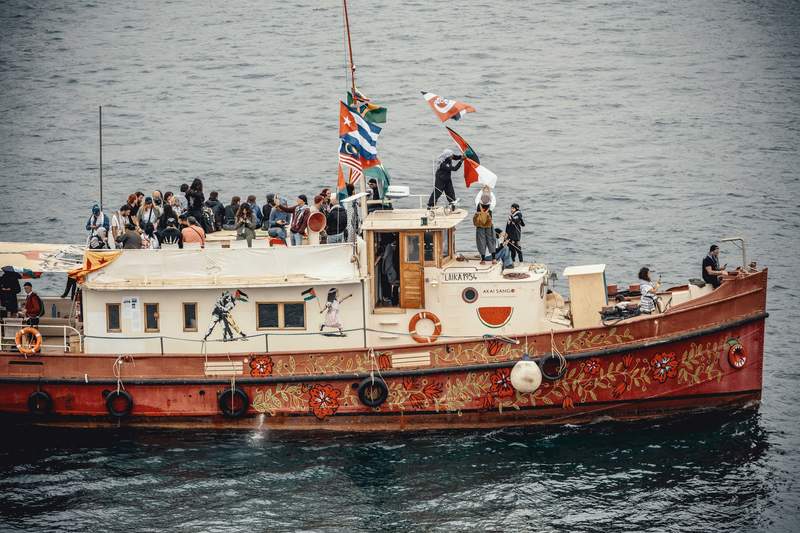
POLICY WIRE — Geneva, Switzerland — Another act in a painfully familiar geopolitical drama just concluded, with predictably explosive reviews. The latest iteration saw a multi-national flotilla, laden with what its organizers termed ‘desperately needed humanitarian provisions,’ intercepted by the Israeli navy in international waters off the Gaza coast. This wasn’t a sudden, unforeseen entanglement; rather, it played out like a well-rehearsed, tragic ballet—every move anticipated, every condemnation pre-written, and the humanitarian stakes as dire as ever.
The vessels, comprising a diverse coalition of activists, physicians, and peace advocates from some two dozen nations, had embarked with a declared mission: to pierce the long-standing Israeli blockade of the Gaza Strip and deliver tons of medicine, food, and construction materials directly to its beleaguered populace. Their intent, they insisted, was purely humanitarian, a direct challenge to what many international bodies deem collective punishment.
But the Israeli Defense Forces (IDF) saw it differently. They contended the flotilla represented a deliberate provocation, a thinly veiled attempt to undermine Israel’s legitimate security protocols. Naval commandos boarded the ships, asserting control with a swiftness that belied the international outcry it would inevitably unleash. The vessels were then diverted to Ashdod port, their cargo—and passengers—processed under Israeli scrutiny. Accounts from activists depicted a forceful takeover, while the IDF maintained its personnel encountered resistance, necessitating a firm response.
The global community didn’t dither. Swift — and vehement denunciations cascaded from diplomatic capitals. The United Nations Secretary-General expressed ‘grave concern,’ while the European Union’s foreign policy chief lambasted the incident as a clear violation of international law. It’s a chorus that’s grown louder with each successive flotilla, each clash, each civilian casualty. Still, the rhythm of protest — and justification remains largely unaltered.
“We regret any inconvenience, but our sovereign duty is to prevent any material that could bolster terror capabilities from entering Gaza,” shot back Rear Admiral Eitan Levy, spokesperson for the Israeli Defense Forces, in a terse statement to Policy Wire. “This wasn’t about aid; it was about challenging our legitimate security measures, designed to protect our citizens from hostile entities. We won’t apologize for defending our borders, maritime or otherwise.” Levy’s remarks underscore Israel’s unwavering stance: the blockade is essential for national security against Hamas, Gaza’s ruling militant group.
Yet, the reality on the ground in Gaza tells a grim tale. The enclave, home to over two million Palestinians, remains under an Israeli-Egyptian blockade that has crippled its economy and infrastructure. Basic services are chronically underserved, access to clean water is a luxury, and healthcare facilities operate at breaking point. According to a 2023 report by the UN Office for the Coordination of Humanitarian Affairs (OCHA), approximately 80% of Gaza’s population relies on humanitarian aid—a stark testament to the ongoing crisis.
And these maritime altercations reverberate far beyond the immediate Mediterranean theatre. In Muslim-majority nations, from Jakarta to Islamabad, the incident sparked widespread outrage and calls for stronger international action. For countries like Pakistan, long champions of the Palestinian cause, such events are seen as flagrant breaches of human rights and international norms, further hardening public opinion against Israel. This ongoing friction often spills into other arenas, sometimes creating unexpected diplomatic flashpoints, as seen in geopolitical skirmishes even on the sporting pitch.
📄 POLICY WIRE WHITEPAPER PUBLISHED: PAKISTAN'S NATIONAL SECURITY POLICY PRIORITIES
👉 READ BY CLICKING HERE“Such actions—particularly in international waters—don’t just impede vital aid; they severely undermine the very notion of humanitarian corridors and diplomatic efforts,” observed Helena Vance, EU Special Envoy for the Middle East, during an impromptu press conference. “It’s a tragic setback for any hope of de-escalation, reminding us all that the path to peace is littered with these frustrating, and frankly, unnecessary confrontations.” Vance’s words capture the exasperation common among those tasked with navigating the intractable conflict.
What This Means
At its core, this latest interception signifies an enduring stalemate, a cyclical pattern of action, reaction, and recrimination. Politically, Israel faces further diplomatic isolation, particularly from nations in the Global South and key European partners who’ve grown weary of the persistent humanitarian crisis and the optics of such forceful interventions. It’s likely to spur renewed calls for investigations into the blockade’s legality and potentially fresh UN resolutions, though their practical impact often falls short of their rhetorical heft. The incident doesn’t exist in a vacuum, either; it amplifies broader geopolitical tensions across the Middle East and beyond, impacting regional alliances and dialogues.
Economically, while direct punitive sanctions against Israel remain improbable, the persistent narrative of humanitarian crisis and conflict risk could subtly deter foreign investment and tourism. For aid agencies, the episode adds another layer of logistical complexity and heightened risk to an already challenging operational environment, inevitably driving up costs and delaying critical assistance. It’s a grim reminder that in this protracted conflict, the most significant economic cost is borne by the millions trapped within Gaza, whose future remains predicated on the whims of political maneuvering and the occasional, ill-fated humanitarian mission.