


From Nottingham’s Roar to Braga’s Eleventh-Hour Triumph: European Dreams Converge on Istanbul’s Horizon
POLICY WIRE — Istanbul, Turkey — The hallowed ground of Istanbul’s Beşiktaş Stadium, usually reserved for Turkey’s own footballing titans, now looms as a potent symbol. It’s the ultimate prize, the...

POLICY WIRE — Istanbul, Turkey — The hallowed ground of Istanbul’s Beşiktaş Stadium, usually reserved for Turkey’s own footballing titans, now looms as a potent symbol. It’s the ultimate prize, the glittering endpoint for a pair of improbable journeys currently unfolding across Europe. For Nottingham Forest and SC Braga, this week wasn’t merely about winning a football match; it was about laying claim to a dream, a whisper of glory that has suddenly, dramatically, grown into a roar.
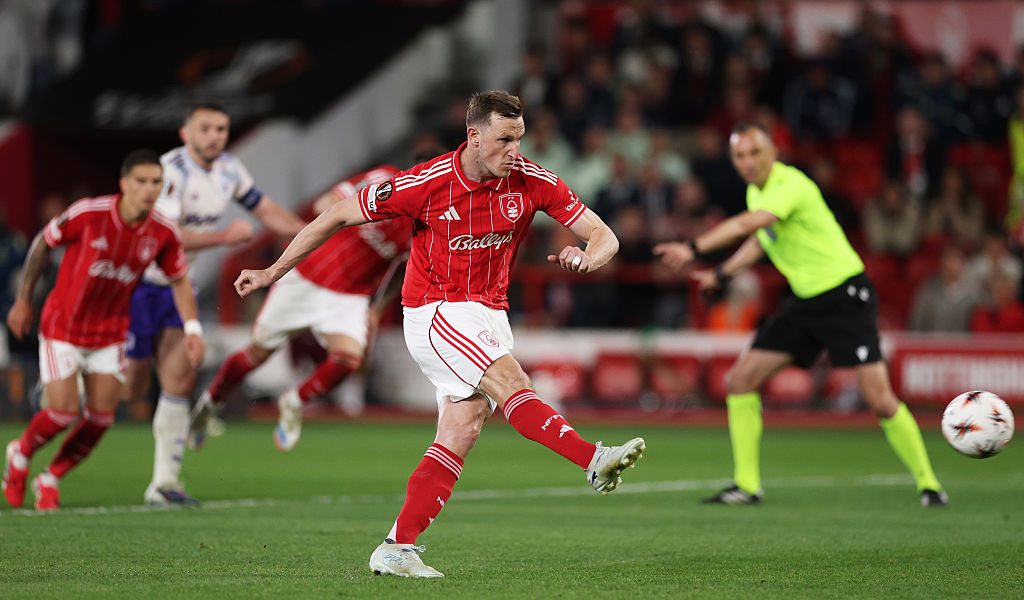
Consider the raw, unadulterated tension that gripped the City Ground. It wasn’t the free-flowing spectacle many analysts had projected. Rather, it was a gritty, attritional affair against Unai Emery’s Aston Villa — a man whose uncanny knack for continental success is almost legendary. Forest, the two-time European champions of a bygone era, dug deep. They clawed, they fought, and ultimately, they converted a penalty, a solitary strike from Chris Wood in the 71st minute that shattered the stalemate. The financial stakes alone for such a run are colossal, representing a potential windfall for clubs operating outside football’s perennial elite.
And Braga? Oh, Braga. The Portuguese club’s first leg against Germany’s Freiburg was an exercise in pure, unadulterated drama. They led early, thanks to Tiknaz, then squandered it. The Gverreiros then watched helplessly as Atubolu, Freiburg’s keeper, repelled a crucial penalty, denying them a halftime advantage. But football, isn’t it, often reserves its most poignant moments for the dying seconds. As the clock wound down, deep into stoppage time, Mario Dorgeles emerged, a figure from the shadows, to hammer home a 92nd-minute winner. The Pedreira erupted. Suddenly, a frustrating draw had morphed into a precious, precarious lead.
“We know this competition; it demands two full performances,” asserted Aston Villa manager Unai Emery, his expression a familiar blend of tactical insight and simmering frustration after the loss. “This is just half-time, isn’t it? Our focus shifts immediately to the return leg, where we will, unequivocally, be a different proposition.” But Forest, after years in the wilderness, won’t be easily deterred. A club official, visibly beaming but exercising restraint, shot back, “We’ve taken a crucial step, yes, but no one’s getting ahead of themselves. The job’s far from done, yet you can feel the energy this run has injected into everyone associated with the club.”
Still, the narrative extends beyond the immediate results. These semi-final clashes aren’t merely about athletic prowess; they’re intricate chess games, psychological battles waged across two legs. Both Nottingham — and Braga now hold the strategic advantage. They’ve earned the right to approach their return fixtures with a lead, however slender, forcing their opponents to chase the game. It’s a powerful position to occupy, particularly in knockout football.
📄 POLICY WIRE WHITEPAPER PUBLISHED: PAKISTAN'S NATIONAL SECURITY POLICY PRIORITIES
👉 READ BY CLICKING HEREWhat This Means
At its core, the advancement of clubs like Nottingham Forest and Braga to the Europa League final — should they complete the job next week — signifies a thrilling recalibration of European football’s established hierarchy. For Forest, it’s a dramatic return to continental relevance, a testament to astute management — and a rekindled fan base. For Braga, it underscores consistent European performance, proving that careful strategy can indeed challenge the financial behemoths. Reaching the Europa League final typically secures a club an additional €4.6 million in prize money from UEFA, a substantial sum for clubs like Nottingham Forest (Source: UEFA financial reports). Such an infusion of capital can be transformative, influencing everything from player acquisition to youth development for seasons to come. It’s not just about bragging rights; it’s about solidifying a club’s future.
The choice of Istanbul’s Beşiktaş Stadium as the final venue adds another layer of geopolitical — and cultural resonance. Istanbul, bridging continents — and civilizations, is a symbolically potent location. For nations across the Muslim world, including Pakistan, a final hosted in this historic city carries a special significance. Football, after all, transcends borders and faiths. Fans from Lahore to Jakarta will be tuning in, not just for the spectacle, but for the connection to a city deeply embedded in their shared heritage. It presents Turkey with an opportunity to showcase its modern infrastructure and cultural richness on a global stage, drawing eyeballs and potential investment from South Asia and beyond. Pakistan’s own sporting aspirations, while focused differently, often benefit from such high-profile events drawing global attention to the broader region.
The journey to the final on May 20th promises further twists — and turns. But as the dust settles on these initial skirmishes, one truth emerges with piercing clarity: the romance of European football, where history and tenacity can still trump sheer financial might, remains gloriously, defiantly alive. And that, for fans everywhere, isn’t just sport; it’s a validation of dreams.