


AI or Prodigy? Cricket’s New Marvel Prompts Existential Questions on Human Potential
POLICY WIRE — New Delhi, India — The persistent hum of artificial intelligence – its invasive algorithms now parsing everything from stock markets to geopolitical strategies – finds its most...

POLICY WIRE — New Delhi, India — The persistent hum of artificial intelligence – its invasive algorithms now parsing everything from stock markets to geopolitical strategies – finds its most unexpected echo in the hallowed, often anachronistic, arena of professional cricket. It’s a space where raw talent and sheer grit have historically reigned supreme, but even here, the question now arises: is this phenomenon real, or merely a sophisticated simulation?
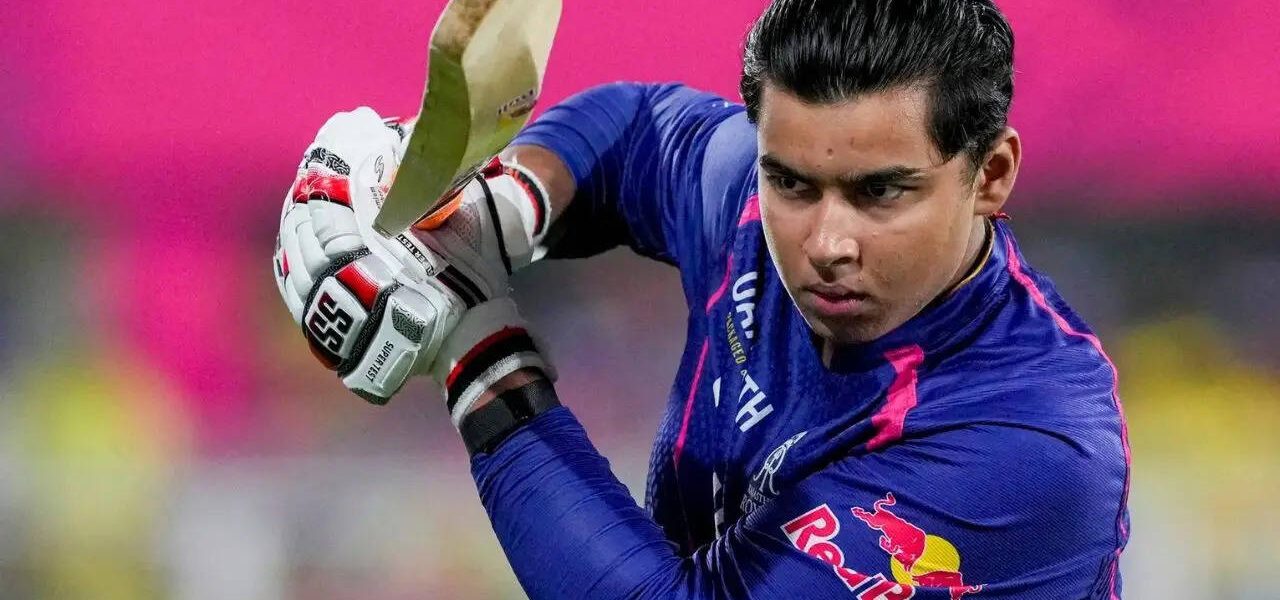
Such is the bewildered astonishment surrounding Vaibhav Sooryavanshi, a 15-year-old batting prodigy whose audacious exploits in the Indian Premier League (IPL) have utterly upended conventional wisdom. So, when England’s T20 captain, Jos Buttler, recently aired his incredulity, it wasn’t an isolated sentiment. “I actually texted Jofra — and asked, ‘Is he AI? Has Elon Musk created this teenage sensation who’s just a wizard with the bat?’” Buttler mused, barely containing his mirth on a recent podcast alongside former fast bowler Stuart Broad. It was a jocular aside, yes, but it perfectly encapsulated the global cricket fraternity’s collective bewilderment at Sooryavanshi’s almost supernatural form this season.
But the story doesn’t end with Buttler’s tech-tinged query. It pivots to Sooryavanshi himself, who, with an almost preternatural calm, had already dismissed the nascent “AI chip in bat” theory a day prior. When confronted with the notion of technological enhancement, the Rajasthan Royals wunderkind shot back with a grin that betrayed no hint of nerves, only an endearing confidence: “Bhagwaan ne laga ke diya hai. Upar hi bola tha ki bat mein tumhare kuch laga ke de raha hoon. Ussi ka istemaal kar raha hoon [God has implanted it — and told me he’s putting something in my bat. I am just using that].” A witty rejoinder, certainly, and one that immediately went viral, further cementing the teenager’s burgeoning mythos. It’s this kind of disarming humility, juxtaposed with on-field ruthlessness, that makes him so compelling.
Beyond the humour, Buttler’s underlying admiration was palpable. He spoke with genuine awe of Sooryavanshi’s audacious approach – his willingness to take on the world’s most fearsome bowlers from the very first ball. The statistics, too, were laid bare, revealing a pattern of unadulterated aggression against the sport’s titans. Buttler highlighted an almost surreal data point: “Sooryavanshi, from the first three balls he has faced against Hazlewood, Bumrah and Cummins, has deposited each one over the ropes for six. That’s outrageous.” You don’t often see such fearless belligerence from seasoned veterans, let alone a mere stripling still navigating adolescence. Coaches, he observed, typically advise caution; Sooryavanshi, it seems, has elected a more incendiary path.
This isn’t merely about individual brilliance; it’s about a narrative that reverberates deeply across the subcontinent, from Karachi to Dhaka, a region where cricket transcends mere sport to become a national obsession. “Every generation looks for its myth-maker, and young Sooryavanshi, with his unassailable confidence, is fast becoming just that,” observed Sunil Gavaskar, the legendary Indian batsman and commentator, in a recent television segment. His rise from relative obscurity (or at least, youth cricket’s quiet anonymity) offers a potent symbol of hope and aspiration, particularly in developing economies where athletic success can redefine generational fortunes. For many a young Pakistani or Bangladeshi, seeing an Indian contemporary achieve such meteoric success isn’t just about rivalry; it’s about shared dreams and the tantalizing possibility of transcending humble origins.
📄 POLICY WIRE WHITEPAPER PUBLISHED: PAKISTAN'S NATIONAL SECURITY POLICY PRIORITIES
👉 READ BY CLICKING HEREAnd if the prodigious hype demanded empirical validation, Sooryavanshi has delivered with an almost brutal efficiency. He’s not just breaking records; he’s obliterating them. The youngster recently became the fastest player in IPL history to amass 400 runs in a season, achieving this prodigious feat in merely 167 balls, according to official IPL records. This astonishing pace eclipses the previous benchmark set by power-hitter Andre Russell, who took 188 balls in 2019. With 400 runs in just nine matches at a staggering strike rate north of 230, including a remarkable 37 sixes, Sooryavanshi isn’t simply a breakout star; he’s the undeniable, defining story of IPL 2026, forcing even seasoned observers to question the very limits of human athletic potential.
What This Means
At its core, the phenomenon of Vaibhav Sooryavanshi underscores a confluence of narratives relevant to contemporary policy and economics. First, there’s the economic imperative of identifying and nurturing elite talent. The IPL, a multi-billion dollar enterprise, thrives on such emergent stars, rapidly commodifying their skills and transforming them into global brands. This rapid commercialization — and the astronomical sums involved — raises questions about the long-term welfare and psychological burden placed on such young athletes. Secondly, the ‘AI chip’ theory, however facetious, reflects a growing societal anxiety about technology’s encroachment into domains traditionally considered purely human. It’s a playful manifestation of a serious debate: where do we draw the line between enhancement and authenticity in competitive arenas? Finally, Sooryavanshi’s meteoric rise, originating from India, further cements South Asia’s pivotal role in the global sporting economy, not just as a market, but as an inexhaustible wellspring of world-class talent, profoundly shaping international sporting narratives and capital flows.