

New Mexico’s Big Game Bonanza: When Public Hunts Become Private Playgrounds for the Wealthy
POLICY WIRE — SANTA FE, N.M. — For the average New Mexican hunter, the quest for a coveted big game tag often feels like a lottery — a slim chance at a cherished tradition. Yet, for...

POLICY WIRE — SANTA FE, N.M. — For the average New Mexican hunter, the quest for a coveted big game tag often feels like a lottery — a slim chance at a cherished tradition. Yet, for an exclusive cadre of affluent non-residents, the system appears less a game of chance and more a well-trodden pathway, bypassing local hopefuls entirely. This subtle, yet consequential, re-routing of public resources has now galvanized a bipartisan chorus of state lawmakers, demanding an immediate intervention.
It’s not about the thrill of the chase, they contend; it’s about equitable access to the state’s natural patrimony. A recent exposé by 4 Investigates ripped back the curtain on a glaring disparity: while official allocations pledge 84% of public draw tags to New Mexico residents — with marginal slices for outfitters (10%) and out-of-staters (6%) — a parallel conduit, the Elk Private Land Use System (EPLUS), has been funneling an overwhelming share of these opportunities to those residing beyond state lines. And that’s the rub, isn’t it? A system ostensibly designed to serve its citizens has developed a convenient — some would say corrupt — bypass for those with deeper pockets.
Behind the headlines, this isn’t just about deer or elk; it’s a quintessential battle over resource control, mirroring broader global debates about who truly benefits from communal assets. In regions like Pakistan or other parts of the developing world, the control of essential resources — water, timber, or even access to agricultural land — often concentrates disproportionately in the hands of a politically connected or economically powerful elite, leaving the general populace to contend with scraps. New Mexico’s hunting tag imbroglio, while different in scale, echoes that same foundational struggle: ensuring resources serve the many, not just the privileged few.
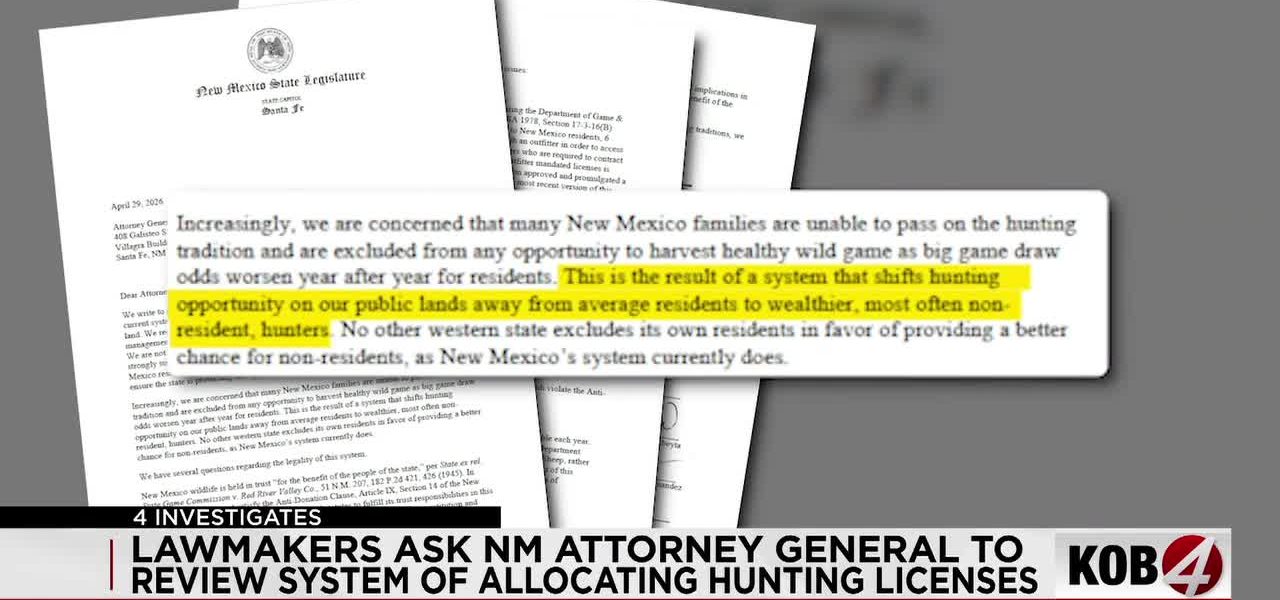
On Wednesday, more than a dozen New Mexico lawmakers, bridging the ideological chasm, affixed their signatures to a missive dispatched to Attorney General Raúl Torrez. Their collective plea? A thorough review of the state’s big game draw process, scrutinizing its adherence to the New Mexico Constitution. The letter, unsparing in its assessment, declares: “This is the result of a system that shifts hunting opportunity on our public lands away from average residents to wealthier, most often non-Resident, hunters.” It’s a sharp indictment, pointing fingers not just at a loophole, but at the spirit — or lack thereof — guiding resource allocation.
So, what does Attorney General Torrez make of this bipartisan gauntlet? “My office has received the letter from our esteemed legislators, and I assure the people of New Mexico that we will conduct a meticulous and impartial review of the big game draw system,” Torrez told Policy Wire. “The integrity of our state’s constitutional principles and the equitable distribution of public resources are paramount.” His measured tone, however, belies the potential political earthquake this investigation could trigger.
📄 POLICY WIRE WHITEPAPER PUBLISHED: PAKISTAN'S NATIONAL SECURITY POLICY PRIORITIES
👉 READ BY CLICKING HEREState Senator Maria Delgado, a Democrat from northern New Mexico, minced no words when discussing the burgeoning controversy. “Our constituents — the hard-working men and women who pay taxes here, who steward these lands — they’re feeling completely shut out. It’s an absolute outrage,” she shot back during a brief exchange yesterday. “We can’t have a system that essentially sells off our heritage to the highest bidder, irrespective of residency. It just doesn’t sit right.”
The core of the issue, as detailed in a 2020 Legislative Finance Committee (LFC) report, confirms the anecdotal frustrations: tags allocated through the EPLUS mechanism “overwhelmingly end up in the hands of out-of-state hunters.” This single data point — a formal acknowledgement from a legislative body — underpins the entire demand for a systemic overhaul. It isn’t merely perception; it’s documented reality, proving that the arid arithmetic of appetites often favors those who don’t call New Mexico home. For more on how resource scarcity impacts public policy, consider The Arid Arithmetic of Appetites.
What This Means
This legislative broadside against New Mexico’s big game tag system isn’t just a localized hunting spat; it’s a critical challenge to governance and the perceived fairness of public resource management. Politically, the bipartisan nature of the lawmakers’ letter signals a potent consensus that Attorney General Torrez can’t easily ignore. A comprehensive investigation, depending on its findings, could lead to significant legislative reform, potentially reshaping how lucrative hunting opportunities — and the substantial revenue they generate — are distributed. This could, in turn, influence upcoming state elections, as local hunters represent a vocal — and dedicated demographic. Economically, while out-of-state hunters certainly contribute to New Mexico’s tourism and outfitter industries, a perceived lack of access for residents risks alienating a core constituency, potentially impacting local small businesses that cater to resident hunters. this controversy shines a spotlight on the inherent tension between maximizing revenue from natural resources and ensuring equitable access for a state’s own citizens — a dilemma many jurisdictions, domestic and international, grapple with constantly. The outcome here won’t just define who gets to hunt; it’ll define whose interests the state truly serves when it comes to shared natural wealth.