

Canine & Consequence: Albuquerque’s K-9 Arrest Underscores Evolving Policing, Persistent Pursuit Peril
POLICY WIRE — Albuquerque, New Mexico — A K-9 named Hulk, with the stoicism befitting his namesake, recently found himself at the epicenter of a rather un-Hulk-like drama: coaxing two alleged...

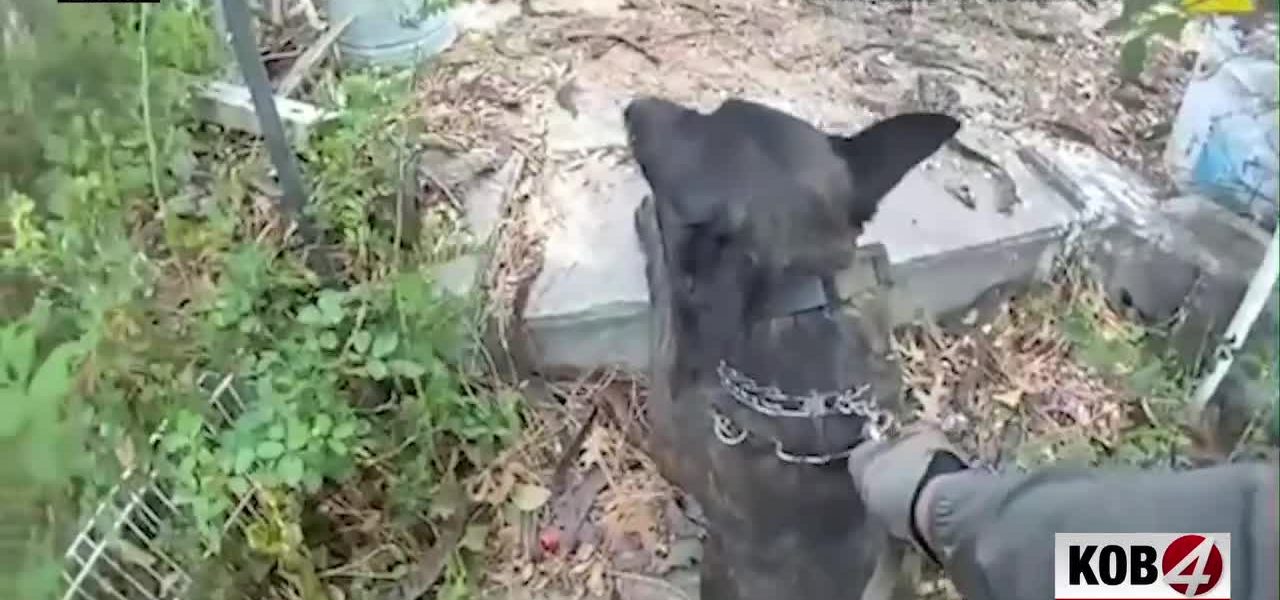
POLICY WIRE — Albuquerque, New Mexico — A K-9 named Hulk, with the stoicism befitting his namesake, recently found himself at the epicenter of a rather un-Hulk-like drama: coaxing two alleged fugitives from the dubious sanctuary of an Albuquerque garage. It wasn’t a world-ending event, no intergalactic threats, just the gritty reality of urban law enforcement—yet, it’s these seemingly routine deployments that increasingly delineate the shifting landscape of modern policing, prompting questions about proportionality, public safety, and the often-unseen human (and canine) element.
The incident, unfolding on April 23, began, as many do, with a vehicle stop that spiraled. Two individuals, identified by authorities as Jeremy Valencia, 28, and Kayla Svihula, 36, reportedly bolted from their vehicle. They weren’t just fleeing; they’d opted for the desperate tactic of barricading themselves within a residential garage, prompting Albuquerque police to solicit specialized assistance from the Bernalillo County Sheriff’s Office (BCSO). And so, Deputy Jojola — and K-9 Hulk were dispatched, transforming a domestic scene into a tactical perimeter.
Still, the stakes were undeniably high. Police pursuits, even those that don’t culminate in a standoff, present inherent dangers. According to the National Highway Traffic Safety Administration (NHTSA), police pursuits result in an average of 355 fatalities and over 2,600 injuries annually across the United States. It’s a statistic that underscores the fraught calculus law enforcement must perform when weighing apprehension against public risk. So, when suspects opt for evasion, particularly into confined spaces, the deployment of a K-9 isn’t merely procedural; it’s a strategic maneuver designed to de-escalate potential violence with a non-lethal, yet undeniably potent, psychological and physical presence.
But this isn’t just about the immediate resolution of a chase; it’s about the broader narrative. It’s about resources, about community trust, and about the ever-present shadow of outstanding warrants—both Valencia and Svihula reportedly carried them. The BCSO’s canine unit, like many across the nation, serves as a testament to the specialized skills now demanded of police departments. They’re not just patrol officers; they’re negotiators, bomb technicians, crisis intervention specialists, and, yes, K-9 handlers, each role a distinct facet of a complex whole. That’s a lot for any department to manage, isn’t it?
Captain Elise Montgomery, a spokesperson for the Bernalillo County Sheriff’s Office, opined on the efficacy of such units. "Our K-9 units aren’t just tools; they’re integral members of our team, often the final deterrent that prevents a dangerous standoff from escalating into something far worse for both our deputies and the community," she asserted. "Their training is rigorous, focused on apprehension and safety, and this incident perfectly illustrates their invaluable role in resolving situations without further harm."
And yet, not everyone views the expanding role of K-9 units without reservation. Dr. Tariq Hassan, a professor of Criminal Justice at the University of New Mexico and a vocal civil liberties advocate, shot back with a caveat. "While we appreciate safe resolutions, the increasing deployment of K-9s in routine arrests, especially for individuals not yet proven dangerous, raises questions about proportionality and potential for harm," Dr. Hassan cautioned. "We must always balance the efficacy of a tactic against its impact on community relations and the potential for unintended consequences, particularly in communities already wary of law enforcement tactics."
📄 POLICY WIRE WHITEPAPER PUBLISHED: PAKISTAN'S NATIONAL SECURITY POLICY PRIORITIES
👉 READ BY CLICKING HEREWhat This Means
At its core, this incident in Albuquerque isn’t an isolated footnote in a police blotter; it’s a microcosm of several evolving policy discussions. First, it underscores the persistent challenges faced by law enforcement in an era of heightened scrutiny. Departments are compelled to find methods that are simultaneously effective, swift, and, crucially, perceived as safe—even when dealing with actively resisting suspects. K-9 units, in this context, are often presented as a ‘less lethal’ option than firearms, a compromise between verbal commands and direct physical force.
But the expansion of specialized units also reflects a broader trend of police militarization that has parallels even in vastly different socio-political landscapes. Consider nations like Pakistan, where specialized police units, including canine teams, are deployed not just for routine crime but in complex counter-terrorism operations, border security, and crowd control. While the context of an Albuquerque garage is a far cry from the Khyber Pass, the underlying principle—the use of highly trained, specialized assets to address intractable security challenges—remains globally consistent. It reflects a universal reliance on force multipliers when conventional approaches falter, albeit with varying degrees of public acceptance and oversight. How these units integrate into community policing models—or fail to—is a global concern.
So, the policy implications here range from resource allocation (training and maintaining a K-9 unit isn’t cheap) to judicial considerations of aggravated fleeing and burglary charges. It delves into justice’s slow burn, where initial apprehension is merely the prelude to a protracted legal process. it highlights the often-overlooked socio-economic pressures that can lead individuals like Valencia and Svihula to evade capture—issues that resonate deeply in states like New Mexico, which grapples with unique environmental and economic strains, a phenomenon often explored in pieces like The Arid Arithmetic of Appetites. The choice to flee, then barricade, suggests a desperation that transcends mere criminality, hinting at deeper societal fissures. It’s not just about a dog, is it? It’s about everything that leads up to — and follows that bark.