


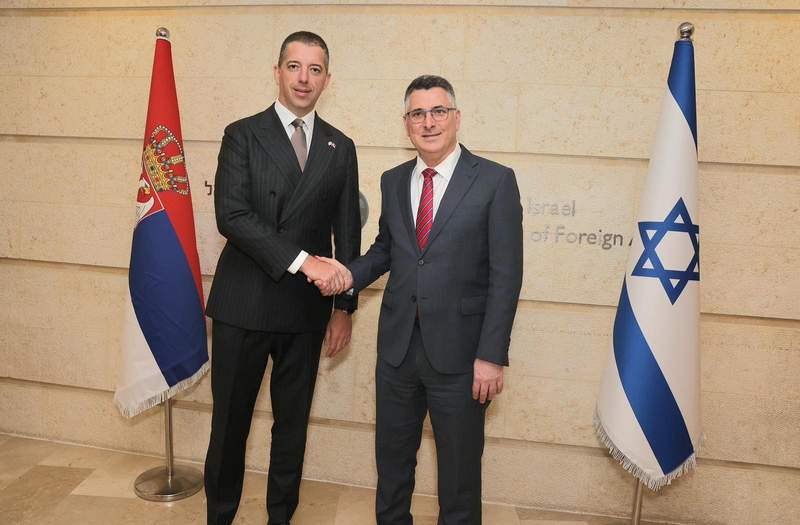
Balkan Gambit: Serbia and Israel Forge Pragmatic Alliance Amidst Shifting Geopolitical Sands
POLICY WIRE — Belgrade, Serbia — In a landscape rife with entrenched historical grievances and fluid diplomatic allegiances, the recent handshake between Serbia and Israel isn’t merely a photo...

POLICY WIRE — Belgrade, Serbia — In a landscape rife with entrenched historical grievances and fluid diplomatic allegiances, the recent handshake between Serbia and Israel isn’t merely a photo opportunity; it’s a meticulously calculated political maneuver. Two nations, both acutely aware of their often-precarious positions on the global stage, are now actively constructing a strategic dialogue and negotiating a Free Trade Agreement – a testament to raw, unvarnished pragmatism overriding ideological inertia. It’s a striking development, particularly for observers accustomed to regional alliances drawn along rather predictable lines.
At its core, this burgeoning partnership speaks volumes about the shifting tides of international relations. The formal inauguration of a strategic dialogue, coupled with the pursuit of an FTA, suggests a mutual desire to transcend past complexities and forge a future rooted in economic expediency and shared security concerns. For Belgrade, it offers a pathway to diversify its economic partnerships beyond traditional European and Russian spheres, a crucial objective as it navigates an increasingly multipolar world. For Jerusalem, it’s another brick in the wall of its global outreach efforts, aiming to cultivate allies wherever common interests converge, especially in areas historically less receptive.
“We’re not just forging economic ties; we’re solidifying a bulwark of shared democratic values in a region that desperately needs stability,” shot back Israeli Foreign Minister Eli Cohen, speaking from Jerusalem. He underscored the potential for collaboration in technology, agriculture, and defense, areas where Israel has consistently demonstrated prowess. And Cohen isn’t wrong; both countries face distinct yet parallel challenges in securing their borders and fostering domestic prosperity.
Still, the optics of such an alliance aren’t lost on anyone. Serbia, a nation with a historically complex relationship with the West and a significant Muslim minority in Sandžak, is now openly embracing Israel – a move that undoubtedly raises eyebrows in certain capitals. This bold alignment, one might argue, underscores a deliberate strategy by Belgrade to assert its foreign policy independence. President Aleksandar Vučić, known for his deft balancing act between East — and West, sees this as a crucial step. “Serbia’s future hinges on strategic partnerships that benefit our people, and this agreement with Israel represents a significant stride towards economic resilience and diversification,” Vučić told state media, emphasizing national interest above all else.
The economic stakes are considerable. Bilateral trade between Israel and Serbia, though still modest, expanded by an estimated 15% in 2023, reaching approximately $150 million, according to data from Serbia’s Statistical Office. This upward trajectory, while not earth-shattering, provides a compelling impetus for deeper integration. An FTA would aim to dismantle tariffs and non-tariff barriers, potentially unlocking significant growth in sectors ranging from IT to tourism. Imagine, for a moment, Israeli tech firms finding new markets in the Balkans, or Serbian agricultural products gaining preferential access to the Levant. These aren’t just hypotheticals; they’re the driving force behind the ongoing negotiations.
📄 POLICY WIRE WHITEPAPER PUBLISHED: PAKISTAN'S NATIONAL SECURITY POLICY PRIORITIES
👉 READ BY CLICKING HEREAnd it’s a telling contrast, isn’t it? While Israel has made strides in normalizing relations with several Arab nations through the Abraham Accords, the broader Muslim world—including nations like Pakistan, with whom it has no diplomatic ties—remains largely distant. The Serbian alignment, therefore, offers Jerusalem a different kind of diplomatic win: forging ties with a non-Muslim European state that has historically been non-aligned, providing a template (or at least a stark comparison) to the often-stymied efforts in other regions. It illustrates that where geopolitical interests align, bridges can still be built, even across seemingly disparate cultural and historical landscapes.
Behind the headlines, one can perceive a subtle geopolitical chess match at play. Serbia, a candidate for EU membership, is simultaneously cultivating relationships that offer leverage and alternative pathways should its European ambitions falter or progress too slowly. Israel, perpetually seeking strategic depth, views the Balkans as a promising region for both economic and diplomatic expansion. It’s an intricate dance, with both partners acutely aware of the delicate balance required to maximize gains without unduly antagonizing other key players. The invisible handshake of such agreements often carries far more weight than the public pronouncements.
What This Means
This evolving relationship between Serbia and Israel represents a significant recalibration of geopolitical alliances in Southeast Europe and the Eastern Mediterranean. Economically, a Free Trade Agreement could unlock substantial growth for both nations, diversifying Serbia’s export markets and providing Israel with new investment opportunities and access points into Europe. Politically, it signals Serbia’s continued pursuit of a multivector foreign policy, balancing its traditional ties with Russia and its aspirations for EU integration with new, pragmatic partnerships. For Israel, it solidifies its strategy of forging alliances with non-Arab states that share economic and security imperatives, underscoring a broader shift towards utility-driven diplomacy over purely ideological alignments. The move could also serve as a subtle indicator for other nations (especially those in the Muslim world) watching Israel’s diplomatic engagements, demonstrating a capacity for flexible alliance-building that transcends immediate regional conflicts. In an era of escalating global uncertainty, such strategic dialogues aren’t just about trade; they’re about resilience and the relentless pursuit of national interest.