

Caspian Currents: Germany’s Energy Quest Finds a Detour Through Kazakhstan’s Oilfields
POLICY WIRE — Berlin, Germany — It wasn’t the thunderclap of a new sanctions package or the dramatic closure of a major pipeline that recently sent ripples through Europe’s beleaguered...

POLICY WIRE — Berlin, Germany — It wasn’t the thunderclap of a new sanctions package or the dramatic closure of a major pipeline that recently sent ripples through Europe’s beleaguered energy markets. Instead, a seemingly bureaucratic announcement, buried in trade circulars, about Kazakhstan’s decision to re-route oil meant for Germany has quietly underscored the profound, sometimes absurd, lengths nations now go to for energy security. Germany, still reeling from a tumultuous divorce from Russian gas, finds itself increasingly reliant on the intricate dance of Central Asian crude — a dance often orchestrated, or at least influenced, by Moscow itself.
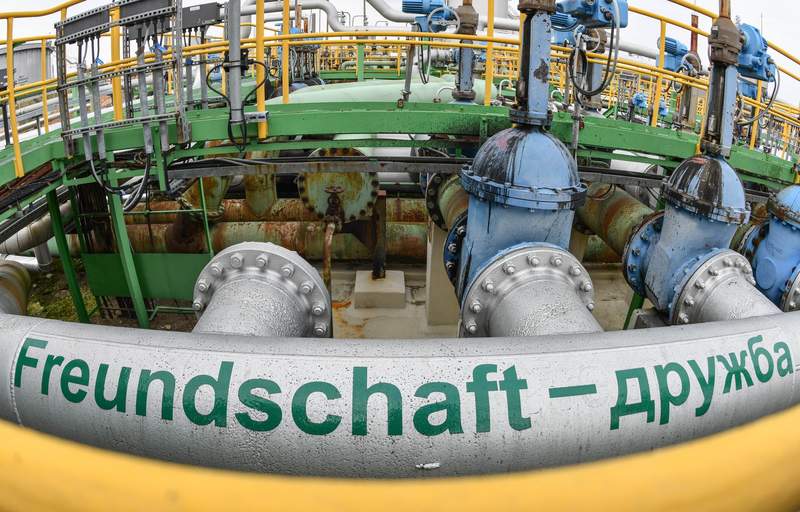
The immediate catalyst? A halt in a segment of the Druzhba pipeline, that ancient circulatory system of Soviet-era hydrocarbons. For years, Kazakh oil had flowed westward through Russia, a pragmatic arrangement born of geography — and infrastructure. But circumstances, they’ve shifted dramatically. Berlin, desperate to scrub its energy slate clean of Russian influence, had been working to ensure its refineries — particularly the PCK Schwedt refinery, a historically Russian-dependent facility — received non-Russian crude. And now, this.
But this isn’t merely a logistical headache; it’s a strategic gambit. Kazakhstan, a nation deftly balancing its colossal neighbor to the north with burgeoning ties to the West and East, is now openly shifting its energy vectors. Its crude, which was once destined for Germany via a Russian artery, will now seek more circuitous, less politically tainted paths. The Caspian Pipeline Consortium (CPC) system, terminating at Russia’s Black Sea port of Novorossiysk, remains a primary route for Kazakh oil, true. But the explicit re-routing for Germany suggests a more direct, perhaps politically palatable, alternative is being sought, even if it entails longer sea journeys and higher costs. It’s a testament to the new price of geopolitical purity.
And what does this mean for Nur-Sultan (or Astana, as it’s now often called)? “Our strategic imperative remains diversifying export routes, ensuring market stability and maximizing national revenue,” articulated Bolat Akchulakov, Kazakhstan’s former Minister of Energy, in a recent statement to local press. “This isn’t a political statement; it’s sound economic stewardship in a volatile global energy landscape.” One can almost hear the unstated subtext: we’re navigating a very narrow channel between giants.
For Germany, the stakes couldn’t be higher. Its economy, the engine of Europe, runs on energy. Shuttering nuclear plants and weaning off Russian fossil fuels simultaneously has proven an immensely complex, costly endeavor. Securing Kazakh crude, even indirectly, is a win. “Every barrel secured from a reliable, non-Russian partner bolsters our energy sovereignty,” shot back German Economics Minister Robert Habeck during a parliamentary debate last month. “We’re rebuilding our energy security brick by painstaking brick, and Kazakhstan is a crucial partner in that endeavor.” It’s an alliance forged not of deep ideological kinship, but of desperate necessity.
Still, the rerouting highlights an uncomfortable truth: while Germany seeks to divest from Russian energy, the practicalities often still involve Russian infrastructure or spheres of influence. Kazakhstan, for all its efforts to assert independence, remains inextricably linked to its northern neighbor economically and geographically. Its oil, amounting to approximately 1.8 million barrels per day in 2023, according to the U.S. Energy Information Administration (EIA), represents a significant chunk of global supply, but its pathways are limited. Diversifying routes means expensive, time-consuming investments in pipelines across the Caspian Sea (a potentially huge boon for regional connectivity, mind you) or more reliance on rail and sea, adding layers of cost and complexity. It’s not simply flipping a switch, you see.
📄 POLICY WIRE WHITEPAPER PUBLISHED: PAKISTAN'S NATIONAL SECURITY POLICY PRIORITIES
👉 READ BY CLICKING HEREBehind the headlines, this subtle shift also resonates across the broader Muslim world — and South Asia. Nations like Pakistan, chronically energy-deficient and perpetually searching for stable, affordable sources, watch Central Asian energy dynamics with keen interest. Any move that strengthens trans-Caspian routes or reduces reliance on traditional, Russian-controlled infrastructure could, in the long term, open up new avenues for energy trade with Central Asian republics, potentially fostering greater regional economic integration and reducing geopolitical vulnerabilities for a country like Pakistan that’s already grappling with its own economic headwinds. It’s a delicate balance, of course, with Beijing’s influence also growing rapidly in the region.
At its core, this isn’t just about pipelines and crude; it’s about sovereignty, leverage, and the enduring power of geography. Germany’s energy pivot has become a global scavenger hunt, and Kazakhstan, with its vast reserves and strategic location, has emerged as a surprisingly pivotal player in this high-stakes game. But even as new routes are forged and old dependencies are ostensibly severed, the shadow of Russia—and the complex interdependencies of the Eurasian landmass—don’t simply vanish. They merely reconfigure themselves.
What This Means
This Kazakh oil rerouting, though a seemingly minor operational adjustment, is profoundly symbolic. Politically, it represents Germany’s unwavering commitment to severing energy ties with Russia, even if the alternatives are more costly and less efficient. It underscores Berlin’s willingness to pay a premium for political independence, reshaping its supply chain and challenging Moscow’s traditional leverage over Central Asian states’ energy exports. For Kazakhstan, it’s a shrewd act of geopolitical balancing. By overtly offering non-Russian-linked crude to Germany, it signals its commitment to market diversification and its increasing willingness to explore options beyond Moscow’s direct control, without openly antagonizing its powerful neighbor. This delicate dance aims to maximize its strategic autonomy — and economic benefit.
Economically, the implications are two-fold. For Germany, it means continued higher energy costs and the necessity of investing in adaptable infrastructure to handle diverse crude sources. The financial burden of this geopolitical shift is substantial, potentially impacting industrial competitiveness. For Kazakhstan, while diversification offers long-term stability and greater negotiating power, the immediate impact is logistical complexity and potentially higher transit costs, which could erode profit margins unless offset by favorable pricing agreements with European buyers. It also highlights the continued strategic importance of the Caspian Sea as a vital energy conduit, potentially spurring further investment in cross-Caspian infrastructure that could redraw regional trade maps. Ultimately, these minor adjustments aggregate into a tectonic shift, one barrel at a time, away from the old order and towards a much more fragmented, multipolar energy reality.