


Kyiv’s New Gambit: Ukraine Eyes Global Arms Market, Signaling Geopolitical Reshuffle
POLICY WIRE — Kyiv, Ukraine — The global arms bazaar, long dominated by a familiar cadre of industrial titans, might just be welcoming an improbable newcomer: Ukraine. It’s a remarkable pivot,...

POLICY WIRE — Kyiv, Ukraine — The global arms bazaar, long dominated by a familiar cadre of industrial titans, might just be welcoming an improbable newcomer: Ukraine. It’s a remarkable pivot, isn’t it?—from a nation perpetually on the receiving end of international military largesse to one contemplating its own significant foray into the lucrative, and often shadowy, realm of weapon sales.
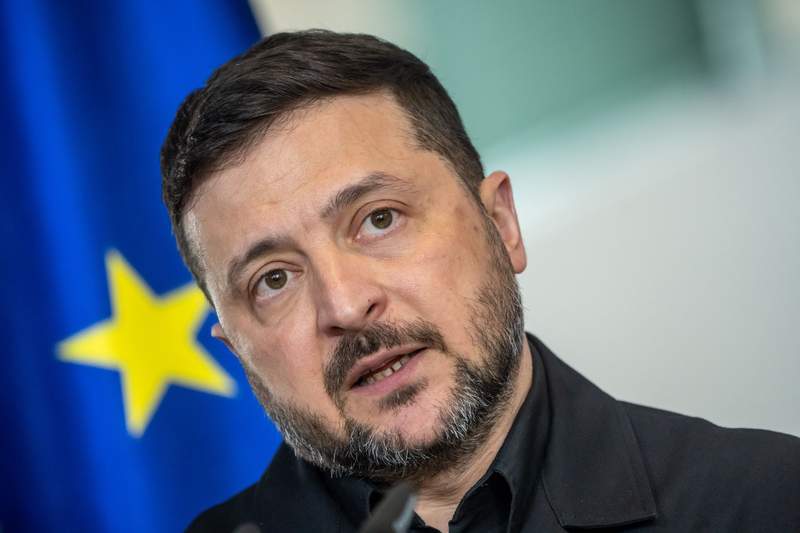
President Volodymyr Zelensky, whose impassioned pleas for aid have become a fixture on the international stage, recently articulated a vision far grander than mere self-defense. Kyiv intends to export its ‘excess’ military production, a bold declaration that fundamentally reconfigures its stance on the world stage. Behind the headlines, this isn’t simply about bolstering a war-ravaged economy; it’s a profound recalibration of Ukraine’s post-conflict identity, projecting a nascent industrial military complex forged in the crucible of Europe’s largest land war in decades.
This isn’t some aspirational fantasy, either. Two years of grinding, brutal conflict have transformed Ukraine into an unprecedented proving ground for military hardware. Western-supplied systems have been tested, adapted, — and in many cases, improved upon in real-time combat scenarios. The operational feedback loop is arguably the fastest — and most comprehensive anywhere on the planet. And frankly, what better marketing collateral could there be than battle-proven efficacy against one of the world’s largest standing armies?
Still, the notion carries an inherent irony. The very weapons that saved Ukraine from collapse could, in time, become instruments of its economic recovery, perhaps even tools of its future foreign policy. “We’re not just fighting for our freedom; we’re refining the tools of modern warfare,” President Zelensky recently asserted, according to a transcript of his address to defense industry leaders. “These are battle-tested systems, and the world needs to see that Ukraine can not only defend itself but contribute to global security through its innovations.” It’s a pragmatic, if stark, declaration of intent.
But the market Ukraine seeks to penetrate is fraught with complexities, ethical dilemmas, and deeply entrenched players. The global arms trade reached an estimated $100 billion annually in recent years, according to the Stockholm International Peace Research Institute (SIPRI), a gargantuan sum that attracts intense competition. For many nations, particularly those navigating complex geopolitical currents, diversifying their arms suppliers is a persistent objective. And here, Ukraine, with its unique experience and burgeoning domestic production capabilities, presents an intriguing, if disruptive, option.
Consider the broader Asian — and Muslim world, for instance. Nations like Pakistan, perpetually balancing relationships with Western powers and traditional suppliers like Russia and China, might find an emergent Ukrainian defense sector an attractive, less politically encumbered alternative. Such a move could subtly shift regional power dynamics, complicating traditional alliances and offering new avenues for strategic autonomy. It’s not just about what’s cheaper; it’s about what comes with fewer strings attached, or perhaps, different strings entirely. Challenging traditional alliances, it seems, is becoming a global pastime.
📄 POLICY WIRE WHITEPAPER PUBLISHED: PAKISTAN'S NATIONAL SECURITY POLICY PRIORITIES
👉 READ BY CLICKING HEREDr. Anya Sharma, a senior fellow at the Royal United Services Institute, offered a circumspect view. “This isn’t merely about revenue; it’s about projecting influence,” she observed during a recent Policy Wire roundtable. “Kyiv is leveraging its wartime experience to carve out a niche in a highly competitive—and ethically fraught—global market. The challenge will be to ensure its exports don’t inadvertently fuel future conflicts or fall into the wrong hands, a perpetual concern in this business.”
What This Means
At its core, Ukraine’s announced pivot towards arms exports signifies several consequential shifts. Economically, it represents a desperate, yet ingenious, attempt to pivot from dependency to self-sufficiency. A vibrant defense industry could become a cornerstone of its post-war reconstruction, attracting foreign investment and skilled labor. It’s a high-stakes gamble, certainly, but one with the potential for substantial payoff.
Politically, this move solidifies Ukraine’s image as a serious regional power, not merely a victim. It projects confidence — and competence, aiming to elevate Kyiv’s standing in international defense dialogues. This could also give Ukraine greater leverage in its relationships with Western allies, demonstrating a capacity to contribute beyond just receiving aid. it introduces a new variable into the intricate equation of global supply chain disruptions and defense procurement.
For the wider international community, it presents a delicate balancing act. While a more self-reliant Ukraine is desirable, the proliferation of battle-tested weaponry always carries inherent risks. The vetting processes, end-user agreements, and oversight mechanisms will need to be exceptionally robust to maintain international confidence. Will Kyiv be able to manage these complexities while still fighting a full-scale war? That, we’ll have to see. It’s a new chapter, in the grim saga of modern conflict — and its unintended consequences.