


New Mexico’s Deluge Dilemma: A ‘Wetter’ Week Challenges Arid State’s Water Ethos
POLICY WIRE — ALBUQUERQUE, N.M. — For a state perpetually caught in the parched grip of its own geology, the forecast of an impending deluge — not merely a drizzle, but a proper,...

POLICY WIRE — ALBUQUERQUE, N.M. — For a state perpetually caught in the parched grip of its own geology, the forecast of an impending deluge — not merely a drizzle, but a proper, multi-day soaking — isn’t just a weather report; it’s a profound, complex, and politically charged event. This isn’t merely about umbrellas and slick roads; it’s about the very lifeblood of New Mexico, its strained infrastructure, and the enduring debate over water — a commodity more precious here than gold.
A significant atmospheric shift, unfurling its humid tendrils across the Southwest, promises a statewide drenching later this week, with Friday pinpointed as the main impact day. Yet, behind the headlines of impending snow and wind, a more nuanced narrative emerges: the precarious dance between a thirsty land and the unpredictable generosity of the skies. For decades, New Mexico, one of the nation’s driest states, receives an average of just 13-14 inches of precipitation annually, making every substantial weather event a significant factor in its precarious water balance. (Source: NOAA/USDA historical data).
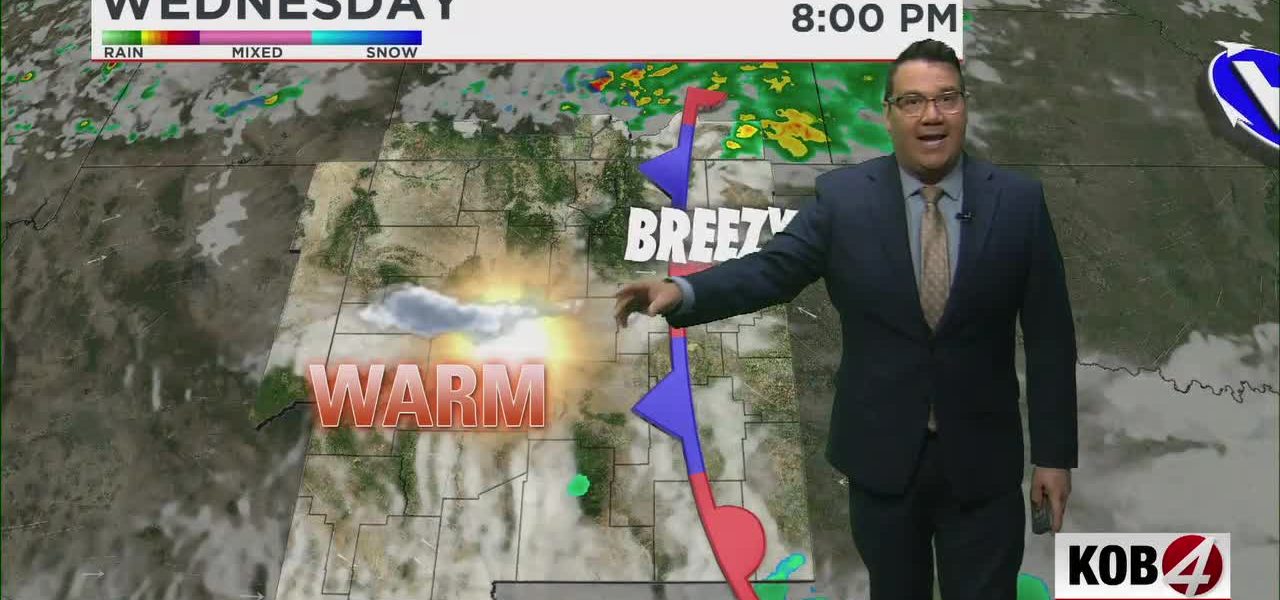
The state’s hydrological destiny — inextricably linked to a series of climate patterns now deemed increasingly erratic — will see a backdoor cold front elbowing its way into eastern New Mexico late Tuesday night. By Wednesday morning, it’s set to slide southwest, painting a wet path through Clayton, Tucumcari, Clovis, Roswell, and into the eastern slopes of the central mountains. And yes, people might even notice an unusual east to southeast wind near Moriarty, Edgewood, and the east side of Albuquerque, particularly near those canyon openings that often funnel such atmospheric theatrics.
But the true spectacle begins Thursday. A formidable storm system, migrating eastward from Baja California, will commence its operations. Showers are expected to initiate around Silver City, Deming, — and the Gila region before spreading. Thursday evening, Albuquerque — a city often grappling with peculiar environmental challenges, as explored in Albuquerque’s Thorny Predicament — is braced for a robust east canyon wind, with gusts potentially hitting 45 miles per hour. That’s enough to rearrange unsecured patio furniture, don’t you think?
Rain, the much-coveted elixir, is slated to spread statewide Thursday night into Friday morning, bringing with it widespread showers and embedded thunderstorms. The forecast calls for the heaviest precipitation to favor the Rio Grande Valley, the central highlands, and eastern New Mexico. Friday, it’s predicted, won’t just be wet; it’ll be a chilly, thoroughly soaked affair across much of central and eastern regions, ensuring a steady downpour for Albuquerque, Santa Fe, Clines Corners, Roswell, Clovis, Portales, and Hobbs.
Rain totals are projected to range from 0.5 to 1 inch in the Rio Grande Valley and a more substantial 1 to 2 inches east of the central mountain chain. And for those at higher elevations, winter isn’t quite done yet: snow is expected above 8,500 feet. The Tusas and Jemez mountains could accumulate a modest 2 to 6 inches, while the Sangre de Cristo Mountains — encompassing Taos, Red River, Angel Fire, and high peaks near Santa Fe — could see a truly consequential 6 to 15 inches. It’s a bounty, certainly, but also a test of an aging infrastructure.
📄 POLICY WIRE WHITEPAPER PUBLISHED: PAKISTAN'S NATIONAL SECURITY POLICY PRIORITIES
👉 READ BY CLICKING HERE“Every significant precipitation event, whether rain or snow, is a critical deposit in our state’s water bank, but it also underscores our vulnerability to extreme weather,” Governor Michelle Lujan Grisham shot back when asked about the state’s readiness. “We’ve invested heavily in climate resilience and water conservation, but these patterns remind us that managing water in an arid environment isn’t a static problem; it’s a perpetual, dynamic challenge requiring foresight and constant adaptation.” Her administration’s push for sustainable water policies hasn’t always been met without friction, of course.
Mayor Tim Keller of Albuquerque, meanwhile, focused on immediate community impact. “We’re mobilizing city services for potential flooding — and infrastructure strain. It’s not just about the volume; it’s about how quickly it comes down and how our drainage systems cope, especially after prolonged dry spells harden the ground,” he explained, noting the city’s readiness for rapid response teams. He’s learned, no doubt, from past flash flood surprises.
What This Means
This incoming weather system, while a welcome — if somewhat abrupt — replenishment of the state’s dwindling water resources, highlights the acute policy challenges inherent in managing water in arid regions. Economically, a good snowpack in the mountains promises crucial runoff for agriculture and urban centers in the spring, potentially alleviating some of the stress on the state’s irrigation districts and municipal suppliers. However, the intensity of forecasted rainfall also poses risks: flash floods, erosion, and strain on wastewater treatment plants, requiring significant infrastructure investment and strategic planning. Politically, every drop of water in New Mexico is a point of contention, negotiated between agricultural interests, urban demand, Native American water rights, and interstate compacts. Erratic weather patterns like this one complicate long-term water allocation agreements, often leading to fierce legislative battles and courtroom skirmishes. it places renewed pressure on policymakers to accelerate climate adaptation strategies, not just for drought, but for flood mitigation too.
Still, New Mexico’s predicament isn’t unique. The challenges of managing a fluctuating water supply in the face of climate change resonate far beyond its borders. Arid and semi-arid regions across the globe — from the American Southwest to parts of Pakistan and the broader Muslim world — contend with strikingly similar environmental pressures. Erratic monsoons, glacial melt acceleration, and increasingly severe droughts followed by sudden, intense rainfall events are becoming the norm, not the exception. The economic ramifications are profound, impacting agricultural yields, energy production, — and urban development. Just as Firozabad’s Fragile Future illuminates the vulnerability of Indian industries to global disruptions, New Mexico’s immediate future is intimately tied to the ebb and flow of global climatic shifts — an interdependency few, perhaps, truly grasp from their kitchen windows.