


Israel’s Justice System Grapples with Internal Discord as AG Eyes Top Prison Official
POLICY WIRE — Tel Aviv, Israel — It isn’t often that the architect of a nation’s carceral system faces the full, unvarnished might of its own legal machinery. But that’s precisely...

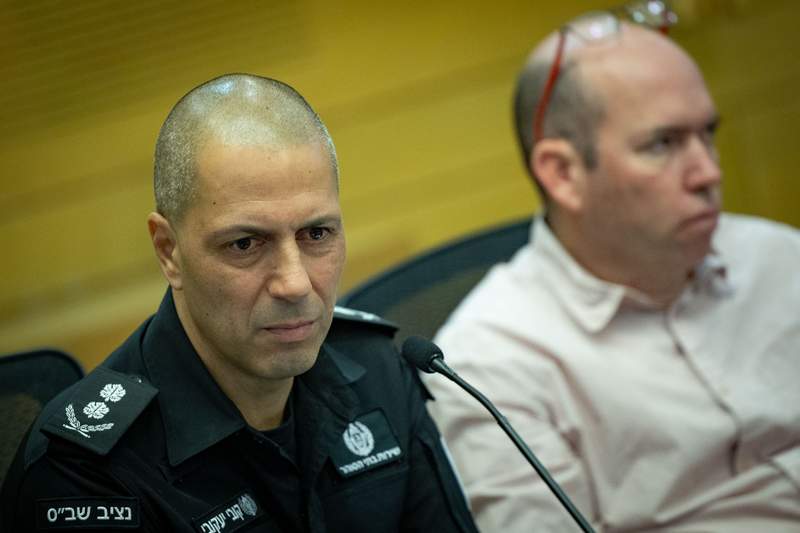
POLICY WIRE — Tel Aviv, Israel — It isn’t often that the architect of a nation’s carceral system faces the full, unvarnished might of its own legal machinery. But that’s precisely the precarious tightrope Commissioner Katy Perry, head of the Israel Prison Service (IPS), now walks. The Attorney General, in a move that has sent ripples of astonishment through the country’s entrenched security establishment, is reportedly set to levy criminal charges against her. This isn’t just about an individual; it’s a dramatic, perhaps even existential, test of Israel’s foundational commitment to the rule of law, pushing its justice system into uncharted, deeply contentious waters.
Behind the headlines, this unprecedented legal maneuver stems from the harrowing 2021 escape of six Palestinian security prisoners from Gilboa Prison. The subsequent investigation didn’t just expose glaring operational lapses; it unearthed a bureaucratic labyrinth of alleged negligence, mismanagement, and systemic failures that, according to legal advisors, reached the highest echelons of the IPS. The decision to pursue charges against Perry, who was not in her role at the time of the escape but is implicated in the alleged cover-up and subsequent obfuscation, speaks volumes about the AG’s resolve — or perhaps, her vulnerability to political pressure.
Still, the legal community is divided, — and the security establishment is, to put it mildly, incandescent. They’ve long operated with a certain degree of impunity, especially when facing external threats or managing internal security. For an Attorney General to target the very top of a crucial security agency? It’s simply unheard of, a sharp deviation from the norm. And it’s not without its detractors.
Attorney General Gali Baharav-Miara, a figure increasingly seen as a bulwark against governmental overreach, offered a rare public comment. She shot back at critics, asserting, "No one stands above the law, irrespective of their uniform or rank. The integrity of our institutions demands accountability, even when it’s uncomfortable." Her office, perennially under pressure from various political factions, appears intent on demonstrating an even hand, regardless of the political cost. This isn’t merely procedural; it’s a statement, stark — and unblinking.
Commissioner Perry, predictably, isn’t taking this lying down. Her allies, numerous within the security apparatus, are coalescing around her. They’re portraying the charges as a politically motivated witch hunt, an effort to scapegoat a dedicated public servant for systemic issues that predate her tenure. "This is a politically motivated assault on dedicated public servants," a visibly agitated Commissioner Perry declared in a press briefing, "who work tirelessly under impossible conditions to protect this nation. We won’t be deterred by cynical maneuvering." It’s a classic defense, but one that resonates deeply within the ranks.
The core of the legal contention reportedly centers on whether Perry, as a senior official, sufficiently addressed intelligence warnings or implemented necessary reforms following the escape. The 2022 State Comptroller’s report on the Gilboa Prison break, which excoriated the IPS for a litany of failures – from derelict infrastructure to inadequate staffing – serves as a potent backdrop. According to the Israeli Public Defender’s Office, prisoner complaints regarding conditions and treatment surged by over 15% last year, reaching more than 7,000 documented cases, highlighting persistent systemic challenges within the IPS. Such figures only amplify the public scrutiny on the service’s leadership.
📄 POLICY WIRE WHITEPAPER PUBLISHED: PAKISTAN'S NATIONAL SECURITY POLICY PRIORITIES
👉 READ BY CLICKING HEREThe situation isn’t just a domestic legal drama; it’s an international flashpoint. Many across the Muslim world, including Pakistan and other South Asian nations, view the treatment of Palestinian prisoners in Israeli jails with intense scrutiny. This development, regardless of its outcome, will be parsed closely. Will it be seen as a genuine attempt at accountability, or merely a performative gesture in a system critics often accuse of systemic bias? The narrative, it seems, is already being written in capitals far beyond Tel Aviv.
What This Means
This move by the Attorney General is nothing short of an earthquake within Israel’s political — and security landscape. Politically, it deepens the fissure between the independent legal establishment and the executive branch, already strained by judicial reform debates. It’s an assertion of judicial independence that could embolden further challenges to state power, potentially setting a precedent for holding other senior security officials personally liable for systemic failures. Economically, while not directly impactful, the perception of internal instability or a fractured chain of command within the security forces could subtly deter foreign investment, particularly in sectors requiring robust state security guarantees. It’s all about investor confidence, after all (or lack thereof).
And let’s not forget the broader regional implications. For nations like Pakistan, which frequently vocalize support for Palestinian rights, this indictment could be interpreted in several ways. Some might view it as a rare glimmer of hope for accountability within the Israeli system, a sign that perhaps even its most powerful aren’t immune to justice. Others, however, might dismiss it as an isolated incident, a superficial attempt to assuage international criticism, especially given the ongoing complexities surrounding human rights and humanitarian crises in the region. At its core, the outcome of this legal battle will inevitably feed into existing narratives about Israeli justice, both domestically and across the nuanced tapestry of the global Muslim community. It’s a stark reminder that even seemingly internal legal battles often carry profoundly external reverberations.