


Historic Lindy’s Diner Crumbles: A Route 66 Icon’s Battle Against Decay and Bureaucracy
POLICY WIRE — ALBUQUERQUE, N.M. — In a city grappling with the perennial dance between progress and preservation, a sudden, brutal collapse has spotlighted the precarious future of America’s...

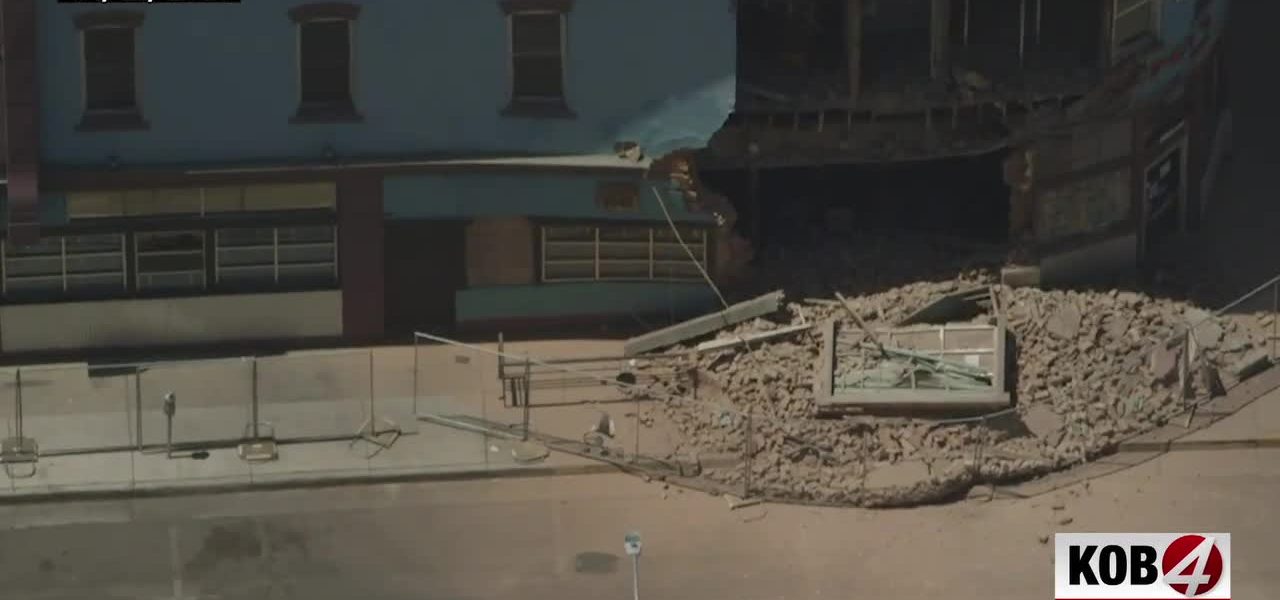
POLICY WIRE — ALBUQUERQUE, N.M. — In a city grappling with the perennial dance between progress and preservation, a sudden, brutal collapse has spotlighted the precarious future of America’s vanishing roadside heritage. It wasn’t a wrecking ball that felled a significant portion of Lindy’s Diner, an Albuquerque institution and a veritable shrine to Route 66 nostalgia; rather, it was time, neglect, and, ultimately, a foundational infirmity. The wall didn’t just give way—it succumbed with a startling, decisive crunch, exactly one week after municipal inspectors had red-tagged the venerable edifice for structural deficiencies. Now, what was once a mere impediment to pedestrian traffic has escalated, effectively partitioning parts of Central and 5th Street, a physical manifestation of the uncertainty looming over the diner’s fate.
For Dawn Vatoseow, co-owner of Lindy’s, the emotional fallout has been profound, a sentiment she articulated with disarming candor. “The only reaction I have is numb. You know, we’re just numb,” Vatoseow lamented, her voice tinged with the weary resignation of someone caught in an unforeseen vortex. “I mean, I’m so grateful and thankful to God that nobody was injured in that.” But the relief, she notes, is shadowed by a chilling ‘what if.’ She had an appointment to be inside the diner just hours after the collapse—a meeting with a structural engineer and contractor designed to preempt precisely this sort of catastrophe. The shock, she concedes, hit harder knowing how narrowly she, — and perhaps others, avoided tragedy. “I mean, it was just a shock, like, what are you talking about? I had an appointment to be in there at three o’clock in the afternoon with the structural engineer and the contractor,” she recalled, the incredulity still palpable.
And so, the future of Lindy’s — a beacon of Americana that, according to the New Mexico Tourism Department’s 2018 data, contributes to the estimated $38 million in annual Route 66 tourism revenue for the state — now lies squarely within the labyrinthine channels of municipal bureaucracy. Proprietors, it seems, have effectively relinquished agency. “I have no answers, and I don’t know how long it’s going to take to get an answer,” Vatoseow opined, underscoring the disorienting paralysis that grips them. She articulated a fervent hope: “I hope to rebuild that building. You know, it’s a historic landmark. We have a lot of ties to that building.” It’s more than just a diner; it’s a repository of collective memory, a place people “drive Route 66 for, you know, to see the nostalgia, to bring that back to themselves, to bring back a time that was better for them, for everybody.”
But the city, as is its wont, views matters through a different lens. “Our primary mandate is public safety,” remarked City Planning Director Elena Rodriguez, in an exclusive statement to Policy Wire. “While we deeply appreciate the cultural resonance of structures like Lindy’s, we can’t compromise on structural integrity. The process, while rigorous, is designed to protect both the public and the historic fabric of our city.” It’s a classic impasse: the emotional pull of heritage against the unyielding strictures of urban planning and safety codes. When historical memory bows to pragmatic necessity, the outcome is often less than idyllic. And for the Vatoseows, that pragmatic necessity has translated into an agonizing wait for a civic determination on whether they’ll even be permitted to bring in their own experts to assess reconstruction viability.
Behind the headlines of a crumbling diner wall lies a deeper narrative of community resilience. Before the collapse, the owners had launched a GoFundMe campaign, seeking assistance for much-needed renovations. That financial lifeline, originally intended for proactive refurbishment, has now transmuted into a desperate war chest for potential resurrection. They’re planning to deploy those funds to rebuild, provided the city’s directives don’t outright forbid it. This struggle to preserve such local institutions, veritable time capsules of a nation’s narrative, isn’t confined to America’s sun-drenched highways. In bustling metropolises like Lahore or Karachi, aged havelis and colonial-era structures — each brimming with their own stories — contend with similar, often more acute, threats of urban redevelopment and financial exigency, their fate frequently hanging by a thread of bureaucratic will and public outcry. It’s a shared human dilemma, this tension between the relentless march of progress — and the yearning for continuity.
📄 POLICY WIRE WHITEPAPER PUBLISHED: PAKISTAN'S NATIONAL SECURITY POLICY PRIORITIES
👉 READ BY CLICKING HEREWhat This Means
The predicament of Lindy’s Diner isn’t merely a localized architectural tragedy; it’s a microcosm of the broader challenges facing historic urban centers across the globe. Politically, it pits the often-sluggish machinery of municipal government — tasked with public safety and zoning compliance — against passionate local stakeholders advocating for cultural preservation and economic vitality. The city’s deferral of immediate action, while ostensibly prudent, fuels an economic paralysis for the business owners and a palpable anxiety within the community. It’s a bureaucratic tightrope walk: move too fast, and accusations of callousness or insufficient due diligence might arise; move too slowly, and the very structure they aim to protect may deteriorate beyond repair, or public sentiment could sour further.
Economically, the impact is multi-faceted. Lindy’s isn’t just a diner; it’s an anchor for heritage tourism on Route 66, attracting visitors whose spending ripples through the local economy. Its indefinite closure represents lost revenue for the owners, potential job losses for staff, and a diminished draw for other businesses along that historic stretch. The GoFundMe campaign, while a testament to community solidarity, highlights the financial precarity of many small, historic enterprises that often operate on razor-thin margins. Should reconstruction be denied or prove prohibitively expensive, it won’t just be a building lost; it’ll be a piece of collective memory erased, a tourist magnet diminished, and a small business — one that had hoped to preserve a tangible link to a bygone era for future generations — extinguished, leaving an indelible void.