


Beyond the Parcel: Brisbane’s Air Hub — A Quiet Reshaping of Pacific Trade Routes
POLICY WIRE — Brisbane, Australia — It wasn’t the fanfare of a new defense pact or a bilateral trade summit, but a rather prosaic ribbon-cutting at Brisbane Airport recently underscored a...

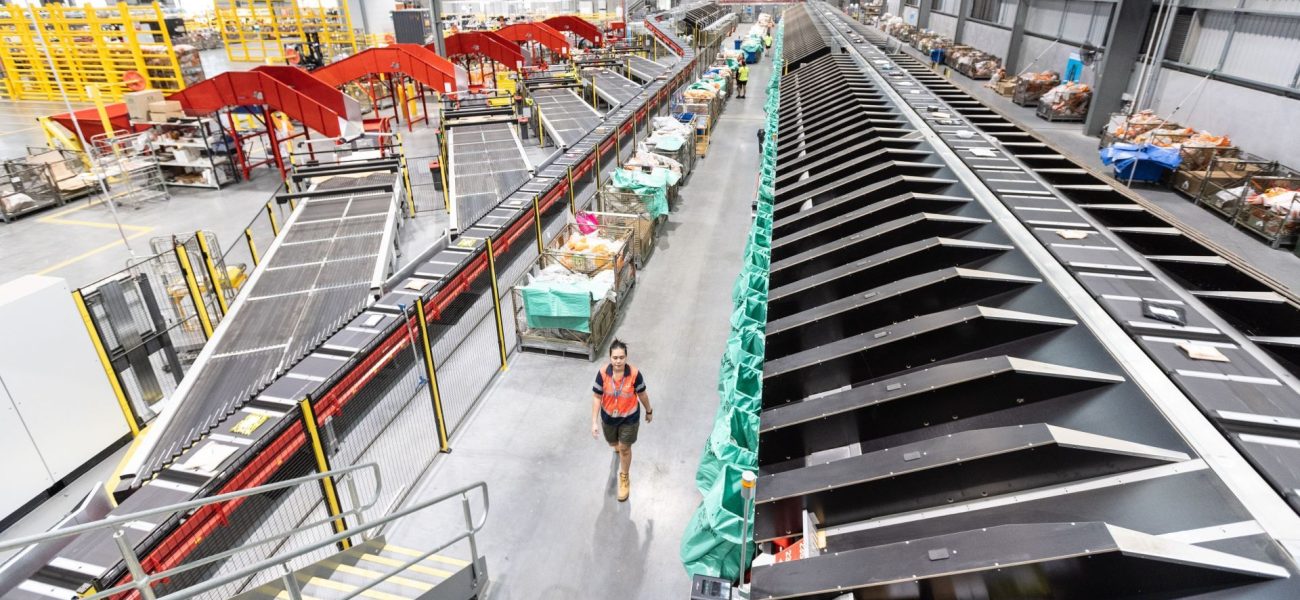
POLICY WIRE — Brisbane, Australia — It wasn’t the fanfare of a new defense pact or a bilateral trade summit, but a rather prosaic ribbon-cutting at Brisbane Airport recently underscored a seismic shift in global commerce. Australia Post, the nation’s venerable postal service, has quietly unveiled a sprawling new air parcel hub, an operational behemoth designed to process the escalating torrent of online purchases. And while the official narrative champions efficiency and domestic delivery speeds, the true import of this facility stretches far beyond the mundane movement of mail; it’s a calculated repositioning in the intricate dance of international logistics.
At its core, this isn’t merely an upgrade. It’s an infrastructure bet on the relentless ascent of e-commerce, particularly across the Asia-Pacific. We’re talking about a facility that, at full tilt, can sort hundreds of thousands of parcels daily – a staggering logistical feat. Still, the underlying message is sharper: Australia, often perceived as a distant outpost in global supply chains, is cementing its place as a critical node. This isn’t just about getting your new gadget from Sydney to Perth quicker; it’s about altering the fundamental pathways goods take from manufacturing powerhouses to burgeoning consumer markets.
“We’ve seen the writing on the wall for years,” shot back Paul Graham, Group CEO and Managing Director of Australia Post, during the hub’s inauguration, his voice betraying a hint of competitive zeal. “The global marketplace isn’t waiting for anyone. This facility isn’t just about future-proofing our operations; it’s about providing Australian businesses with a robust, reliable conduit to international customers, and vice-versa. We’re building resilience, plain and simple.” It’s a statement that rings with more than corporate boilerplate; it speaks to national economic strategy.
Indeed, the sheer volume tells a story. Australian consumers, like their global counterparts, have embraced online shopping with gusto. According to Australia Post’s own 2023 eCommerce Report, nearly 9.4 million Australian households—a staggering 81% of all households—shopped online last year, purchasing 937 million parcels. That’s a lot of boxes, — and each one needs a journey, often a complex one. The new Brisbane hub is tailored to streamline these journeys, especially for imports and exports traversing the vast oceanic distances.
But the real geopolitical frisson lies in its potential to re-route traditional supply lines. For too long, much of Australia’s international parcel traffic has flowed through larger, often congested, hubs in North Asia or the Middle East. This new facility offers a direct, expedited pathway, particularly for goods originating from or destined for Southeast Asia, the Pacific Islands, and even Delhi’s increasingly sophisticated commerce. It represents a subtle recalibration of influence, allowing Australia to exert greater control over its own logistics destiny.
“This hub alters the calculus for businesses looking at the Australian market, but also for those in emerging economies eyeing Australia’s consumer base,” observed Dr. Amina Khan, a logistics analyst specializing in South Asian trade flows, from her Karachi office. “Think about Pakistan, for example. Small and medium enterprises there, especially those in textiles or artisanal goods, could find direct air freight routes from Brisbane more appealing than the traditional, often slower, maritime routes or trans-shipments through Dubai. It cuts transit times, reduces handling — a significant competitive advantage in a world where speed is currency.” She’s not wrong; it’s about connectivity, after all, not just capacity.
📄 POLICY WIRE WHITEPAPER PUBLISHED: PAKISTAN'S NATIONAL SECURITY POLICY PRIORITIES
👉 READ BY CLICKING HEREAnd it’s not just about inbound trade. Australian exporters, particularly those in agricultural produce or specialized manufacturing, gain a faster, more reliable outbound channel to lucrative markets in the Muslim world and broader South Asia, regions experiencing significant economic growth and a burgeoning middle class eager for high-quality imports.
What This Means
The inauguration of Australia Post’s Brisbane Air Parcel Hub is more than just a logistical update; it’s an economic statement. Politically, it underpins Australia’s broader Indo-Pacific strategy, aiming to foster deeper economic ties and reduce reliance on single-point vulnerabilities within global supply chains. By establishing a more robust, independent gateway, Canberra implicitly hedges against future geopolitical shocks — a lesson learned bitterly during the pandemic’s supply chain unraveling. Economically, it promises to stimulate trade, both importing efficiency for consumers and providing a competitive edge for exporters. For small businesses, particularly those leveraging online platforms, it dramatically shrinks the world, transforming distant markets into reachable customers. And, of course, for global logistics giants, it’s a clear signal: the regional chessboard just got a new, significant piece. This move, while seemingly mundane, speaks volumes about a nation intent on carving out its own indispensable niche in the increasingly complex architecture of global commerce. It’s an investment in sovereignty, wrapped in cardboard — and sealed with tape.
Still, the challenges remain. Maintaining high efficiency in such a large-scale operation, mitigating environmental impacts (air freight isn’t exactly green, is it?), and navigating the ever-shifting landscape of international trade regulations will test the facility’s mettle. But for now, Australia’s quiet expansion into the skies above Brisbane marks a consequential moment for its economic trajectory, a strategic play that might rival even Ottawa’s grandest investment schemes in its long-term impact on national prosperity.