


Pompeii’s Uncanny Gaze: AI Revives a Face, Igniting Debates on History’s Future
POLICY WIRE — Naples, Italy — A man, two millennia interred beneath the petrified ash of Vesuvius, has now, in a startling contemporary volte-face, stared back at us. It isn’t a resurrection,...

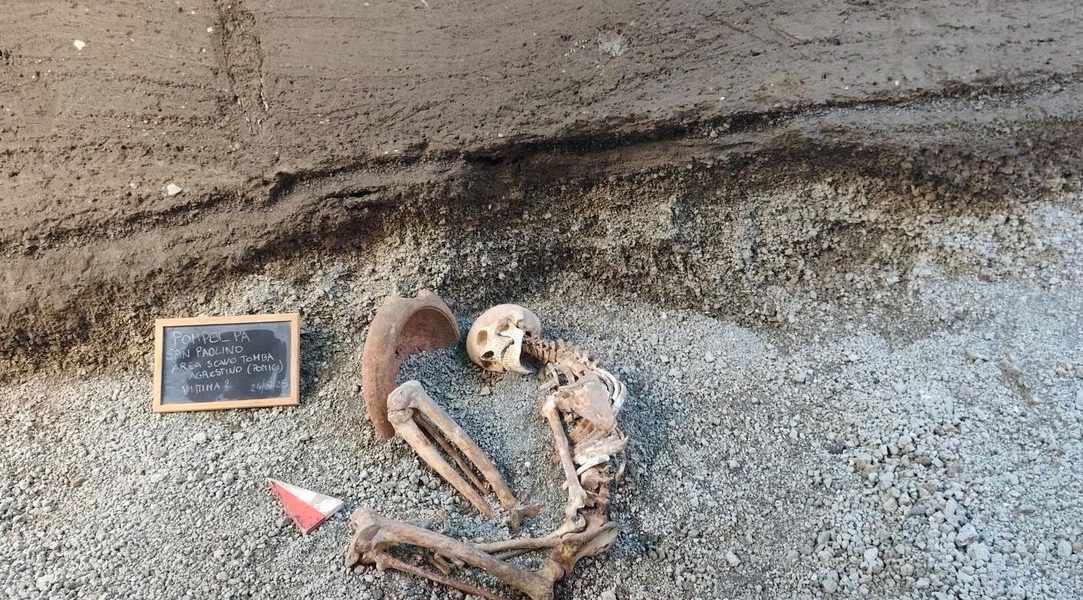
POLICY WIRE — Naples, Italy — A man, two millennia interred beneath the petrified ash of Vesuvius, has now, in a startling contemporary volte-face, stared back at us. It isn’t a resurrection, not in the corporeal sense, but an uncanny digital mirror, crafted by artificial intelligence—a profound, almost unsettling conjuration of the past. This isn’t merely about visualizing an ancient face; it’s about humanity’s enduring, perhaps even desperate, quest to touch the tangible specter of those long gone, leveraging twenty-first-century algorithms to pierce the veil of time.
Archaeologists, long accustomed to dusty fragments and scholarly conjecture, are now wielding machine learning models to reconstruct the visage of a man caught in Vesuvius’s cataclysmic embrace of 79 CE. Using advanced photometric analysis and neural networks, researchers at the Pompeii Archaeological Park have digitized the cranial structure of one of the famous plaster casts, extrapolating soft tissue and facial features with a precision previously unimaginable. The result? A face — perhaps not perfectly accurate, but startlingly human — emerging from the historical abyss, less a scientific diagram and more a haunting portrait.
“It’s not just about a face; it’s about restoring a tangible, agonizing humanity to a tragedy often viewed through the detached lens of millennia,” posited Dr. Alessandra Rossi, the meticulous Director of the Pompeii Archaeological Park. “This technology permits us to bridge the chasm of time, demanding empathy, forcing us to acknowledge the individual suffering beneath the blanket of history.” Her voice, typically reserved, held a discernible tremor of awe. But, as with all such advancements that flirt with the numinous, philosophical quibbles quickly surface.
Behind the headlines, a more intricate discourse unfolds. Is this a triumph of technology or a subtle distortion of historical reverence? And what are the implications for other ancient sites, particularly those in precarious geopolitical landscapes? Consider the monumental sites across the Muslim world—from the towering minarets of Samarra to the intricate ruins of Palmyra—many of which grapple with the threats of conflict, neglect, and the sheer erosion of time. Could such AI-driven archaeology offer a bulwark against oblivion for these invaluable treasures, or does it introduce a new layer of digital colonialism, where Western technology dictates how non-Western histories are perceived and preserved?
“While compelling, we must scrutinize the ethical dimensions of such digital resurrection,” shot back Professor Karim Al-Faisal, a cultural heritage technology ethicist at Lahore University, a prominent institution in Pakistan. “Whose history are we privileged to reconstruct, and are we truly honoring the past, or merely projecting modern anxieties onto it? For many cultures, particularly those in South Asia, the concept of ancestry carries a sacred weight; this digital proxy raises profound questions about authenticity and remembrance, and whose narrative ultimately benefits.” His concern isn’t about the technology’s capability, but its stewardship.
Still, the allure of seeing a Roman citizen, a farmer or a merchant, as he might’ve appeared on his last living day, proves irresistible. It transforms abstract scholarship into immediate, visceral connection. This technological leap, however, isn’t without its fiscal complexities. According to a recent report by the World Archaeological Congress, less than 2% of global archaeological research budgets are currently allocated to advanced AI and digital reconstruction technologies, despite their proven potential to revolutionize our understanding of ancient civilizations. That’s a stark contrast to the millions funnelled into more conventional excavation methods annually, suggesting a considerable lag in strategic foresight.
📄 POLICY WIRE WHITEPAPER PUBLISHED: PAKISTAN'S NATIONAL SECURITY POLICY PRIORITIES
👉 READ BY CLICKING HEREAnd it’s this strategic investment that could redefine how we approach historical preservation, moving beyond mere excavation to active, empathetic reconstruction. Countries, much like Canada’s C$25 billion gambit into sovereign wealth, are increasingly recognizing cultural assets as more than just tourist attractions—they’re soft power instruments, national identity anchors, and, yes, potential economic drivers. But the question remains: will global powers and cultural organizations commit to funding this digital frontier, especially when so many historical sites, like those facing destruction in El-Fasher, Sudan, cry out for basic physical protection?
What This Means
At its core, this digital reanimation of a Pompeian citizen marks a pivotal moment for cultural heritage, shifting it from purely academic pursuit to a realm deeply intertwined with technological innovation and, inevitably, political economy. Economically, this advancement could spawn an entirely new sector of high-tech heritage tourism and digital cultural industries. Imagine virtual reality tours where you don’t just see ruins, but interact with reconstructed denizens. That’s a powerful draw for investment and revenue, particularly for nations rich in archaeological treasures but perhaps lacking the infrastructure for mass physical tourism.
Politically, the implications are equally weighty. Control over historical narratives—and the tools to reconstruct them—becomes a soft power play. Nations like Italy, at the vanguard of applying cutting-edge AI to their heritage, set a precedent. Others, particularly those in the Global South with equally profound but often less-funded histories, face a choice: either invest heavily in these technologies or risk having their past interpreted and presented through lenses developed elsewhere. This isn’t merely about preserving stones and bones; it’s about shaping how future generations, and indeed the entire world, perceive entire civilizations. It’s a new front in the battle for cultural influence, fought not with armies, but with algorithms — and data sets.