


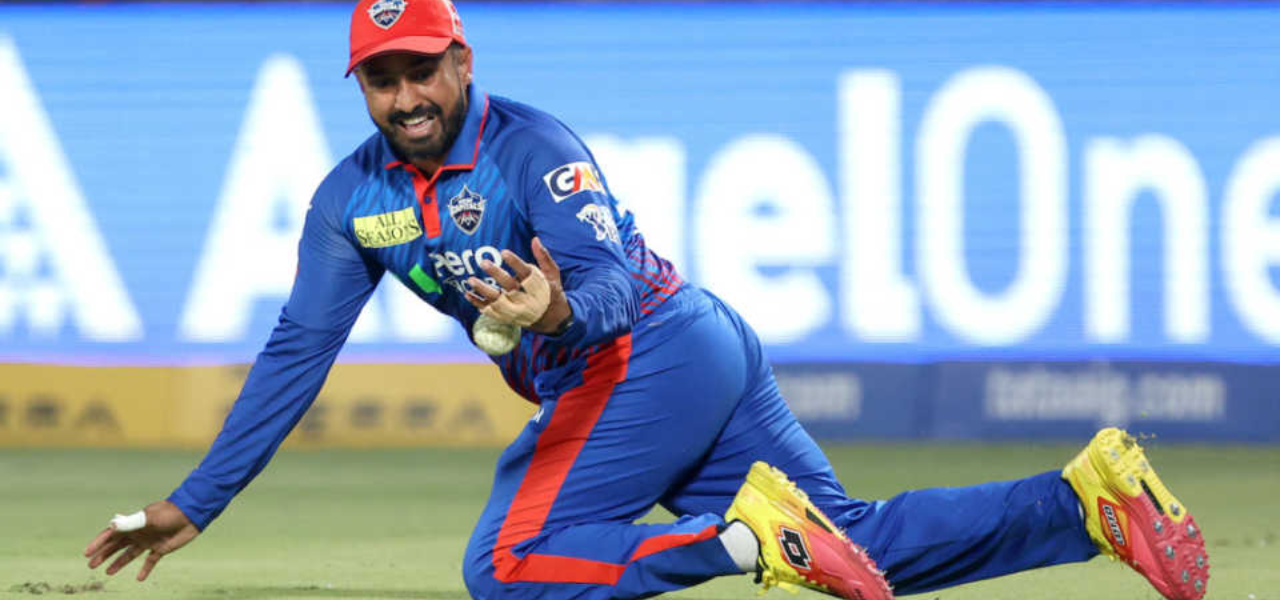
The Cruel Catch: How a Single Misplay in the IPL Unpacked the Brutal Psychology of Elite Sport
POLICY WIRE — Delhi, India — The hushed gasp that sweeps through a stadium — a singular, collective intake of breath — often speaks volumes more than the roar of triumph. It’s...

POLICY WIRE — Delhi, India — The hushed gasp that sweeps through a stadium — a singular, collective intake of breath — often speaks volumes more than the roar of triumph. It’s the sound of opportunity slipping through fingers, of a narrative irrevocably altered, a sound Karun Nair now intimately understands. For him, a single night in the hyper-charged crucible of the Indian Premier League (IPL) wasn’t just about dropped catches; it was a stark, public dissection of the human element — fallibility, pressure, and the unforgiving gaze of millions.
It wasn’t the Delhi Capitals’ valiant chase of 265 runs that etched itself into the annals of IPL lore — though Punjab Kings did, in a stunning display of power hitting, achieve the highest successful run chase in the league’s history against them. No, the indelible image was Nair, a seasoned campaigner, twice fumbling what appeared to be straightforward chances off Shreyas Iyer. The first, a mistimed loft from Iyer in the 15th over, fell safely under Nair’s care at long-off. Then, a moment of profound, almost theatrical disbelief, as the ball inexplicably spilled. The bowler, Vipraj Nigam, crumpled; the stadium murmured. But what was truly staggering? Just four deliveries later, Iyer found another lifeline, a top-edged wrong’un ballooning towards the very same fielder — and again, Nair failed to hold on. He visibly deflated, a tableau of despair under the unforgiving floodlights.
Iyer, gifted two lives, subsequently hammered a match-winning 71 off 36 balls, securing a breathtaking victory with seven balls to spare. It’s a testament to the brutal efficiency of the IPL, isn’t it? A game where a single misstep can unravel an entire strategic blueprint. Such high-octane moments aren’t just about athletic prowess; they’re an exacting psychological examination.
Still, the sporting fraternity, a peculiar blend of cutthroat competition — and occasional camaraderie, rallied. Former India spinner Ravichandran Ashwin, known for his incisive commentary, offered a measured defense. Speaking on his popular YouTube channel, ‘Ash Ki Baat,’ Ashwin articulated a nuanced perspective often lost in the immediate aftermath of such blunders. “Let me tell you about Karun Nair’s situation,” Ashwin explained. “When a player knows they aren’t in the playing XI, they usually find out at least a day in advance. Players who are dropped or rested often hit the gym or do extra training on match days to stay fit, knowing the next day might be a travel day with late-night flights and limited practice time. So, maybe Karun Nair was mentally ‘switched off’ — though that’s probably the wrong word — but he might have been fatigued from training. I’m not making excuses, but for a substitute to suddenly step into the intensity of the game, these things can happen.” He added, almost wistfully, “He dropped one catch, and his confidence just plummeted after that. Karun is actually a fabulous fielder; I’ve seen him be very reliable in first-class and red-ball cricket, especially in close-in positions. I’ve rarely seen him drop catches like that, but today was just one of those days.”
But does context fully absorb the consequences? “The IPL, for all its glitter, is an unforgiving arena,” shot back Rohan Jaitley, President of the Delhi and District Cricket Association (DDCA), acknowledging the financial stakes. “Every player understands the weight of expectation. It’s not just about winning or losing; it’s about contracts, careers, — and the millions watching. While we empathize with a player’s momentary lapse, the business of cricket moves relentlessly forward.” That’s the cold, hard truth, isn’t it? The league’s commercial juggernaut, generating billions in revenue annually — a figure that dwarfs the GDP of many smaller nations — brooks little sentimentality.
📄 POLICY WIRE WHITEPAPER PUBLISHED: PAKISTAN'S NATIONAL SECURITY POLICY PRIORITIES
👉 READ BY CLICKING HEREAcross the subcontinent, from the bustling streets of Karachi to the quiet villages of Bangladesh, these IPL narratives unfold with a fervent intensity. Despite official bans on Indian cricketers playing in the Pakistan Super League (PSL) and vice-versa, the IPL remains a dominant cultural force, a shared passion transcending geopolitical boundaries. A player’s rise or fall in this league resonates deeply, influencing not only fan sentiment but also the aspirations of countless young cricketers dreaming of a similar shot at global recognition and unimaginable wealth. It’s not merely a game; it’s a significant cultural export, an economic powerhouse, and — for its participants — a career-defining pressure cooker.
What This Means
At its core, this incident underscores the profound psychological burden placed upon elite athletes in commercially driven leagues like the IPL. The ‘mental switch-off’ Ashwin described isn’t a weakness; it’s a very human response to an environment that demands constant, peak performance from individuals existing in a state of high-alert readiness. Policy implications here are manifold: discussions around player welfare, mental health support, and the contractual obligations for substitute players need renewed scrutiny. Are players truly ‘ready’ — mentally and physically — when thrust unexpectedly into the spotlight after prolonged periods on the sidelines? The economic impact is equally stark; a single costly error can ripple through a player’s career trajectory, affecting future contracts, endorsement deals, and even their national team prospects. For franchises, it represents a tangible loss, emphasizing the perennial challenge of managing player rosters, balancing readiness with rest, and mitigating the inevitable human errors in a game where fractions of a second and inches often dictate millions in revenue and an entire city’s pride.
And so, the IPL machine grinds on. Karun Nair’s night of anguish will become a footnote, another brutal lesson in the ledger of elite sport. Yet, it serves as a poignant reminder: even in a league defined by gargantuan scores and dazzling displays, it’s the moments of human frailty that often resonate most profoundly, echoing far beyond the boundary ropes.