


The Silent Skies: How Geopolitics Grounded Global Commerce in the Middle East
POLICY WIRE — Dubai, UAE — The sudden absence of contrails, those ephemeral markers of global connectivity, has become the most visible, yet understated, casualty of renewed tensions gripping the...

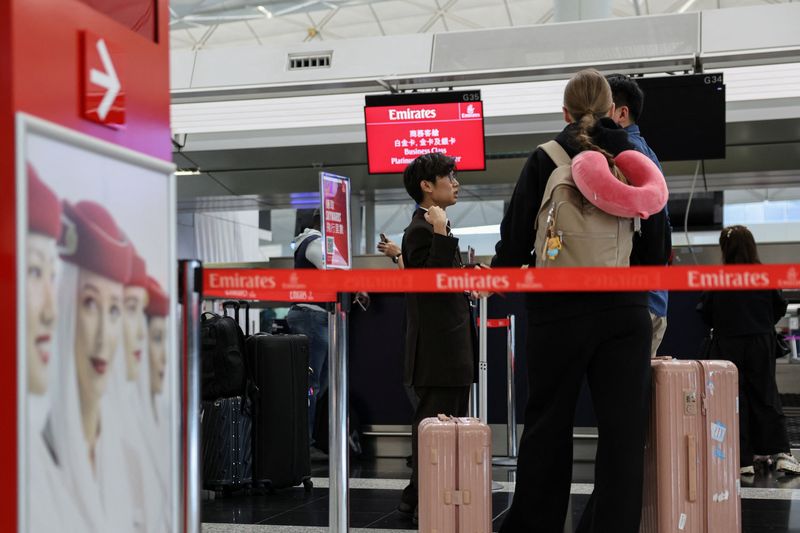
POLICY WIRE — Dubai, UAE — The sudden absence of contrails, those ephemeral markers of global connectivity, has become the most visible, yet understated, casualty of renewed tensions gripping the Middle East. It isn’t just about delayed vacations or missed business meetings anymore; it’s about the intricate, often unseen, web of commerce and human movement — air cargo, supply chains, even the critical flow of remittances — that has been abruptly re-spliced, sometimes severed entirely. The skies, once an emblem of boundless movement, now reflect the terrestrial realities of a deeply fractured region.
Behind the headlines of missiles and diplomatic posturing, airlines have quietly, but consequentially, redrawn their aerial maps. Major carriers, facing an intractable choice between prudence and profit, have opted for lengthy detours or outright cancellations. This isn’t merely a logistical headache; it’s a profound recalculation of risk, one that ripples outward, impacting everything from fresh produce deliveries to vital medical supplies.
It’s a situation fraught with difficult decisions. Consider the predicament of a pilot, hours into a transatlantic journey, receiving an unexpected notification to reroute, potentially adding thousands of miles and countless gallons of fuel. And this, for countless passengers, means uncertainty, longer travel times, and an increasingly palpable sense of global disquiet. Many simply won’t get where they’re going at all.
“Our paramount obligation remains the safety of our passengers and crew,” said Pieter Elbers, CEO of IndiGo, addressing reporters amidst a flurry of questions regarding redirected routes. “It’s a logistical nightmare, yes, but one we must endure to protect lives. The financial implications are significant, but they don’t supersede human safety.” His sentiment isn’t unique; it’s a mantra echoing through executive boardrooms across the aviation sector, from Lufthansa to Emirates.
Still, the economic toll is undeniable. Airlines absorb massive costs for rerouting, fuel surcharges, — and compensation for disrupted travel. According to data from OAG, a global travel data provider, Middle Eastern airspace saw a nearly 30% reduction in commercial flight movements within the first 48 hours following the escalated conflict, affecting approximately 2.5 million passenger seats weekly. That’s a staggering figure, a quantifiable measure of the conflict’s immediate reach beyond its territorial bounds.
And for nations like Pakistan, nestled at the crossroads of vital East-West flight paths, the impact extends beyond mere transit. The disruption to air corridors directly affects the millions of expatriate workers — a significant portion residing in the Middle East — who rely on these connections for travel home and for sending remittances. Delayed flights mean delayed reunions, — and for those whose livelihoods depend on seamless travel, it’s a direct hit. It also complicates the logistics of Hajj and Umrah pilgrimages, which see millions of South Asians travel to Saudi Arabia annually.
But the broader picture reveals something more profound. “Regional stability isn’t merely a diplomatic ideal; it’s the bedrock of our economic arteries, including our skies,” opined Ambassador Fatima Zahra, Pakistan’s Permanent Representative to the UN, during a recent address. “These disruptions underscore the global interconnectedness – — and fragility – of modern travel and trade. The unseen scars of conflict, even far from the immediate battlefield, are deeply felt.” She wasn’t wrong; the economic reverberations echo through manufacturing, tourism, and even global finance.
At its core, this ongoing aerial redrawing is a stark reminder that in an increasingly interconnected world, localized conflicts rarely stay local. They become global inconveniences, then economic tremors, and eventually, policy challenges demanding international introspection. The very air we breathe – or rather, the air we fly through – becomes a theatre of geopolitical consequence.
What This Means
The widespread grounding and rerouting of flights in response to escalating Middle East tensions herald a multi-faceted policy challenge. Economically, airlines face unprecedented operational costs, potentially leading to increased fares and reduced services, thus dampening global travel and trade. Supply chains, already brittle from recent global crises, will experience further strain, affecting everything from perishable goods to high-value electronics. Politically, the situation forces governments to reassess their dependency on stable transit routes and consider contingency plans for citizen repatriation or humanitarian aid delivery – a complex ballet of diplomacy and logistics. the decision by various Muslim-majority nations’ carriers to adjust routes might signal a quiet, yet discernible, realignment of regional alliances or a heightened sense of caution regarding volatile geopolitical flashpoints. This isn’t just about aviation; it’s a bellwether for the broader geopolitical climate, underscoring how quickly regional instability can metastasize into global economic and social friction, demanding a unified, pragmatic response that, frankly, seems increasingly elusive.