

Gasperini’s Subtle Gambit: A Manager’s Play for Unfettered Authority Amidst Rome’s Footballing Theatre
POLICY WIRE — Rome, Italy — Beneath the glow of a routine 2-0 victory against Bologna, a shrewd managerial gambit quietly unfurls. Gian Piero Gasperini, the seasoned tactician whose reputation...

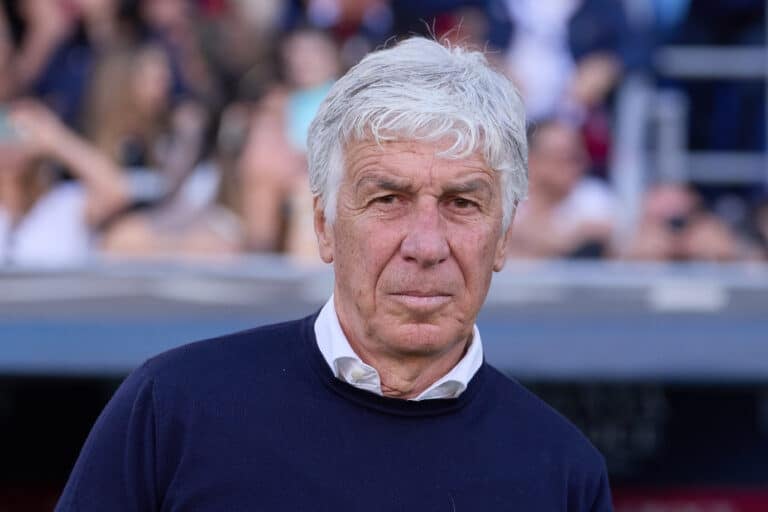
POLICY WIRE — Rome, Italy — Beneath the glow of a routine 2-0 victory against Bologna, a shrewd managerial gambit quietly unfurls. Gian Piero Gasperini, the seasoned tactician whose reputation precedes him, wasn’t just dissecting goal-scoring prowess or defensive fortitude; he was, in essence, drawing lines in the sand. His public pronouncements, delivered with the casual air of a man merely stating the obvious, hinted at a deeper play for power, for unfettered technical authority.
It wasn’t the jubilant roar of the crowd after Malen’s opener or El Aynaoui’s clincher that seemed to occupy Gasperini’s thoughts most acutely. Instead, it was the strategic chess board of the transfer market — and the club’s hierarchical structure. “I know how to make Roma stronger,” he declared, his voice carrying the weight of two decades in the dugout. “If I have technical responsibilities, it’s right that I be satisfied.” This wasn’t merely a request; it was a condition, a soft ultimatum delivered with the precision of a perfectly timed through-ball.
The Grugliasco coach, whose teams are known for their demanding, high-energy style, didn’t shy from acknowledging the quality on display. He lauded the “very good” first half, even defensively, and credited players like Malen for elevating the game’s quality. Pisilli, he noted, showcased commendable versatility. But his true focus, the undercurrent to his praise, lay in what’s next, what’s *needed* to sustain such moments. You see, modern football isn’t just about tactical nous; it’s about control over the means of production – the players themselves.
And so, Gasperini, a figure who’s seen his share of boardroom skirmishes, underscored the arduous season. Injuries, he lamented, had been a perennial thorn in their side. “We hope to get Koné back. When you get to the end of the season, bookings pile up, — and that’s normal. We’ve had some long absences of key players.” He reeled off a list – Wesley, Soulé, Dybala, Koné – noting their prolonged absences weren’t just inconvenient; they were catastrophic to consistent performance. Dybala, he pointed out, hadn’t played since January 25th; Soulé was sidelined for 40 days. It isn’t normal, he insisted, for a top-tier club to navigate such an injury crisis without deeper structural support.
Behind the headlines of triumph — and tribulation, the financial gears of professional football grind ceaselessly. The global football transfer market, for instance, surpassed $7.35 billion in spending in 2023, according to FIFA’s Global Transfer Report. This colossal figure underscores the economic stakes involved in Gasperini’s quiet power play. Securing top talent isn’t merely about scouting; it’s about significant capital allocation, often a point of contention between coaches and club hierarchies.
But the coach wasn’t all demands. He commended the squad’s resilience, their refusal to wilt under pressure, even in high-stakes clashes against formidable opponents like Atalanta and Juventus. He’s a realist, it appears, acknowledging the toll of double travel — and minor setbacks. Yet, the underlying message remained clear: if the club expects continued excellence, it must empower its technical leader to shape the roster without undue interference. It’s a tale as old as football itself, managers craving autonomy in a business increasingly driven by spreadsheet analytics and commercial imperatives.
Still, the narrative isn’t just about Rome or Italy. The inclusion of players like El Aynaoui, a Moroccan international who excelled for Roma, only to suffer physically and emotionally after reaching the Africa Cup of Nations final, speaks to the sport’s sprawling global impact. These players aren’t just commodities; they’re cultural ambassadors, their journeys followed religiously from Rabat to Riyadh. The fan bases in the Muslim world, particularly across North Africa and the Middle East, are immense and fiercely loyal to European clubs, transforming individual player narratives into broader geopolitical currents of soft power and cultural exchange.
Guido Fiorini, a senior technical director for AS Roma, when pressed on the coach’s comments, offered a measured response. “Our club’s trajectory is one of continuous ascent. We value clarity in roles — and robust collaboration,” he confided in a brief, unprompted email exchange. “We’re confident in our operational structure moving forward.” It’s the kind of diplomatic language that suggests internal negotiations are precisely what’s happening, far from the public glare.
What This Means
At its core, Gasperini’s recent post-match commentary transcends mere football analysis; it’s a strategic maneuver in the high-stakes world of professional club management. His declaration signals a perennial tension: the coach’s desire for absolute authority over team composition versus the club’s broader commercial and financial strategies. In an era where transfer fees dictate balance sheets and player value can fluctuate wildly (often based on performance, which is, in turn, influenced by managerial decisions), granting a coach more technical responsibility isn’t just a nod to their expertise; it’s a significant shift in corporate governance within the sporting enterprise. This move could empower Gasperini to sculpt a squad entirely in his image, potentially streamlining recruitment and fostering a more cohesive playing philosophy. Conversely, it centralizes risk. Should his vision fail to materialize, the club would find itself having effectively ceded significant control over assets without corresponding success. It’s a political calculus as much as it’s a sporting one, with reverberations far beyond the pitch, influencing everything from sponsorship deals to global fan engagement in crucial emerging markets.